Get all the latest India news and top breaking news live from all cities of India only on Readselective.com. Read latest India news, current affairs and news headlines online today.
New Delhi and Beijing had agreed that the 2005 Agreement on Political Parameters and Guiding Principles for resolving the territorial dispute would be followed by a framework for boundary settlement.
National Security Advisor (NSA) Ajit Doval holds the 25th round of Special Representatives (SR) talks with China Foreign Affairs Minister Wang Yi, in Beijing. Credit: PTI Photo
New Delhi: Though New Delhi and Beijing are yet to work out the settlement framework that, according to the 2005 bilateral agreement, should precede delineation and demarcation of the boundary between the two neighbouring nations, India and China on Tuesday discussed ways to make progress on delimitation.
As the special representatives of the two governments held the 25th round of boundary negotiations in Beijing on Tuesday, the Embassy of India in the capital of China stated that the ways to make progress on “boundary delimitation” had been discussed.
The Ministry of External Affairs (MEA) in New Delhi noted that the special representatives – National Security Advisor Ajit Doval of India and Foreign Minister Wang Yi of China – had agreed to continue “seeking a political settlement of the boundary question” in the context of the “overall and long-term interests” of the two nations.
The two sides “engaged in in-depth discussions on advancing border demarcation negotiations, strengthening border control, improving mechanisms, and promoting cross-border cooperation,” according to a press release issued by the Ministry of Foreign Affairs (MoFA) of the government of China.
New Delhi and Beijing had agreed that the 2005 Agreement on Political Parameters and Guiding Principles for resolving the territorial dispute would be followed by a framework for boundary settlement.
They had agreed that the “framework would provide the basis for the delineation and demarcation of the India-China boundary to be subsequently undertaken by civil and military officials and surveyors of the two sides.”
Though the two sides could not work out a framework in the past two decades, Doval and Wang, according to the readout issued by the Chinese MOFA, discussed “advancing border demarcation” on Tuesday. “They discussed ways to further expand bilateral cooperation, maintain stability and ensure peace and tranquillity in the border areas, and make progress on boundary delimitation, while sustaining the ongoing work on transboundary cooperation,” the Embassy of India in Beijing posted on X.
The discussion on the boundary delimitation on Tuesday signalled that India and China were ready to revisit the agreed sequencing of the process to resolve the protracted territorial disputes between the two neighbouring countries.
The Indian MEA stated in New Delhi that the special representatives of the two governments, under the strategic guidance of Prime Minister Narendra Modi and President Xi Jinping, had “a candid and in-depth exchange of views on the boundary question” in “a constructive and forward-looking spirit”.
West Bengal BJP president Saamik Bhattacharya warned party leaders and workers against corruption, extortion and ‘cut money’ practices, saying action would follow if allegations are proved. He said complaints of irregularities had been received and the party had already issued over 200 show-cause notices and suspended more than 100 individuals over alleged misconduct.
West Bengal BJP President Warns Leaders Against Corruption, Says Action Will Follow If Allegations Are Proven | IANS
Bharatiya Janata Party (BJP) state president Saamik Bhattacharya on Tuesday, in an open letter, issued a stern warning to party leaders and workers against corruption, extortion and ‘cut money’, making it clear that even MLAs will not be spared if allegations are proved.
BJP warns against corruption
“BJP is an ideological party and serving the nation is its foundation. Recently, I have received letters and complaints regarding irregularities and undesirable activities by some workers. If any leader or worker acts outside the party’s principles or gets involved in corruption, the party will not take responsibility for their actions. This applies from the booth level to the state level,” Bhattacharya wrote in his letter.
Notably, the state BJP has already issued more than 200 show-cause notices and suspended over 100 individuals over allegations of irregularities.
Bengaluru’s Health Department has initiated inspections at several high-profile clubs to assess adherence to food safety and hygiene regulations. FDA teams discovered multiple violations, such as inadequate personal hygiene among food handlers, unsanitary storage conditions, and pest infestations.
FDA Raids 10 Posh Clubs in Bengaluru Over Food Safety Violations – Check Full List
The Health Department has launched raids at some of Bengaluru’s top clubs to check whether food safety rules and hygiene standards are being followed. The inspections are being carried out by FDA teams at clubs that have some of the city’s elite as members, with membership fees at several clubs running into lakhs of rupees.
The inspections found several alleged food safety and hygiene violations at some of the clubs. These included poor personal hygiene among food handlers, unhygienic frozen storage rooms, cockroach infestation and a lack of proper separation between vegetarian and non-vegetarian food.
The teams also found that hot water was not available at some utensil-cleaning areas, raising concerns over basic hygiene practices followed in the kitchens.
FDA Teams Raid 10 Bengaluru Clubs
The FDA teams are searching the following clubs as part of the food safety inspections:
Century Club
KSCA Club
Race Course Club
Bowring Club
Catholic Club
Badminton Club
Tennis Club
Vijayanagara Club
Mahalakshmi Layout Club
Malleshwaram Club
The raids are aimed at checking kitchen hygiene, food storage, food handling and compliance with food safety guidelines at these establishments.
Officials are also looking into whether food handlers are maintaining proper personal hygiene while preparing and serving food. The presence of cockroaches and poor conditions in frozen storage areas have also raised concerns about food contamination.
Notice Issued To Mahalakshmi Layout Club
Among the establishments inspected, Mahalakshmi Layout Club was found to have poor hygiene standards, following which the authorities issued a notice to the club.
The inspections come amid growing concerns over food safety and hygiene standards at food-serving establishments. The Health Department is expected to take further action based on the findings of the ongoing inspections.
IIT-Delhi has initiated an external investigation into the suicide of MSc Physics student Rishikesh Kumar, following student protests.
IIT Delhi sets up external panel to investigate alleged suicide by a student
IIT-Delhi has set up an external panel to investigate the circumstances that led to the death of a student allegedly by suicide, officials informed. An external ombudsperson will be appointed to address student grievances that remain unresolved through existing internal mechanisms, the institute said.
IIT Delhi Director Rangan Banerjee announced the external inquiry committee. The announcement was made following a day of student protests over the death of MSc Physics student Rishikesh Kumar. The protest by the students is still continuing.
Committee to Probe Death, Submit Report in Two Weeks
The external panel comprises Ashok Kumar, former Uttarakhand Director General of Police who is an IIT-Delhi alumnus and Vice Chancellor of Haryana Sports University and Pratap Sharma, Head of Department of Psychiatry, AIIMS, New Delhi.
Besides, two student representatives and IIT-Delhi registrar will also be part of the external probe panel.
“The committee will speak to relevant students and faculty members, examine the functioning of the concerned administrative offices, review existing protocols and processes and make recommendations. The panel has been given two weeks to submit its report,” an official said.
“The institute will ensure that the committee is given the necessary mandate to examine the matter comprehensively and to identify any further measures that may be required to strengthen student support systems,” the official said.
“In addition, an external ombudsperson is proposed to be appointed to address student grievances that remain unresolved through the existing internal mechanisms,” the official added.
The institute also informed that they will reimburse medical costs, use a benevolent fund, and open a new voluntary fund for the family.
IIT Director Banerjee also said that Rishikesh Kumar had joined the MSc Physics program in July 2025 and was staying in the Shivalik hostel. He performed well academically in his first semester before developing mental health issues in March 2026.
Amit Shah said only citizens had the right to live in the country and infiltrators posed a threat to India’s security, economy and demographics.
Union home minister Amit Shah had made similar remarks in Lok Sabha on March 27 while replying to the debate on the Immigration and Foreigners Bill, 2025. (@AmitShah/X)
Union home minister Amit Shah on Tuesday reiterated that India was “not a dharamshala”, saying only citizens had the right to live in the country and that infiltrators posed a threat to India’s security, economy and demographics.
“This country is not a dharamshala (charitable rest house); only citizens of the country have the right to live here,” Shah said, speaking at the valedictory session of the National Security Strategy conference of the Intelligence Bureau (IB), attended by chiefs of central agencies and state police forces.
Shah’s take on India’s security policy
Stressing that infiltrators threatened the country’s “security, economy and demographics”, the home minister said: “Over the past eight months, after visiting all states sharing land borders, we have shared a document outlining a four-pronged approach to border security with the states. Our goal is to make the country free of infiltrators in a very short period.”
Shah said India’s security policy had to be framed against the backdrop of global instability, insecurity around energy and resources, supply-chain disruptions, rising radicalisation and the warfare of cyber misinformation. A strong internal security apparatus, he said, was a prerequisite for a developed India. “If India is to emerge at the forefront in every field, its internal security will have to be further strengthened.”
Over the two-day NSS conference, intelligence agencies and security forces discussed infiltration, real-time intelligence-sharing against terror groups, and the dismantling of their logistics and funding networks, among other national security matters.
Similar comments from the past
Shah made similar remarks in Lok Sabha on March 27 while replying to the debate on the Immigration and Foreigners Bill, 2025. On that occasion, he had said India was “not a dharamshala where anyone can come and stay for any purpose”, arguing that Parliament had the right to bar those who posed a threat to national security, and that sensitive locations and army establishments along the borders could not be left open to all. Those who came legally to contribute to India’s prosperity were welcome, he had said, but illegal entrants would be dealt with strictly.
The Supreme Court too used phrasing when on May 19, a bench of justices Dipankar Datta and K Vinod Chandran declined to intervene in the detention of a Sri Lankan Tamil national facing deportation after a seven-year sentence under the Unlawful Activities (Prevention) Act. “Is India to host refugees from all over the world? We are struggling with 140 crore. This is not a dharamshala that we can entertain foreign nationals from all over.”
The CJP announced a peaceful protest march from India Gate to the Delhi police headquarters, alleging that the Centre failed to honour its commitments.
The CJP is scheduled to hold a protest at India Gate. (PTI)
The Delhi Police has begun making security arrangements ahead of the Cockroach Janta Party’s (CJP) proposed September 5 march, citing security and traffic concerns, even as a senior officer on Tuesday said the group is yet to seek permission for the protest.
On Monday, the CJP announced a peaceful protest march from India Gate to the Delhi police headquarters on Jai Singh Road, alleging that the Centre failed to honour commitments made to the young protesters when the stir at Jantar Mantar was called off last month. The 2.5-km march will see the families of National Eligibility cum Entrance Test (NEET) aspirants who died by suicide and victims of alleged police brutality take part. Students, youth organisations and young citizens from across the country have been invited to participate in the event.
Delhi Police says no permission sought
Police had earlier said that prohibitory orders under Section 163 of the Bharatiya Nagarik Suraksha Sanhita are already in force in the New Delhi district area where India Gate is located, and that protests and marches are only allowed near Jantar Mantar with prior permission.
“The department has not received any request for any march or protest from their side,” said deputy commissioner of police (New Delhi) Sachin Sharma.
A CJP spokesperson said they will be informing the Delhi Police about the protest in the coming days.
An officer asking not to be named said, “There is absolutely no possibility that this protest is legal. India Gate is not a designated site and also huge crowds there will lead to major law and order as well as traffic violations. Also, we do not allow marches in New Delhi due to security issues.”
Police have now started “chalking out” plans to ensure “nobody” is allowed at India Gate, said one officer, asking not to be named. Two officers told HT that senior police officers, including joint commissioner of police (New Delhi) Nupur Prasad and officers of the New Delhi district, held meetings on Tuesday to assess the proposed protest and maintain security in the area.
Prasad did not respond to HT’s requests for comment.
Police said they will also push for a venue change from New Delhi district to Ramleela Maidan or other place, based on the estimated number of protesters.
Delhi Police calls in border forces
A team at Parliament Street police station has also collected details of the group’s leaders, spokesperson, and other organisers. It is monitoring their social media activity and assessing whether protesters and supporters could travel to Delhi from other states, the first officer quoted above said.
“We have also found families of NEET victims, and other student leaders will join them. We are keeping a check on them. If CJP does not approach us, we will reach out to them. It’s too soon to say but in case there’s mobility from multiple states or groups, our staff is already keeping an intel on social media activities and transport,” said the officer.
Police said a minor girl was allegedly sexually assaulted by three juveniles near Valsad’s Sai Baba Temple after meeting one through Instagram. The case has renewed concern over minors’ online contacts, with all three accused now in custody.
Police said all three juveniles were traced and taken into custody within hours of the complaint being filed.
A minor girl was gang raped by three juveniles near a temple in Gujarat’s Valsad district after befriending one of the accused through social media, police said. All three accused have been taken into custody and booked under relevant provisions of the Protection of Children from Sexual Offences (POCSO) Act.
According to police, the incident took place on the night of August 23 near the Sai Baba Temple in Tithal, a coastal area in Valsad. The case came to light after the victim’s mother lodged a complaint with the Valsad City Police Station.
Deputy Superintendent of Police AK Verma said preliminary investigations revealed that the girl had come in contact with one of the juvenile accused through Instagram around two years ago. The two had remained in touch through social media and frequently communicated online.
Police said the boy allegedly called the girl to meet him near the Sai Baba Temple on August 23. When she reached the spot, he was accompanied by another juvenile. The trio reportedly went for a walk before the girl was allegedly taken to a secluded area behind the temple, where the assault took place.
Investigators said the two accused later called a third friend to the location, following which all three juveniles allegedly sexually assaulted the girl.
The incident remained undiscovered for several hours as the victim did not return home. Concerned family members launched a search and began looking for her across the area. Police said the frightened girl was later found near Wadi at around 1.30 am.
Prashant Kishor challenged Samrat Choudhary and Tejashwi Yadav to sit their Class 10 exams together. The jibe came after Mithilesh Tiwari told Tejashwi Yadav to clear matriculation before backing student protests.
Prashant Kishor challenges Samrat Choudhary, Tejashwi Yadav to take Class 10 exams together (File Photo: ITG)
Jan Suraaj Party founder Prashant Kishor on Tuesday challenged Bihar Chief Minister Samrat Choudhary and Leader of Opposition Tejashwi Yadav to sit for their matriculation exams together and clear the test. Kishor suggested that Education Minister Mithilesh Tiwari should propose the idea at the next cabinet meeting.
The Bankipur MLA made the tongue-in-cheek remark while responding to Tiwari’s advice to Yadav to clear his Class 10 exams before backing protests by students. “Tiwari should give the same suggestion to Samrat Choudhary as well. Let him propose in the next cabinet meeting that both the CM and the LoP sit for their matriculation exams together,” Kishor said, news agency PTI reported.
Kishor said he was also making the appeal on behalf of Bihar’s youth and urged both leaders to take up the challenge.
“People of Bihar should have the confidence that their leaders are capable of clearing their class 10 exams,” he said, adding, “Choudhary and Yadav must rise to the challenge.”
The remarks came after Tiwari advised Tejashwi Yadav to clear his Class 10 examination before supporting student protests. HeYadav, the RJD working president, had dropped out of school after failing Class 9, according to the report.
The term ‘Bandi Singhs’ refers to Sikh prisoners convicted for their involvement in militancy during the Punjab insurgency of the 1990s.
He is serving a total of 20 years in prison, 10 years each in two cases (File Photo: ITGD)
The grant of a 21-day furlough to Dera Sacha Sauda chief Gurmeet Ram Rahim Singh on Tuesday drew sharp reactions from Sikh religious and community leaders, who questioned why a rape convict was being released repeatedly while Sikh prisoners who have completed their sentences remain behind bars.
Ram Rahim walked out of Sunaria jail in Rohtak on Tuesday. It was the 17th time he has come out of prison since his conviction in August 2017, and his third release this year after 30-day and 40-day paroles in May and January.
Ram Rahim is serving a 20-year jail term for raping two of his disciples and is currently lodged in Sunaria jail in Haryana’s Rohtak.
Reacting to the furlough, Akal Takht Jathedar Giani Kuldip Singh Gargajj criticised the decision. He said those jailed for heinous crimes like rape were being released “frequently” as if they were on a “picnic”, while ‘Bandi Singhs’ who had spent over 30 years in jail and completed their sentences were being denied parole.
Gargajj also said Jagtar Singh Hawara, who is serving a life sentence for the assassination of then Punjab chief minister Beant Singh in 1995, has not yet been granted parole to meet his ailing mother.
Several Sikh organisations have been demanding the release of ‘Bandi Singhs’ and parole for Hawara so that he can meet his mother. Chief Minister Bhagwant Mann has already met the governor, favouring a 10-day parole for Hawara to meet her.
The term ‘Bandi Singhs’ refers to Sikh prisoners convicted for their involvement in militancy during the Punjab insurgency of the 1990s. The Qaumi Insaaf Morcha has been holding a protest near Sector 52-53 in Chandigarh and YPS Chowk in Mohali since January 7, 2023, as part of its campaign for the release of Sikh prisoners.
John Ratcliffe reportedly travelled to the Russian capital on board a military plane on Tuesday
The head of the US Central Intelligence Agency (CIA) has travelled to Moscow for unannounced talks, the BBC’s US news partner CBS has reported.
John Ratcliffe reportedly arrived in the Russian capital earlier on Tuesday. Neither Washington or Moscow have confirmed the nature of the visit or who he was due to meet.
In-person talks between high-level American and Russian officials are rare.
Flight tracking data confirmed a large US military aircraft travelled to Russia from the US via Latvia on Tuesday. It departed later on Tuesday.
BBC News has contacted the CIA, the White House and Pentagon for comment.
Footage posted on social media showed the C-17 transport plane approaching Moscow’s Vnukovo international airport.
It departed Riga airport at 05:50 GMT and appeared to have landed in the Russian capital at around 07:04 GMT, according to data from FlightRadar24. It returned to Riga shortly before 17:00 GMT.
Footage on social media also purported to show a diplomatic motorcade travelling through Moscow.
Ahead of the trip, the US told Ukraine that a senior delegation would be travelling to Moscow and asked Kyiv to suspend strikes until they had left, a senior Ukrainian official told CBS.
The trip is thought to be Ratcliffe’s first trip to Russia as CIA director, although he has maintained contact with his intelligence counterparts in Moscow.
John Foreman, who served as a British military attaché to Moscow between 2019 and 2022, told Radio 4’s PM programme that the visit could be focused on “escalation management” given speculation recent drone activity in Germany could be linked to Russia.
He said: “The Americans don’t normally send such a high ranking official to Moscow unannounced at short notice unless something is up.”
Foreman said the trip could also concern the release of US detainees currently being held in Russia.
Ratcliffe played a role in negotiations for the release of Russian-American citizen Ksenia Karelina, who was jailed in Russia for over a year after being accused of providing support to Ukraine.
The CIA was also involved in a 2024 prisoner swap deal with Russia that saw the release of Wall Street Journal reporter Evan Gershkovich, as well as former US marine Paul Whelan and Russian-American journalist Alsu Kurmasheva.
India is the world’s second-largest wheat producer.
Wheat. Image for representation Credit: iStock photo
The central government on Monday lifted the export ban on ban on wheat and its products with immediate effect, a move expected to ease the commodity’s availability in the international market.
The Directorate General of Foreign Trade issued notifications revising the export policy of wheat from “prohibited” to “free.”
The ban has also been removed on wheat flour and other products, including maida, semolina and wholemeal atta.
“The export policy of wheat… is revised from prohibited to free with immediate effect,” one of the notifications stated.
India, the world’s second-largest wheat producer, had imposed the ban in May 2022 to control rising domestic prices amid disruptions to the global supply chain caused by the Russia-Ukraine war. In February, the government had permitted limited exports of 25 lakh tonnes of wheat.
Shah also laid emphasis on training for the implementation of the anti-terror policy developed by his ministry.
Union Home Minister Amit Shah. Credit: PTI Photo
Directing security agencies to strictly deal with infiltration, Union Home Minister Amit Shah on Monday called for an artificial intelligence-driven analysis of intelligence data to counter various national-security challenges.
Inaugurating the two-day ninth National Security Strategies (NSS) Conference-2026, Shah also laid emphasis on training for the implementation of the anti-terror policy developed by his ministry called the “PRAHAAR” scheme, according to a government statement.
The home minister also asked the agencies to expedite trial by bringing back fugitives, using trial-in-absentia provisions and undertaking a comprehensive and integrated approach while investigating anti-terror cases under the Unlawful Activities (Prevention) Act (UAPA), the statement said.
“The Home Minister directed that an AI-based analysis of information available on MAC (Multi Agency Centre) platforms should be done to create SOPs to counter various national security challenges. Union Home Minister directed all the agencies to take strict measures against infiltration,” it added.
The conference, being held in a hybrid mode, is being attended by 850 senior security and police officers from across the country, besides Union Home Secretary Govind Mohan, Intelligence Bureau Director Mahesh Dixit, Central Bureau of Investigation (CBI) Director Praveen Sood and Secretary of the Research and Analysis Wing (RAW) Parag Jain, among others.
Several security officials and domain experts, deputy national security advisors, heads of paramilitary forces and directors general of police (DGPs) of state police forces are also participating in the conference, the statement said.
“On the first day of the conference, discussions focussed on critical aspects of national security, including response to counter-terrorism challenges, fusion, analysis and operationalisation of intelligence through the Multi Agency Centre (MAC), vision document on narcotics control, detection and deportation of illegal migrants, a policy framework to combat cyber-crime and proxy warfare by Pakistan,” it said.
Before inaugurating the conference, Shah laid a wreath at the Martyrs’ Column in remembrance of the Intelligence Bureau personnel who died in the line of duty while safeguarding national security and integrity.
Pakistan has witnessed an unusual surge in Turkish military transport flights, with C-130 Hercules and A400M aircraft reportedly landing at Nur Khan, Masroor and Murid air bases between August 19 and 21.
The activity has triggered speculation in Indian defence circles over possible transfers of Turkish military equipment, including drones and air-defence systems. Photo : AP
Pakistan has witnessed an unusual increase in Turkish military transport flights in recent days, prompting questions in Indian defence circles over whether Ankara is supplying fresh military hardware to Islamabad. Open-source flight tracking data cited in reports indicates a surge lasting around 60 hours, with Turkish Air Force C-130 Hercules and A400M transport aircraft operating into Pakistani military air bases between August 19 and 21.
According to several open-source intelligence observers including OpGrid India and Third Eye OSINT & Intel, the flights included aircraft such as an A400M operating under the call sign TUAF526. Turkish military transports were observed at key Pakistani facilities including Nur Khan, Masroor and Murid air bases, although the precise nature of the cargo carried by the aircraft has not been officially disclosed.
The activity comes weeks after Pakistan, Turkey and Saudi Arabia signed the Mecca Joint Defence Agreement on August 7. The agreement provides for collective defence, stating that an armed attack against one of the three countries would be treated as an attack against all three.
🚨| China-Türkiye Airlift Into Pakistan: Is Islamabad Preparing for a Military Escalation?
“In intelligence, a single movement is a data point. A pattern of movements is a warning.”
A noticeable surge in military airlift activity involving China and Türkiye has been reported… pic.twitter.com/39XuGUKmS5
The timing and frequency of the flights have led to speculation that the transports could be connected to military deliveries. Defence circles have suggested that the aircraft may have carried unmanned aerial systems or other equipment intended to strengthen Pakistan’s air-defence and drone capabilities.
Among the systems being discussed are Turkish-origin unmanned platforms and drone-related equipment, including systems associated with Baykar and Asisguard. However, these remain unconfirmed possibilities, with neither Ankara nor Islamabad publicly identifying the cargo transported during the reported airlift.
⚠️ Turkey–Pakistan | Military Airlift Raises Questions:
✍A sustained movement of Turkish Air Force C-130 Hercules transport aircraft between Turkey and Pakistan has been observed between August 19 and August 21, with sorties linked to Pakistan’s Nur Khan airbase near Rawalpindi…
— Third Eye OSINT and Analysis (@ThirdEyeIntell) August 24, 2026
The use of heavy military transport aircraft itself does not establish what was being moved. C-130 Hercules and A400M aircraft can transport personnel, equipment and other military supplies, meaning the flight activity provides an indicator of increased military logistics but not definitive evidence of a specific weapons transfer.
The locations involved are nevertheless significant. Nur Khan is located near Rawalpindi and is an important Pakistani military aviation facility, while Masroor near Karachi and Murid are also associated with Pakistan’s military aviation infrastructure.
Mecca Defence Pact Adds To Strategic Interest
The flights have attracted additional attention because of the recent Pakistan-Turkey-Saudi defence agreement. The pact creates a framework for collective defence cooperation between the three countries at a time when Islamabad continues to strengthen military relationships with both Turkey and China.
Turkey has increasingly expanded its defence relationship with Pakistan, particularly in areas involving unmanned systems and military technology. China, meanwhile, remains Pakistan’s principal defence supplier and has provided major combat aircraft, air-defence systems and missiles.
The current activity has therefore raised questions about whether Pakistan is using its expanding defence partnerships to replenish or strengthen capabilities following its confrontation with India last year. There is, however, no official indication that the reported Turkish flights are preparations for another conflict.
Pakistan’s Lessons From Operation Sindoor
The speculation also draws on Pakistan’s experience during Operation Sindoor, when Indian and Pakistani forces exchanged strikes and aerial attacks. Reports have previously alleged that Pakistan received Chinese and Turkish military assistance, including systems such as the Chinese PL-15 air-to-air missile and HQ-9 air-defence system, alongside Turkish-origin unmanned platforms.
During the confrontation, Pakistan’s use of drones and missiles placed particular emphasis on the ability of both sides to detect, track and intercept incoming threats. India responded through its layered air-defence architecture and integrated command-and-control network.
Xi Jinping is expected to attend the upcoming BRICS summit in New Delhi, marking his first visit in seven years.
The summit, scheduled for September 12-13, will focus on enhancing engagement while addressing long-standing disputes.
Chinese President Xi Jinping is likely to visit India next month for the BRICS summit in New Delhi, accompanied by a delegation of around 400 officials, in what would be his first trip to the country in seven years. India will host the BRICS summit on September 12-13, with Xi’s presence expected to draw particular attention amid ongoing efforts by New Delhi and Beijing to stabilise relations following the deadly 2020 border clashes, Reuters reported.
“Chinese officials are busy finalising hotels and security protocols,” one of the Indian sources with direct knowledge told the agency.
Two other sources said Xi was likely to be accompanied by a delegation of about 400 officials, compared with fewer than 200 officials the last time in 2019. Officials from both countries are expected to use the summit to explore ways to expand engagement while managing long-standing differences over the border and regional security issues, the sources added.
Last year, Prime Minister Narendra Modi visited China for the first time in seven years, but the relationship has only improved gradually.
India and China will continue in-depth communication on border issue: Beijing
Xi’s final travel plans and agenda for any potential bilateral between India and China are yet to be finalised, the sources said.
The Chinese foreign ministry said, “China attaches great importance to and actively participates in BRICS cooperation, and supports India, the current chair, in successfully hosting this year’s BRICS summit.”
“We currently have no information available to provide” about Xi’s visit, it said. Xi missed the last BRICS summit in 2025 in Brazil.
Congress president Mallikarjun Kharge accused the Modi government of weakening reservation through a “backdoor” by keeping over 8.2 lakh sanctioned government posts vacant. Citing media reports, he said vacancies have nearly doubled since 2015, while permanent PSU jobs have declined and contractual hiring has increased, threatening opportunities for SC, ST, OBC and EWS communities.
8.2 Lakh Govt Posts Vacant: Congress Alleges Modi Govt’s ‘Backdoor’ Plan To End Reservations | ANI
The Congress on Monday attacked the Centre over more than 8.2 lakh sanctioned posts reportedly lying vacant across government civilian establishments, and alleged that the Modi government had hatched a plan to end reservations through the back door.
Congress president Mallikarjun Kharge said the BJP policy of conspiring to end the rights granted by the Constitution had been “exposed”.
His remarks came over media reports that more than 8.2 lakh sanctioned posts were lying vacant across central government civilian establishments.
चोर दरवाज़े से मोदी सरकार ने आरक्षण ख़त्म करने की योजना रची !!
2015 में केंद्र सरकार में 4.21 लाख पद खाली थे। 2024 में यह संख्या बढ़कर 8.24 लाख हो गई।
रेलवे में 2.40 लाख पद खाली हैं। डिफेंस में 2.41 लाख। गृह मंत्रालय में 1.10 लाख।
Kharge shared a screenshot of ministry-wise vacant posts based on a media report that claimed that over a decade, the number of vacant posts in the central government had nearly doubled.
In a post in Hindi on X, Kharge said, “The Modi government has hatched a plan to end reservations through the back door! In 2015, there were 4.21 lakh vacant posts in the central government. By 2024, this number has risen to 8.24 lakh.” In railways, there are 2.40 lakh vacant posts, while in defence there are 2.41 lakh vacant posts, he claimed, citing the report.
“In the Home Ministry, 1.10 lakh vacant posts. In PSUs, 5.1 lakh permanent jobs have been eliminated. The share of contractual workers has risen from 19% to 49%. The question is not just about employment, but about social justice,” he said.
The action covers 128 flats at the project in the Crown Mill Compound. Several of the flats are reportedly linked to Maharashtra politicians, bureaucrats and prominent businesspeople.
Rustomjee Crown has three towers, each 63 storeys tall.
The Brihanmumbai Municipal Corporation (BMC) has begun demolition action against alleged unauthorised construction at Rustomjee Crown, a luxury housing project in Mumbai.
The action covers 128 flats at the project in the Crown Mill Compound. Several of the flats are reportedly linked to Maharashtra politicians, bureaucrats and prominent businesspeople.
The case relates to common and open spaces around the building’s lifts. A complaint alleged that some flat owners had merged these shared areas into their apartments, resulting in unauthorised construction.
The space is estimated to be worth more than Rs 250 crore. Property in the affected part of the building reportedly sells for more than Rs 1 lakh per square foot.
RTI activist Santosh Daundkar filed the complaint alleging that owners of the 128 flats had occupied common areas around the lifts in violation of building rules. The BMC’s assistant commissioner for the G-South ward ordered action against the structures after the complaint was received.
Rustomjee Crown has three towers, each 63 storeys tall. Two of the three have received Occupancy Certificates from the BMC.
Amazon did not submit a response, while Instamart sought additional time to submit its documents regarding the action it took. BigBasket said in its response that it had stopped the online sale of the fruits.
The authority had earlier ordered an inquiry into the sale of datura products.
In a major move against quick commerce apps, the Karnataka Food Safety and Drugs Administration Department suspended the food licences of Amazon, Instamart and BigBasket for selling poisonous datura (dhatura) fruits and seeds on their platforms for human consumption.
The authority had earlier ordered an inquiry into the sale of datura products, as well as their online listing on these platforms.
The action comes on basis of complaints against the quick commerce giants selling the poisonous products.
In its investigation, the department found that datura fruits and seeds were being displayed for sale on various e-commerce platforms, in some cases with FSSAI licence or registration numbers, despite the products being toxic and posing a serious risk to human health if consumed.
Packets containing datura fruits and seeds were found bearing food licence/registration numbers and that the products had been stored in warehouses and offered for sale or distribution through online platforms.
Representatives of the companies had appeared before the authority. According to the order, Amazon did not submit a response, while Instamart sought additional time to submit its documents regarding the action it took. BigBasket said in its response that it had stopped the online sale of the fruits, and noted it would correct the labelling to clearly state “Not for human consumption” in the future.
However, the regulator said the responses and explanations were unsatisfactory, and said storing, selling or distributing the products as food was impermissible.
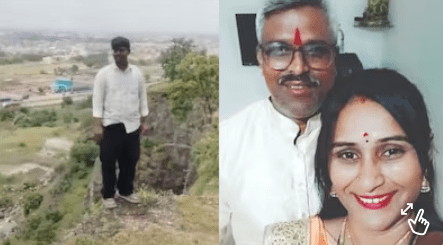
Sangeeta’s maternal family said disputes between the couple, including conflicts over property-related issues, had affected the family
Chandgude family’s relatives have rejected claims that Kunal threatened his parents to jump off the hill over an iPhone
Kunal Chandgude, a 19-year-old boy who fell from a cliff in Chhatrapati Sambhajinagar, wanted his parents to resolve their differences and stay together, the family’s relatives said, suggesting that the iPhone EMI narrative was a “rumour”.
The incident unfolded on August 21 when Kunal reportedly jumped off a cliff on a hill in Waluj. His father, Murlidhar, tried to rescue him and lost his balance before slipping off the cliff. Seconds later, Sangeeta –– who witnessed her husband and son fall –– also died after jumping off the same hill. Their bodies were recovered by the investigators.
Sangeeta’s maternal family said disputes between the couple, including conflicts over property-related issues, had affected the family. They said that Kunal sought to bring his parents together and wanted them to work on their differences, India Today reported.
They described Kunal as a brilliant student who had scored 82 per cent in Class 10. According to them, he wanted to become a doctor.
They also rejected claims that the 19-year-old threatened his parents to jump off the hill as he was seeking their help to pay for the monthly instalments for an Apple iPhone, which he had purchased.
Sangeeta’s sister, Pallavi Patil, said the iPhone narrative is a “rumour”. She suggested those who spread such tales “know nothing”, NDTV reported.
Kunal’s Parents Had A Love Marriage
Murlidhar’s sister, Shobha Rajendra Maske, said the couple had a love marriage about 22 years ago. Upset about the marriage, the man’s family did not attend the wedding. Therefore, Shobha said, relations between Murlidhar and his family remained sour after the marriage, according to India Today.
She also mentioned the reported differences the couple had faced over the years.
How Incident Unfolded
On August 21, Kunal left home around 8 AM for his classes. However, his location was traced to the hill between 10 AM and 10:30 AM, after which villagers reportedly informed the police.
The fire brigade was also called around 11:30 AM. When the team arrived, Kunal was standing near the edge of the hill and kept moving around. Rescue teams placed a safety net below as a precaution and tried to convince him to return.
Meanwhile, his parents also reached the location to persuade their son to return.
During the efforts, Murlidhar approached his son and tried to rescue him by grabbing his hand. The father-son duo then lost their balance fell off the cliff. Sangeeta, who witnessed her husband and son fall off the hill, reportedly jumped off the cliff and died, according to police.
Jaishankar said PM Modi hopes that President Vladimir Putin would attend the Brics Summit in New Delhi on September 12-13
Russian President Vladimir Putin, left, and Indian external affairs minister S Jaishankar shake hands during their meeting at the Senate Palace of the Kremlin in Moscow, Monday, Aug. 24, 2026. (AP/PTI) (Sergei Karpukhin/Pool Sputnik Kr)
Russian President Vladimir Putin on Monday assured India of supplies of energy and fertilisers amid disruptions caused by the West Asia conflict, even as external affairs minister S Jaishankar highlighted the need to address the growing imbalance in two-way trade that has soared to $50 billion.
Putin’s expected meetings with Prime Minister Narendra Modi on the margins of the Shanghai Cooperation Organisation (SCO) Summit in Kyrgyzstan this month and on the sidelines of the Brics Summit in New Delhi in September figured in a meeting between the Russian leader and Jaishankar in Moscow. Jaishankar is in Russia to co-chair a meeting of the Inter-Governmental Commission on Trade, Economic, Scientific, Technological and Cultural Cooperation (IRIGC-TEC).
Putin pointed out that bilateral trade has increased this year, after declining slightly in 2025, and said Russia is increasing fertiliser supplies to India. He noted that any important issues had figured in the IRIGC-TEC meeting and said: “One of these issues is not only energy – it is, of course, the supply of fertilisers…We are doing everything to resolve this issue for Indian farmers, for agriculture. We are increasing these supplies and are ready to do so further.”
The two sides are also making progress on cooperation in nuclear energy and high-tech, Putin said.
Jaishankar said Modi hopes Putin will attend the Brics Summit in New Delhi on September 12-13. “Prime Minister Modi looks forward to meeting you at the SCO Summit and also hopes that you will have the opportunity to come to the Brics Summit and host this annual summit,” Jaishankar was quoted as saying by state-run TASS news agency.
He also handed over a personal message from Modi to Putin. People familiar with the matter said Putin is expected to attend the Brics Summit, along with Chinese President Xi Jinping and Iranian President Masoud Pezeshkian. The summit is expected to focus on global economic and political challenges, and expanding multilateral cooperation among Brics member states.
While co-chairing the IRIGC-TEC meeting with Russia’s first deputy prime minister Denis Manturov, Jaishankar pointed out that a more than four-fold increase in bilateral trade in goods — from $13 billion in 2021-22 to nearly $60 billion in 2025-26 — had been “accompanied by a significant widening of the trade imbalance” from $6.6 billion to more than $50 billion.
“Addressing this imbalance is today one of our foremost priorities. Progress on market access, removal of tariff and non-tariff barriers, strengthening payment mechanisms and stronger business-to-business engagement will be critical for addressing this imbalance and achieving our shared objective of $100 billion in bilateral trade by 2030,” Jaishankar said at the start of the meeting.
Jaishankar made three proposals for the next phase of the India-Russia economic partnership – focusing on implementation and outcomes to prioritise deliverables and solving problems, strengthening engagement with businesses by aligning institutional mechanisms with industry priorities, identifying bottlenecks and improving policy responses, and exploring new possibilities to address the needs of de-risking and diversifying.
The discussions between Jaishankar and Manturov also encompassed cooperation in trade, investments, energy, fertilisers, nuclear energy, connectivity, technology, space and mobility of professionals. The two sides also reviewed the progress in discussions between India and the Eurasian Economic Union on a free trade agreement.
Manturov said Rosatom’s involvement in building the Kudankulam nuclear power plant in Tamil Nadu could be the basis for expanding cooperation in nuclear energy, including the “creation of new power generation facilities in India, including small-scale ones, as well as the localisation of equipment and nuclear fuel production”.
Russia also sees potential for new joint projects in the extraction and processing of non-ferrous and rare earth metals, Manturov said. Russia and India are also discussing cooperation in space exploration, including manned spaceflight, rocket propulsion and satellite navigation, he said.
The prototype of a high-speed electric train jointly produced by India and Russia will be assembled by the end of the year, after which serial production is expected to begin, Manturov announced at the meeting. “Within this framework, the flagship project in transport engineering — the development and production of the Vande Bharat electric trains — is systematically developing,” he said.
In March 2023, a consortium led by Russia’s Transmashholding won a $6.5-billion tender for the development, production and 35-year service of 1,920 Vande Bharat electric train cars.
Manturov also prioritised cooperation in energy security, including the supply of oil, petroleum products and coal, as well as joint investment projects in hydrocarbon production and processing. Russia is currently among the top two suppliers of energy to India.
Mumbai’s taxi and autorickshaw drivers say they are willing to learn Marathi, but claim RTO officials are asking questions beyond their training. As a three-day auto and taxi strike hits the city, commuters are struggling to find rides during peak monsoon season. Drivers are worried that the language test could threaten their livelihoods.
A section of Mumbai’s autorickshaw drivers on Monday began a three-day strike against Maharashtra’s new Marathi language requirement. (Image: Getty Images)
For decades, Mumbai’s iconic kaali-peeli taxis and autorickshaws have given the city its daily rhythm and enabled the superfast pace the city boasts about. Not just during peak office hours, cabs and autorickshaws are also a crucial part of the city’s late-night ecosystem. But since August 21 (Friday), hailing a taxi or autorickshaw and hearing the meter-down sound has become extremely difficult in Mumbai, because officials from the Regional Transport Offices (RTOs) have started checking if the drivers can speak Marathi.
The nakas are everywhere, from south Mumbai to the northern suburbs. Drivers who fail to speak in Marathi are being issued a “memo”, and if they fail again after a month, their registration as cab or autorickshaw drivers could be cancelled for three months, until they can pick up a few basic sentences in Marathi. At least, that’s what the official requirement says.
Basic sentences in Marathi shouldn’t be much of a problem. But drivers allege that the questions they are being asked by the officials are “out of syllabus”.
The checking drive is scheduled to continue until September 30.
A section of autorickshaw drivers in Mumbai began a three-day strike on Monday evening against Maharashtra’s new Marathi language requirement for commercial passenger vehicle drivers.
Mumbai had already been facing a shortage of autos since Friday, when the drive began. Several commuters told India Today Digital that they had to wait 40-50 minutes to find an auto or cab, with many reaching work late.
The language test, the drivers said, has added pressure to an already difficult livelihood.
On Monday, autorickshaw and taxi drivers in the Kandivali suburb staged a road blockade, alleging that the enforcement of the Marathi language rule has led to harassment and threats against drivers who are not proficient in the language.
Cab drivers who spoke to India Today Digital said they are willing to learn Marathi, but claimed that some questions being asked by officials are beyond what they were taught during the government’s training programme.
The requirement applies to taxi and autorickshaw drivers, including those working with app-based cab services such as Ola and Uber. The Maharashtra government amended the Maharashtra Motor Vehicles Rules, 1989, to make working knowledge of Marathi mandatory for commercial passenger vehicle drivers. The enforcement drive began on August 20, after a three-month grace period ended on August 15.
Maharashtra Chief Minister Devendra Fadnavis said on Monday, “We are not trying to make our Hindi-speaking brothers experts in the Marathi language, but they should have working knowledge of the language… The deadline to learn the language has been extended three times now. Our Mahayuti government will not allow injustice based on language.”
DRIVERS SAY RTO OFFICIALS’ QUESTIONS ARE OUTSIDE THEIR TRAINING
Kisun Yadav, a Kandivali-based taxi driver, originally from Patna, told India Today Digital that drivers were prepared to learn Marathi but were struggling with the way the requirement was being implemented.
He said, “Training and certification centres were operating in parts of Mumbai, including Marol Naka, Kanjur Marg, Kurla, Andheri and Goregaon. But the material taught there did not adequately prepare drivers for some of the questions they were facing during RTO checks.”
Yadav said this was particularly difficult for older drivers, many of whom have limited education and depend on driving for their livelihood. He said some drivers were not even literate and had taken up driving because they had few other options to earn a living.
The pressure is also greater for drivers who work on short-term contracts. Yadav told India Today Digital, “Many autorickshaw drivers do not own their vehicles. Instead, they work under contractors who own several autos or cabs and pay drivers a share of their daily earnings.”
For such drivers, Yadav said, “Learning another language while meeting daily income targets is very difficult. Not all of them become cab or auto drivers permanently. They keep moving from driving, labour work, and other jobs, whatever comes their way.”
Yadav also questioned the timing of the government-backed Marathi classes conducted through the Konkan Sahitya Parishad. He said attending classes meant losing working hours, while the sessions were held during periods when drivers could otherwise be earning.
Ashok Tiwari, another cab driver who spoke to India Today Digital, is originally from Ballia in Uttar Pradesh, and has lived in Mumbai since he was five and learnt Marathi in school. But he said his experience cannot be compared with that of lakhs of other drivers who came to Mumbai later in life.
Notably, in Mumbai alone, there are 4.6 lakh auto-rickshaw and taxi licence holders, according to figures cited in The Hindu’s report.
Tiwari said learning a new language can itself be difficult for people with little or no formal education. His main objection, however, was to what he described as questions that were outside the training material provided to drivers.
WHAT IS THE LANGUAGE TEST THAT MUMBAI DRIVERS NEED TO TAKE?
The official test consists of practical questions based on situations drivers encounter every day. These include communicating with passengers about destinations, fares, routes, meters and CNG stops. Expected responses include phrases such as, “Mala CNG bharayche aahe. Thode thambave lagel” (I need to fill up with CNG, we’ll have to stop for a while), and “meter chalu kele aahe” (have started the meter).
The transport department has said the questionnaire is based on the Marathi training provided to drivers by the Konkan Sahitya Parishad. Officials have said the questions are designed around everyday conversations between drivers and passengers.
But the drivers India Today Digital spoke to asked what exactly constitutes “working knowledge” of Marathi?
It must be noted that Marathi is the mother tongue of nearly 36% of Mumbai City’s population, making it the city’s largest linguistic group, according to the 2011 Census. However, at the same time, Uttar Pradesh and Bihar were among the biggest sources of migrants to Mumbai from outside Maharashtra, accounting for nearly 47% of Mumbai’s out-of-state migrant population, according to 2011 census data.
The Census report on the mother tongue of residents in the city has shown that respondents who identify Hindi to be their mother tongue have grown by over 40% from 25.88 lakh to 35.98 lakh in Mumbai. At the same time, the number of respondents who said that Marathi is their mother tongue fell by 2.64% from 45.23 lakh in 2001 to 44.04 lakh.
So, the Marathi language rule comes against this backdrop. Drivers who spoke to India Today Digital said most passengers they encounter understand and converse in Hindi, and that this has been the case in Mumbai for decades.
OVER 1,200 DRIVERS ISSUED NOTICES IN FIRST ROUND
Maharashtra Transport Minister Pratap Sarnaik said on August 21 that 1,268 commercial passenger vehicle drivers had been issued notices after the first day of statewide checking. Of the 8,217 drivers tested until the evening of August 20, 3,995 were tested in the Mumbai Metropolitan Region (MMR).
As of August 20 (Thursday), in the MMR, 604 drivers were found to lack working knowledge of Marathi. On the same day, outside the MMR, 4,222 drivers were tested and 664 were issued notices, according to the press release by Sarnaik.
Drivers receiving notices have one month to acquire the required working knowledge of Marathi. If they fail to comply, their badges can be suspended for three months.
Sarnaik defended the exercise, saying, “Possessing working knowledge of Marathi is not merely a matter of following rules but is also about the convenience and safety of passengers.”
However, cab drivers Kisun Yadav and Ashok Tiwari said that if you go to a busy station like Dadar or Bandra Terminus, or Chhatrapati Shivaji Maharaj Terminus, where trains from everywhere in Maharashtra arrive every few minutes, you’ll barely find any passengers who only speak in Marathi. “If someone from Kolhapur or Solapur or Satara is initiating the conversation in Hindi, why would I respond in Marathi?” asked Yadav.
The minister, however, has also said the government does not want to take away anyone’s livelihood, but wants to protect Marathi and Maharashtra’s identity and culture. He said 1.65 lakh drivers had already undergone Marathi training and received certificates during a 105-day campaign.
The results, however, are visible in the form of strikes and absent cabbies and autorickshaw drivers in India’s financial capital.
But the rule itself is not entirely new. According to Sarnaik, a requirement for practical Marathi knowledge for operating autos and taxis has existed in Maharashtra since 1989, but had not been strictly enforced. The state amended the 1989 rules in 2026 to give the requirement effect.
The enforcement has nevertheless triggered concern among drivers and unions.
Official data says Maharashtra has around 9.65 lakh licensed rickshaw and taxi drivers. The government’s training campaign covered only 1.65 lakh drivers.
DRIVERS FROM UP, BIHAR FEAR CONFRONTATION WITH MNS MEMBERS
For drivers from Uttar Pradesh and Bihar, there is another concern — the fear of confrontation with Raj Thackeray-led Maharashtra Navnirman Sena’s (MNS) activists.
Drivers told India Today Digital that the MNS’s history of confrontations with north Indians in Mumbai makes some of them nervous about the language drive.
The party has a long association with aggressive Marathi identity politics. The MNS won no seat in the 2024 Maharashtra Assembly election and did not contest the 2024 Lok Sabha election, but is aggressive against both north and south Indians when it comes to language politics.
The picture, however, is more complicated than a simple MNS-versus-migrant narrative.
MNS has joined hands with Uddhav Thackeray-led Shiv Sena (UBT). Yet Jan Suraaj leader and newly elected Bankipur MLA Prashant Kishor, who had worked with Uddhav Thackeray’s undivided Shiv Sena, said he had sought an assurance that Hindi-speaking migrants would not be targeted. He also credited the Uddhav-led Sena with ensuring that such violence did not take place during his stint with the party.
For years, Tehseen and Shehzad Poonawalla have sparred over politics. While Tehseen backs the Congress, Shehzad just quit as a BJP member. An official post or not, the two brothers are still finding new ways to take political digs at each other. The latest was Rahul Gandhi blended with sugar and ethanol.
Shehzad Poonawalla (R), who recently quit the BJP, has hit out at elder brother Tehseen over his post targeting the Centre’s sugar policy. (Images: PTI, India Today)
Brothers Tehseen and Shehzad Poonawalla have spent years on opposite sides of India’s political landscape. Their prime-time debates, with Tehseen backing the Congress and Shehzad making a case for the BJP, were a feast for TV news watchers. Though Shehzad recently quit as a BJP national spokesperson and a primary member, he has ensured that it isn’t seen as the end of the brotherly fight between the two.
While Tehseen, the elder sibling, is fighting against the rushed implementation of ethanol-blended petrol (E20) and the sugar policy, Shehzad is highlighting issues faced by the tax-paying middle class.
On Sunday, Shehzad took a swipe at Tehseen over a post targeting the Centre’s ethanol and sugar policy. The exchange has once again put the spotlight on one of the more unusual sibling relationships in Indian politics, between brothers who have long been against each other in political debates on TV, and on social media.
Tehseen claimed he was put under “house arrest” and posted a video of him offering sugarcane juice to Delhi Police personnel who were stationed outside his apartment.
His latest protest came even as India removed duties to import sugar. Diversion of cane for production of ethanol in India, a leading sugar exporter, has been linked to the shortage of sugar in the country.
Taking aim at the government’s sugar policy and the E20 petrol issue, Tehseen wrote on X that the “sugar scam” was making the common citizen pay more for sugar while alleging that vehicle owners were suffering because of ethanol-blended petrol. He also alleged that the system was “making sons of netas become millionaires”.
The next day, Shehzad responded to his brother.
“Dearest Tehseen,” he wrote, before asking, “Is your pal Rahul Gandhi a beneficiary of ‘Beta Badhao’ yojana? Since you made this about netas children.”
He followed it up with another question: “Why so selective?”
Shehzad then questioned Rahul Gandhi’s political credentials and said he was “not fit to even be a booth level leader”, while asking why he was called “Jannayak”.
The exchange is significant not merely because of what was said about Leader of the Opposition Rahul Gandhi, but because of who said it, and to whom.
The Poonawalla brothers have for years been among the most recognisable siblings in India’s political landscape. Their political positions have taken them in polar opposite directions. Before he left the saffron party, Shehzad had become one of the BJP’s most vocal faces on television after leaving the Congress in 2017, while Tehseen has generally been associated with the Congress side of the political spectrum and has frequently criticised the BJP government.
Their differences have not remained confined to political ideology.
In interviews, Tehseen has spoken about the strain their political differences have placed on their personal relationship. He has said that the brothers have not had the kind of conversation one would normally expect between siblings for years.
Asked in an interview about their equation off camera, particularly given that they frequently fought on television debates, Tehseen said there was no “bhai wali baat-cheet (brotherly conversation)” between them. He also spoke about the emotional distance that had developed between the two.
TEHSEEN AND SHEHZAD’S ON CAMERA RELATIONSHIP MANUFACTURED?
Tehseen and Shehzad’s relationship on camera has often fuelled speculation that the rivalry could be manufactured for television or social media. But Tehseen has rejected that suggestion, saying that if the disagreements were merely a political or television arrangement, the relationship would not have reached the point where the brothers stopped speaking to each other.
The latest exchange comes at an interesting moment in Shehzad’s political journey.
Shehzad, a lawyer by training, began his political career with the Congress but broke with the party in 2017, strongly opposing the elevation of Rahul Gandhi as Congress president and criticising what he described as “dynastic politics”. He then joined the BJP and became one of its most prominent national spokespersons, particularly on television debates and social media.
But that political chapter has now formally ended.
Shehzad resigned from the BJP in August, citing “pressing personal and financial circumstances” and saying that he planned to move to the private sector. He had first submitted his resignation on July 30, but the party had asked him to reconsider. He later reiterated his decision and sought to be relieved of his organisational responsibilities and primary membership.
Shehzad made it clear that leaving the BJP does not mean abandoning his political beliefs. In his resignation letter, he said he was leaving the party’s “vyavastha”, but not the “vyakti” or “vichar”, and expressed his continued support for Prime Minister Narendra Modi and the BJP’s larger ideological vision.
As an activist, Shehzad is championing tax relief and greater accountability for India’s salaried middle class. He argues that taxpayers are not getting adequate public services in return for the taxes, tolls and other levies they pay, and is calling for lower or even zero personal income tax for salaried middle-class Indians until public infrastructure and civic services improve.
US Ambassador Sergio Gor said India had asked to avoid questions during PM Modi’s June 17 meeting with Donald Trump in France, but Trump invited reporters anyway, turning it into a 45-minute press interaction.
Prime Minister Narendra Modi with US President Donald Trump and US Ambassador to India, Sergio Gor during G7 Summit in France.
India had specifically asked the US to avoid questions at the press conference after Prime Minister Narendra Modi’s meeting with President Donald Trump on the sidelines of the G7 summit in France, US Ambassador to India Sergio Gor has claimed. Trump initially agreed, but then appeared to forget the request and invited questions, turning the interaction into a 45-minute presser with PM Modi sitting beside him, Gor said at the Economic Times World Leaders Forum on Saturday.
The PM Modi-Trump meeting took place on June 17 on the sidelines of the G7 summit in Evian-les-Bains in France.
“We were behind the scenes, behind the stage, and at one point it was just the president and I, and he asked me, he goes, what the Indians are going to raise. We went over some topics,” Gor said, recalling his conversation with Trump before the meeting.
“And he said, do they have any asks? And the MEA had one ask. He said, and it was, let’s bring in the media, but let’s not do a full press conference,” the ambassador added.
Gor said he conveyed India’s preference directly to Trump.
“I told the president, I said, the Indians prefer no questions. He said, sure, no problem,” Gor recalled.
The meeting subsequently began with journalists and cameras present. Gor said there were around 50 cameras in the room as Modi and Trump sat across from each other and delivered their opening remarks.
“So the meeting starts, the press comes in, there must have been 50 cameras, the president is sitting here, the prime minister is sitting there, they both speak for a few minutes,” he said.
But immediately after the opening remarks, Trump turned towards the cameras and asked reporters, “Any questions?”
Gor said the question effectively opened up the interaction.
“And that opened everything up,” the ambassador said, adding that what followed was “a 45-minute press conference” in which “everything was on the table”.
The government has not officially responded to Gor’s comments regarding New Delhi’s no-question request.
PM Modi’s meeting with Trump on June 17 on the sidelines of the G7 summit in eastern France came days after three Indian mariners were killed in an attack by the US Navy on a commercial vessel in the Strait of Hormuz. The safety of Indian seafarers operating in the conflict zone was among the issues raised by Modi during the interaction.
“Many Indian seafarers in the Strait of Hormuz, their safety is of the utmost importance,” the PM told Trump during the meeting. Trump, however, played down the risks associated with seafaring, describing it as a “rough profession”.
India rushed the E20 mandate and built a huge ethanol set-up with ready loans. Now, it is diverting rice bought with taxpayers’ money to ethanol distilleries at a 40% less price. Despite that, ethanol remains costlier than petrol. The questions here. Who’s subsiding whom, and who is really gaining?
Rice is a staple food for about 60-65% of India’s population. A farmer shows rice in a grain market in Punjab’s Amritsar. (Image for representation: PTI)
Irony is one among the several layers of India’s ethanol-blending programme. The government’s attempt at energy security is latched on to its food security system with parasitic hooks. Paddy, that the government buys on a minimum support price (MSP) with taxpayers’ money to distribute among the poor, is being sold to distillers at half the cost.
It is a bewildering case where the finished product — rice, after transporting, milling and stocking — is being sold at even lower than the procurement price of the source product — paddy.
We are going to tell you how that is being done and why we are talking about the national food security programme here. We are also going to tell you why the government is doing so.
The government says the national Ethanol Blended Petrol (EBP) programme will help reduce petroleum imports and save India’s foreign reserves. That should make sense because India imports around 90% of its energy needs. There’s just one small problem: the current economics don’t support the plan.
This economics is the primary reason why the government is supplying “surplus” rice from the Food Corporation of India (FCI) godowns to distillers producing ethanol.
The Ministry of Petroleum and Natural Gas in a statement on July 31 clarified that the EBP programme didn’t compromise India’s food security programme. However, it sidestepped crucial questions, the main being: why was rice, bought under India’s food security programme using taxpayers’ money, being given to distillers at a subsidised rate?
“In a country where 80 crore people depend on free rations, the diversion of any item that can be used as food to produce ethanol is a big sacrifice. Food cannot be an alternative energy source in a country like India,” agriculture expert and Lucknow University professor Sudhir Panwar told India Today Digital.
INDIA’S ETHANOL PROGRAMME AND CEA NAGESWARAN’S WORD OF CAUTION
While the need to cut petroleum imports is understandable, the rush to do so with ethanol-blended petrol isn’t.
The government has mandated the sale of E20 petrol, which is a mix of 20% ethanol in a litre of petrol. While the deadline was set for 2030, the capacity to produce enough ethanol for blending with petrol was achieved by 2025, five years ahead of schedule.
That was even as 80% of the vehicles on the road were not E20 compatible.
In an Op-Ed article published in The Indian Express on August 17, India’s Chief Economic Advisor (CEA) V Anantha Nageswaran argued that E10 petrol should be made available for older vehicles.
Nageswaran’s piece, co-authored with Department of Economic Affairs consultant Akash Poojari, also suggests that India shouldn’t move beyond the E20 until India has “thoroughly costed the food-versus-fuel trade-off”.
The government was moving towards E25 and higher ethanol blends, and paused only after public backlash. CEA Nageswaran is cautioning against rushing towards higher blends because some moves around agriculture pattern and distillery capacity might be difficult to undo.
One of the reasons the government is under pressure on the EBP programme is that it has already installed hundreds of factories to produce ethanol.
Investments were made, and big bank loans were taken out to build these plants. The repayments clock is ticking and investors and bankers might find the wait for a gradual move to higher ethanol blends difficult.
HOW DID INDIA GET 700 CRORE LITRES OF ETHANOL SURPLUS CAPACITY?
India’s ethanol production capacity expanded from about 421 crore litres in 2014 to nearly 2,000 crore litres by 2026. The spirited dash has made India sit on a notional surplus capacity of 700 crore litres of ethanol. That means, it can produce more than it can use.
There are 370 operational distilleries while 40 others are coming up, shows data shared by the All India Distillers’ Association (AIDA) with India Today Digital.
Now, ethanol is a biofuel, which means there is a farm component to it. While the scope of expansion of factories is virtually limitless, a steady supply of feedstock, which is agriculture dependent, and therefore not unlimited, has to be maintained. The input price of the feedstock has to be factored in too.
WHAT FEEDSTOCK ARE INDIA’S ETHANOL FACTORIES BEING RUN ON?
While molasses and rotten rice were earlier used to make ethanol, the feedstock has now changed to include millets (corn) and even rice.
Going by the current trend, grain-based ethanol is 67% of the total supply while the rest is from sugarcane-based feedstock. This shows “the strategic role of grain in sustaining India’s ethanol blending programme,” said AIDA.
AIDA president Vijendra Singh told India Today Digital that the government has mandated ethanol distillers to source at least 40% of their feedstock from surplus rice stocks held by the FCI.
Singh said distillers independently procure feedstock such as maize (corn) and sugarcane, while the government supplies broken rice.
“The FCI has a huge rice surplus, including broken rice that is not fit for human consumption, lying in its warehouses. The government has limited avenues for disposing of it, and that is why it has mandated that 40% of ethanol production must come from surplus FCI rice,” AIDA’s Singh told India Today Digital.
But experts say broken rice is perfectly fine for consumption. Also remember, the broken rice being provided to the distillers had been procured by the government through the FCI as part of India’s National Food Security And Nutrition Mission.
WHAT’S INDIA’S NATIONAL FOOD SECURITY AND NUTRITION MISSION?
India’s historical memory is scarred by famines in which millions of people have been killed. An Independent India inherited food scarcity and used to live from aid ship to mouth. Contaminated wheat, especially from the US, was the hallmark of the largesse of the West.
In the 1960s, India launched the Green Revolution under scientist MS Swaminathan. The increase in grain production, particularly in Punjab, Haryana and Uttar Pradesh, turned India into a food-surplus nation. Cultivation of paddy and wheat, the staples, was encouraged as India built a buffer stockpile in FCI godowns.
India launched the National Food Security Mission (NFSM) in 2007-08 to increase the production of rice, wheat, and pulses. The NFSM was rebranded National Food Security and Nutrition Mission (NFSNM) in 2014-15.
The Manmohan Singh government in September 2013, brought the National Food Security Act (NFSA), a landmark law that was aimed at ensuring food and nutritional security for all in India.
While the government tries to boost foodgrain production under NFSNM, it guarantees their equitable distribution under the NFSA.
So, India’s food security programme has two dimensions — procurement and distribution. Foodgrain, especially paddy and wheat, is purchased under the minimum support price (MSP) system from farmers and distributed through fair price or ration shops.
Around 800 million people in India get free food grains. Every month, 5 kg of grain, of which two-thirds is rice, is given to people below the poverty line.
HOW GOVERNMENT SUBSIDISED RICE FOR ETHANOL PRODUCERS
In just one year, (Kharif Marketing Season 2024-25), the government spent Rs 65,695 crore on paddy procurement.
The government supplied that paddy, bought using taxpayer’s money, to ethanol distillers at around 40% lower than its acquisition price. This was revealed in an answer by the Ministry of Consumer Affairs and Food and Public Distribution Department in the Rajya Sabha on July 28.
The FCI spent Rs 3,889 per quintal (Rs 38.89/kg) on paddy procurement in 2025-26. The cost includes storage, transport and carrying charges. Estimates by experts like Ashok Gulati put that at a higher Rs 44 per kg.
However, the rice was sold at Rs 2,320 per quintal (Rs 23.20/kg) on an average to distilleries for the production of ethanol. This is a difference of almost Rs 1,600 per quintal or Rs 16 per kg.
The government’s justification is that the rice is broken or damaged, and unfit for consumption.
BROKEN RICE FIT FOR CONSUMPTION, BEING DIVERTED, SAYS EXPERT
Agriculture expert Sudhir Panwar said rice being broken doesn’t make it unfit for consumption. “The nutrient composition of broken rice remains the same. It is just that the aesthetic changes,” he explained.
“Broken rice formed a bigger part of the public distribution system. No food went to waste. Whatever broken rice was left, used to be given to African countries as humanitarian aid,” he added.
Panwar says the share of foodgrains in the production of ethanol in India is increasing rapidly every year, and needs to be weighed against the trade-offs like water use and farmland dedication.
The broken rice logic is most likely being used to make the broken ethanol-blending model limp.
OIL COMPANIES PAYING MORE FOR ETHANOL THAN FOR CRUDE?
At Rs 60.32 a litre, ethanol made from surplus FCI rice is the cheapest, data from the Ministry of Petroleum and Natural Gas reveals. Ethanol from corn costs Rs 71.86 a litre while it is Rs 65.61 if produced from sugarcane.
The weighted average ex-mill price of ethanol stood at Rs 66.61 per litre, according to a reply in the Lok Sabha by the government on July 30.
Weigh this against the cost of petroleum imports at around Rs 48 a litre with crude at $91 a barrel. Add the processing cost of Rs 7 to Rs 9, and the total comes to around Rs 55.
Blending ethanol to petrol will turn “genuinely advantageous only when crude climbs into the $120-130 [per barrel] range or higher,” KBS Sidhu, former Special Chief Secretary of Punjab, told Financial Express Digital.
Prices of Brent Crude hit $113 a barrel on April 7, at the peak of the Iran-US war, and was at $86 on August 21. The $120-a-barrel scenario is highly unlikely now.
So, oil marketing companies (OMCs) are adding costlier ethanol to cheaper petrol. If FCI rice isn’t provided, the contrast will become starker.
Bihar has set up a five-member expert committee to review and reform its examination system. The panel will study security, technology use, timelines and safeguards against malpractice before submitting recommendations in three months.
Bihar government sets up 5-member panel for sweeping exam reforms (File Photo: PTI)
The Bihar government has constituted a five-member expert committee to recommend sweeping reforms in examinations conducted by state boards, commissions, universities and recruitment agencies, with a focus on making the system more secure, transparent, fair, technology-driven and time-bound.
The General Administration Department on Sunday issued a notification for the formation of the committee. It will examine the entire examination process – from registration and question paper preparation to the conduct of exams, evaluation, declaration of results, grievance redressal and record keeping – and suggest measures to plug loopholes and prevent malpractices.
The five-member panel will be headed by a retired Supreme Court judge, a serving High Court judge or a retired High Court judge. The state government will approach the Supreme Court or the concerned High Court for nomination of the chairperson, if required. The names of the other members have not been specified in the notification.
PANEL TO REVIEW ENTIRE EXAMINATION PROCESS
The committee will examine measures to prevent:
Question paper leaks and unauthorised access to exam material
Impersonation, cheating and malpractice at examination centres
Tampering with answer sheets
Manipulation of examination results
Security breaches involving examination data
It will also review question paper-setting procedures, including multi-level setting, moderation, appointment of trained and empanelled paper setters and standardisation of difficulty levels.
Another key area will be the security of question papers and other examination material. The panel will examine their preparation, storage, transportation, distribution, digital transmission and access control, along with the collection, transportation, secure storage, scanning and evaluation of answer sheets.
The committee will also recommend a clear chain-of-custody mechanism to track question papers and answer sheets at every stage of the examination process.
DIGITAL TECHNOLOGY, AI AND CYBERSECURITY IN FOCUS
The government has asked the committee to examine the use of digital technology, data analytics, artificial intelligence and cybersecurity tools to strengthen the examination system.
The panel will consider measures such as:
End-to-end digital tracking of examination material
Tamper-proof packaging and encrypted transmission
Multi-factor authentication and biometric verification
Geo-tagging and geo-fencing
CCTV surveillance and stronger candidate identification systems
Cybersecurity audits and secure command centres
The committee will review existing laws, rules, regulations and examination guidelines concerning confidentiality, malpractice, data protection and cybersecurity and suggest amendments wherever necessary.
STATE-LEVEL EXAM CALENDAR TO CHECK DELAYS
The panel will examine delays in conducting examinations and declaring results and may recommend a state-level examination calendar with fixed timelines.
The proposed calendar could set deadlines for advertisements, applications, admit cards, examinations, provisional answer keys, objections, final answer keys, evaluation and declaration of results.
The reforms will cover:
Secondary and higher secondary examinations
University examinations
Professional and technical examinations
Entrance and eligibility tests
Recruitment and competitive examinations
The government has stressed that reforms should not create difficulties for students from rural areas, economically weaker sections, socially disadvantaged groups or those with limited access to digital technology.
Jharkhand police have filed fresh FIRs after violent clashes with protesting job aspirants in Giridih and Hazaribag. The cases have intensified the row over recruitment exam irregularities and the state’s handling of student anger.
Student descended onto the streets of Jharkhand to protest.
Three FIRs have been registered against 39 named people and more than 900 unidentified people following clashes during protests by job aspirants in Jharkhand’s Giridih and Hazaribag, officials said on Sunday.
The protests over alleged irregularities in recruitment examinations turned violent when demonstrators attempted to burn effigies of Chief Minister Hemant Soren.
The cases come a day after Ranchi police registered three FIRs against 14 named and 200 unidentified people for allegedly obstructing government work and clashing with police.
FIR AGAINST 718 IN HAZARIBAG
In Hazaribag, Korra police registered an FIR against 18 named people and 700 unidentified people over violence during an attempt to burn Soren’s effigy on August 21.
Hazaribag Sadar DSP Rupak Kumar Singh said the case was registered based on a complaint by Sadar Circle Officer Ashutosh Kumar.
Eight police personnel were injured in the clash, Korra police station officer-in-charge Nemdhari Rajak said. They included four sub-inspectors serving as officers-in-charge of the Korra, Lohsinghna, Sadar and Bada Bazar police stations.
The accused have been booked under provisions of the Bharatiya Nyaya Sanhita relating to assault on police personnel, obstruction of public servants and unlawful assembly.
No arrests or detentions have been made so far. Police are examining CCTV recordings and other video footage to identify those involved.
TWO CASES FILED IN GIRIDIH
Two FIRs were registered at Giridih Town police station over clashes on Friday and Saturday.
Thousands of students had gathered at Gandhi Maidan on Friday to burn an effigy of the Chief Minister as part of their protest against alleged irregularities in recruitment examinations. A scuffle broke out when police attempted to intervene.
The first FIR was registered on a complaint by ABVP activist Anish Rai against JMM leaders and workers. Eleven people, including JMM district president Sanjay Singh, were named, while 20 others remained unidentified.
The second case was registered on a complaint by Sadar Circle Inspector Manoj Kumar Singh. Around 10 people were named and 200 others unidentified.
Police accused them of attempting to block traffic at five locations, clashing with personnel while trying to burn the Chief Minister’s effigy and using abusive language against him.
PROTESTERS ALLEGE HARASSMENT
The JPSC-JSSC Reforms Manch accused the state government of targeting its members through multiple FIRs.
Manch leader Piyush Kumar Singh said he, Kunal Prata Singh and Ravindra Prasad had been named in cases registered in both Ranchi and Hazaribag.
“How can we be present at both places simultaneously?” Singh asked.
Jharkhand Leader of the Opposition Babulal Marandi demanded the withdrawal of cases against the students.
“If the government does not withdraw the FIRs, the youth should not be afraid of jail. Fill up the jails,” Marandi said.
Former JNU Students’ Union president and SFI national joint secretary Aishe Ghosh also criticised the police action.
“The students have legitimate demands, and the government should listen to them. There is always room for dialogue. FIRs and intimidation against the student community should not happen,” Ghosh said during an SFI-led march.
Manish Sisodia said the Youth Run Punjab 2026 reflected the state’s push against drugs. The turnout was projected as a sign of youth turning towards sport, fitness and education.
AAP leader Manish Sisodia. (Source: ITG)
AAP Punjab in-charge Manish Sisodia on Sunday said the Youth Run Punjab 2026 held here under the government’s ‘Yudh Nashean Virudh’ campaign by the party’s youth wing showed how the state is moving forward by “leaving behind drugs”.
Thousands of youngsters and sportspersons participated in the 5-kilometre run, which was flagged off by Sisodia and Bhagwant Mann’s OSD Rajbir Singh Ghumman, a statement released here said.
They later distributed cash prizes of up to Rs 11,000 to the winners.
Addressing the gathering, Sisodia said the event was much more than a race covering a few kilometres. “This marathon is the voice of a Punjab that is moving forward by leaving behind drugs, despair and the mindset of giving up,” he said.
The party statement said under Mann’s leadership, Punjab is leaving behind its old ‘Udta Punjab’ image and emerging as a ‘Khelta-Daudta Punjab’ on the strength of its youth.
Sisodia said Punjab’s youth are increasingly choosing sports, fitness and constructive pursuits, adding that the participation of thousands of young people demonstrates their energy, enthusiasm and determination to move in the right direction.
“Those who once described Punjab as ‘Udta Punjab’ are now seeing a Punjab that runs, plays and moves forward,” the former Delhi minister said, congratulating the AAP Youth Wing and all the participants.
Ajit Doval is expected to meet his counterpart for the Special Representatives mechanism, Chinese foreign minister Wang Yi on Tuesday.
National security adviser Ajit Doval is expected to visit China on Monday for a meeting of the Special Representatives on the boundary issue, which is part of efforts by the two sides to normalise ties. (ANI)
National security adviser Ajit Doval is expected to visit China on Monday for a meeting of the Special Representatives on the boundary issue, which is part of efforts by the two sides to normalise ties, people familiar with the matter said on Sunday.
Doval is expected to meet his counterpart for the Special Representatives mechanism, Chinese foreign minister Wang Yi, on Tuesday, the people said on condition of anonymity. This will be the 25th round of talks under the mechanism, established in 2003 to work out a framework for resolving the dispute over the 3,488-km border.
Doval’s visit assumes greater significance as it comes ahead of Chinese President Xi Jinping’s expected trip to India next month to participate in the BRICS Summit in New Delhi. Though both sides have not made an official announcement in this regard, Xi is expected to join the summit to be held during September 12-13, the people said.
This will be Xi’s first visit to India in seven years. Prime Minister Narendra Modi and Xi last met in August 2025 on the margins of the Shanghai Cooperation Organisation Summit in China.
Talks against recent Arunachal Pradesh standoff
The talks between the Special Representatives is being held against the backdrop of a recent standoff between Indian and Chinese troops in the Arunachal Pradesh sector of the Line of Actual Control (LAC). External affairs minister S Jaishankar reiterated at a media conclave on Saturday that the state of the border will determine the course of the overall India-China relationship.
“I think we went through a particularly bad patch between the summer of 2020 and the autumn of 2024, and that was primarily an outcome of the situation in the border areas,” Jaishankar said, referring to a military face-off in the Ladakh sector of the LAC that lasted more than four years and took bilateral ties to a six-decade low.
After the two sides reached an understanding on ending the face-off in Ladakh in October 2024, Xi and Modi met in Russia and agreed on measures to normalise ties and address the border dispute. Though the two sides have taken steps such as reviving the Kailash Mansarovar Yatra, resuming direct flights and easing visa restrictions for Chinese nationals, there has been no forward movement on de-escalation on the LAC.
Last round of Special Representatives’ talk
At the last round of Special Representatives’ talks in New Delhi a year ago, the two sides reiterated the “importance of maintaining peace and tranquillity” on the border to promote the overall development of ties.
According to an Indian readout issued at the time, the Special Representatives agreed on the need for a “political perspective” while working on a fair, reasonable and mutually acceptable framework for settling the boundary question in line with the Agreement on Political Parameters and Guiding Principles for Settlement of the India-China Boundary Question of 2005.
They also agreed to set up an expert group under the Working Mechanism for Consultation and Coordination (WMCC) on India-China Border Affairs to “explore early harvest in boundary delimitation”, and a working group under the WMCC to advance effective border management.
PM Modi urged private space firms to build an ecosystem that attracts global talent and investment, as India targets a larger share in the space economy
Prime Minister Narendra Modi interacts with start-up executives during a meeting focused on India’s space sector ( x/@NarendraModi)
Prime Minister Narendra Modi has said that India can emerge as a global leader in the space sector, calling on private players to build an ecosystem capable of attracting global talent and investment while reaffirming government’s commitment to innovation.
Modi calls for global talent, investment in India’s space ecosystem
In an interaction with CEOs and founders of 20 private space firms, Modi said India could become a global hub for space start-ups as he highlighted the country’s cost-competitiveness in launching space ventures and its vast domestic talent pool.
“We must create such an aura that people all over the world feel that if they want to build their life, they should come to Hindustan. Join some Indian start-up. Join some Indian space agency,” he said during the interaction that was held on Friday with details released on Sunday. August 23 is marked as National Space Day to commemorate the Chandrayaan-3 mission, which accomplished a safe and soft landing of the Vikram Lander on the lunar surface.
Private space sector expands as India opens up industry participation
India opened its space sector to private participation in 2020, enabling industry and start-up participation across satellites, launch systems and space applications. This not only marked a major shift towards a broader national space ecosystem but also led to an expansion of the sector, with a government release from August 14 saying that the number of private startups in the country rose from one in 2014 to 440 at present. The Indian Space Policy 2023 further expanded participation across the space value chain.
In his opening remarks, Modi told the entrepreneurs that they trusted the government’s assurance and displayed courage by venturing into a new field. “My view has always been that whatever decisions we take, we must remain consistent in them… so that anyone who wants to take a risk can have confidence… And this was our effort –– to create that trust,” he said.
Private investment in space sector rises nearly six-fold
The global space industry is estimated to be $600 billion and the government, in the release quoted above, said that India currently has a $9 billion share, which is targeted to grow to $40-45 billion over the next decade. According to figures released by the government, private investment in India’s space sector surged nearly six-fold, climbing from $100.5 million in 2021–22 to $618.5 million by March 31, 2026, with $187 million recorded just this year.
“In cost we are very competitive, in talent there is no question at all, and the risk-taking capacity of our people is anyway greater. And because of that we can very quickly make our place,” Modi said.
The apprehended three people were believed to have links with the Babbar Khalsa International (BKI), a Khalistani separatist terrorist organisation.
Security personnel cordon off Sector 43 ISBT area after the recovery of alleged ‘tiffin box bomb, in Chandigarh. (PTI)
Police on Sunday apprehended three people, believed to have links with the Babbar Khalsa International (BKI), with a suspected improvised explosive device (IED), explosive materials and a firearm near the inter-state bus terminus in Chandigarh’s Sector 43.
According to the police, the material was found concealed inside a tiffin box bag, alongside a firearm, according to people aware of the matter.
The men nabbed on Sunday have been identified as Lovepreet Singh, 19, of Tarn Taran’s Sarhali village, Jashanpreet Singh, 21, of Tarn Taran’s Deobath village, and Prabhpreet Singh alias Prabh, 19, of Amritsar’s Tarsikka village, police said.
The recoveries included 5 kg of gelatin stick explosives, a detonator, a power source and remotely operated system – all used in preparing explosive devices – besides a pistol, a magazine and five live cartridges, police said.
Following the recovery, an FIR was registered at Sector 36 police station under relevant provisions of the Explosives Act and Arms Act. “The police recovered suspicious items from behind the Sector-43 bus stand in Chandigarh. Chandigarh Police have arrested three individuals in connection with the case,” said the UT police in a statement.
Two MLAs, Anil Jha and Abhay Patil, were among six people injured after a Swift hit a divider and collided with an Innova near Delhi’s ITO.
Two vehicles were damaged after a Swift car crossed a divider and collided with an Innova near Delhi’s ITO. (Video screengrabs)
Two MLAs were among six people who sustained minor injuries after two vehicles collided near the PWD office at Delhi’s ITO on the night of August 22, police said. The accident occurred at nearly 9.30 pm when a Swift car travelling from Laxmi Nagar towards ITO hit a road divider, crossed the railing and crashed into an Innova coming from the opposite direction.
The injured included Anil Jha, the sitting MLA from Delhi’s Kirari Vidhan Sabha, and Abhay Patil, an MLA from Karnataka.
According to the police, those involved in the accident suffered minor injuries and were shifted to Lok Nayak Jai Prakash (LNJP) Hospital.
They were reported to be in stable condition.
Swift Car Crosses Divider, Hits Innova
According to the Delhi Police, a PCR call regarding the road accident was received at IP Estate police station at around 9.30 pm.
A police team subsequently reached the spot and found the two damaged vehicles involved in the collision.
Police said the Swift was being driven by 32-year-old Ashutosh Pandey, who was travelling with his wife and two minor children from Laxmi Nagar towards ITO.
“Near the PWD Office, the Swift car hit the divider and, after crossing the railing, collided with the Innova coming from ITO towards Laxmi Nagar,” the Delhi Police said.
The Innova was carrying Jha and Patil at the time of the collision. The accident took place near the PWD office, in the vicinity of the old Police Headquarters.
Visuals from the accident site showed extensive damage to the front portion of the Innova following the head-on collision. The crash also disrupted the movement of vehicles on the road.
VIDEO | Delhi: Police Crime Branch and Forensic Science Laboratory teams reached the IP Estate police station to examine the two vehicles damaged in the accident involving MLAs Anil Jha and Abhay Patil.
Protesters advocated for reforms, emphasising economic criteria for eligibility and expressing the need for assistance to reach economically disadvantaged individuals from all backgrounds.
They called for the implementation of a creamy-layer criterion and a reassessment of the reservation framework. (Image: FILE)
Around 300 people gathered at Delhi’s Connaught Place on Sunday to protest against caste-based reservation and demand reforms to the quota system, with police detaining more than 20 protesters from the site. The demonstrators called for greater emphasis on economic criteria for reservation and government support, arguing that benefits should reach economically disadvantaged people irrespective of caste.
Police maintained a presence at Connaught Place as the gathering was cleared from the protest site. Over 20 people were detained and removed as no permission had been granted for the demonstration.
A key demand raised during the demonstration was the introduction of a creamy-layer criterion and a review of the existing reservation framework. Protesters also sought changes in policies concerning Scheduled Castes, Scheduled Tribes, and Other Backward Classes.
“We are not against reservation. We want reforms in reservation. The government should understand that poor people from all communities also face difficulties and their concerns should be heard,” a protester told PTI.
Another participant said the existing system should be examined to ensure that its benefits reach those who genuinely need support.
The protesters also raised concerns over the University Grants Commission framework and the Scheduled Castes and Scheduled Tribes (Prevention of Atrocities) Act, seeking a broader review of policies they said affected opportunities in education and employment.
Delhi Police Says No Permission for Protest at Jantar Mantar
The Delhi Police on Sunday said no permission has been granted to any individual or organisation to hold a protest or gathering at Jantar Mantar over reservation reforms.
Police warned people against assembling there based on “misleading” social media posts. This comes after several videos and posts surfaced on social media calling upon people to gather in Delhi.
Various Videos/posts are being circulated calling upon people to gather/assemble on the issue of reservation reforms for the protest at Jantar Mantar on 23 August.
It is clarified that no permission has been granted to any individual or organisation for holding any…
The landlord allegedly saw Vimla putting Rajesh’s intestines, which had come out of his body, into a bag. On seeing the landlord, the woman reportedly panicked and jumped from the terrace.
In a shocking case of murder in Haryana’s Kurukshetra, a woman killed her husband, took his guts out, and then in a moment of panic jumped off the terrace of their rented accommodation.
The victim Rajesh and his wife Vimla Devi were living near Raj Palace on Pehowa Road in Kurukshetra in a rented house. On the day of the crime, their landlord, Rinku, claimed that he heard the couple shouting at around 5 pm.
Hearing the commotion, he rushed to the terrace. What he saw next was no less than a scene from a crime movie.
Rajesh was lying in a pool of blood with severe injuries to his abdomen. The landlord allegedly saw Vimla putting Rajesh’s intestines, which had come out of his body, into a bag. On seeing the landlord, the woman reportedly panicked and jumped from the terrace.
The accused was injured in the fall and was admitted to the hospital, where she is undergoing treatment. Police are attempting to record his statement.
According to officials, Rajesh, a native of Dhampur village in Uttar Pradesh’s Sitapur district, was living with his wife in Kurukshetra for about a year. He worked in the supply department for a water trading company on Pehowa Road.
The post-mortem examination revealed the extent of the injuries. According to the findings, Rajesh’s abdomen had been cut open to around 35 centimetres, with deep wounds caused by sharp-edged weapons. His intestines had reportedly come out of the abdominal cavity.
The post-mortem also found that a substantial portion of his liver and the right kidney were missing. Police are investigating the circumstances surrounding these injuries and the missing organs.
Three knives of different sizes were recovered from the crime scene. Station House officer Surinder Singh and his Police teams reached the spot after receiving information about the incident. The scene was examined and forensic evidence was collected.
Doctors, nurses and other hospital staff rushed to the ward after the fire broke out and began evacuating the babies. Medical equipment was disconnected and the infants were moved out of the affected area
Three newborn babies died after a fire broke out at a government hospital in Maharashtra’s Amravati in the early hours of Monday, prompting an emergency evacuation of dozens of infants undergoing treatment.
The fire reportedly erupted around 3:30 am after a ventilator exploded on the third floor. At the time of the incident, 39 newborns were admitted to the Special Newborn Care Unit (SNCU) of the Amravati District Women’s Hospital.
#BREAKING | 3 Newborns Die After Ventilator Blast Triggers Fire At Maharashtra Hospital
Congress leader Atul Londhe Patil (@atullondhe) and NCP (SP) spokesperson Clyde Crasto (@Clyde_Crasto) speak to NDTV’s @divyawadhwa on Amravati ventilator blast
The three infants died after suffering severe burns and smoke inhalation.
Amravati Police Commissioner Rakesh Ola told news agency PTI that the SNCU has three compartments – one each for inborn and outborn babies, and one for step-down care for children ready to be discharged. He further said that 39 infants were admitted across the three sections.
Staff Evacuate Newborns
Doctors, nurses and other hospital staff rushed to the ward after the fire broke out and began evacuating the babies. Medical equipment was disconnected and the infants were moved out of the affected area as the rescue operation got underway.
Six critically affected newborns were shifted to a nearby Super Speciality Hospital for treatment.
Senior police officials, including the Deputy Commissioner of Police (DCP), reached the site shortly after the incident to assess the situation and initiate a probe. Local authorities have announced a formal high-level inquiry to fix accountability for the administrative lapses that led to this tragedy, news agency IANS reported.
Expressing grief over the loss, the Amravati District Guardian Minister and Revenue Minister Chandrashekar Bawankule offered heartfelt condolences to the grieving families and pledged full government support during this crisis.
“I am deeply saddened by today’s tragic incident in Amravati. My heart goes out to the affected families,” Bawankule said. “I pay my solemn tributes to the departed newborns and pray that God gives their parents the strength to bear this irreparable loss.”
अमरावतीमधील आजच्या दुर्घटनेमुळे मी खूप दुःखी झालो. माझे मन हेलावून गेले आहे.
दगावलेल्या नवजात बालकांना अतिशय व्यथित अंतःकरणाने श्रद्धांजली व्यक्त करतो. त्यांच्या पालकांना हे दुःख सहन करण्याची ताकद ईश्वर देवो, अशी प्रार्थना करतो.
या घटनेच्या संपूर्ण चौकशीचे आदेश मी दिले आहेत. जे…
NCP (SP) MP Supriya Sule termed the fire at Maharashtra hospital that killed three newborns “extremely heartbreaking” and demanded a thorough probe into the incident, alleging that it pointed to serious lapses in the system.
अमरावती जिल्हा स्त्री रुग्णालयात NICU विभागातील व्हेंटिलेटरमध्ये स्फोट झाल्याने लागलेल्या आगीत ३ नवजात अर्भके मृत्युमुखी पडली तर आणखी काही गंभीर आहेत. हि अतिशय हृदयद्रावक घटना आहे. आई-वडील आपल्या बाळाची आतुरतेने वाट पाहत असतात पण त्याच बालकाला अशा पद्धतीने गमावावे लागले तर…
“The entire incident must be thoroughly investigated, and strictest action should be taken against those responsible. There is also an urgent need to conduct fire audits and safety audits of medical equipment in all government and private hospitals across Maharashtra,” she said on X.
Former minister and Congress leader Advocate Yashomati Thakur called the fire at Amravati District Women’s Hospital that claimed three newborns’ lives as “very shocking” and alleged lapses in the hospital’s firefighting system may have allowed the fire to spread.
The sprawling Markaz Subhanallah complex, badly damaged in India’s precision strikes during Operation Sindoor last year, has now been extensively rebuilt.
Exclusive visuals and intelligence inputs accessed by NDTV point to a striking revival of the Pakistan sponsored terror group Jaish-e-Mohammed headquarters in Bahawalpur, raising fresh questions over Islamabad’s continued protection and patronage of a terror organisation designated by the United Nations and the United States.
The sprawling Markaz Subhanallah complex, badly damaged in India’s precision strikes during Operation Sindoor last year, has now been extensively rebuilt. What was left scarred by missile impacts has been transformed with new construction, plaster, paint and polished marble, according to visuals accessed exclusively by NDTV.
The reconstruction appears to have erased much of the physical evidence of the damage inflicted during the operation. Sections of the central hall that had suffered deep impact damage have been repaired, with craters filled and structural portions restored. The facility, once visibly battered, now appears ready to resume its role as a major centre associated with JeM’s activities.
The scale and speed of the restoration are significant because the complex is not an ordinary religious or residential site. It has long been identified with JeM, an organisation designated as a terrorist group by the UN and the US. The rebuilding therefore raises the larger question of whether Pakistan’s security establishment is merely tolerating the group or actively enabling the infrastructure that sustains its operations.
According to intelligence inputs cited in the NDTV report, the Pakistani establishment provided PKR 25 crore to JeM through cash instalments. Of that amount, approximately PKR 11 crore was reportedly allocated for rebuilding the central hall. If borne out, the funding would represent a significant indication of state support flowing towards the restoration of a facility linked to a globally designated terrorist organisation.
The rebuilding has extended beyond the main complex. Structures damaged during Operation Sindoor, including the Madrasa Al-Sabir, described as an indoctrination centre, and residential facilities associated with JeM commanders, have reportedly been demolished or cleared. New construction has subsequently taken place at the site.
The revival also highlights the continued importance of the JeM leadership network.
With founder and chief Masood Azhar reportedly incapacitated by illness, operational responsibilities at the headquarters are said to have shifted towards his brothers, including Talha Al-Saif and Mohinuddin Aurangzeb, alias Ammar Alvi.
Intelligence inputs indicate that Masood Azhar and his brother Rauf Asghar continue to remain beyond the reach of Indian agencies while allegedly enjoying protection within Pakistan. Their reported presence in the Nawabshah area of Sindh reinforces longstanding Indian allegations that Pakistan provides safe haven to wanted terrorist leaders.
The reconstruction of Markaz Subhanallah consequently carries a significance far beyond bricks, marble and fresh paint.
Ship tracking platform MarineTraffic reported that the vessel had set sail from Paradip Port in Odisha and was on its way to Singapore.
The Indian Coast Guard and the Indian Navy have launched a joint rescue operation.
A Panama-flagged cargo ship sank around 240 nautical miles off the Odisha coast on Saturday.
The vessel, MV Ocean-Winner, had set sail from Odisha’s Paradip Port at around 10.30 pm on August 20, carrying 1,700 tonnes of iron ore.
The ship had 24 crew members on board: 20 from China, three from Myanmar and one from Bangladesh. It was on its way to Singapore, carrying a cargo of iron ore loaded from Odisha, according to officials.
The Maritime Rescue Coordination Centre in Sri Vijaya Puram received word at 11.48 am on August 22 that communication with the vessel had been lost. The alert, along with a request for search and rescue assistance, came from Victory Star Group Co Ltd, the company operating the ship.
The Indian Coast Guard and the Indian Navy have launched a joint rescue operation following the sinking.
Goldy Brarmade the claim during a conversation with Khalistani terrorist Paramjit Singh Pamma.
Hardeep Singh Nijjar was shot dead by unidentified gunmen in Canada’s British Columbia in 2023.
Canada-based gangster Goldy Brar has allegedly admitted in a leaked audio clip to killing Hardeep Singh Nijjar, the wanted Khalistani terrorist whose murder outside a Surrey gurdwara in 2023 precipitated one of the worst diplomatic crises between India and Canada. Brar, wanted in India for several murders – including that of singer-songwriter Sidhu Moosewala – was heard boasting in the purported clip that he had Nijjar killed because of the latter’s involvement in the promotion of drug abuse.
Goldy Brar made the claim during a conversation with Khalistani terrorist Paramjit Singh Pamma.
“Those who groomed and incited 16-to-17-year-olds to sell drugs… Those who blackmailed young people into selling drugs and becoming informants… Nijjar supported and strengthened these individuals so that he could use them when necessary,” Brar allegedly told Pamma in the purported clip.
“That’s why we, my team and I, had to kill Nijjar, because these people were using young people to sell drugs. Everyone has to face the consequences of their actions,” he added.
Nijjar was shot dead by unidentified gunmen in Canada’s British Columbia. Weeks later, former Canadian prime minister Justin Trudeau accused India of having a hand in the terrorist’s murder.
New Delhi dismissed the allegation as “absurd”, accusing Ottawa of allowing pro-Khalistani elements to operate from Canadian soil.
Diplomatic ties between India and Canada hit rock bottom following the allegations.
New Delhi recalled its high commissioner and many other diplomats after Ottawa attempted to link them to the Nijjar murder.
Relations began to normalise only after Liberal Party leader Mark Carney won the Canadian parliamentary election, ousting Trudeau.
Last month, Canadian investigators said they found no evidence linking Nijjar’s murder with India.
“There’s no evidence to suggest through this organised crime investigation and the charges and the indictment laid forward that Indian officials were charged or involved,” Lisa Moreland, the Deputy Commissioner of the Royal Canadian Mounted Police (RCMP), was quoted as saying by news agency PTI. She was responding to a specific question on Trudeau’s charges.
Bishnoi has been in jail since 2015. He and Brar had been accomplices in many crimes in India and abroad, though they reportedly parted ways last year.
The Kishangarh police station received information about the incident through the police control room at 8:33 am. A police team arrived at the scene and took the student to the campus hospital, where doctors declared him dead.
Police have also obtained the student’s counselling records.
A 31-year-old MSc Physics student died on Saturday morning inside the IIT Delhi campus. He jumped from the sixth floor of the lecture hall, police said.
The Kishangarh police station received information about the incident through the police control room at 8:33 am. A police team arrived at the scene and rushed the student to the campus hospital, where doctors declared him dead.
After an initial probe, police said he entered the campus through the main gate of IIT Delhi at around 8 am. He then reached the lecture hall complex and took the elevator to the sixth floor.
Police haven’t found signs of ante-mortem injuries. They have not recovered any suicide note from the scene.
A mobile phone was recovered from the student’s pocket.
At an interaction in Pune, Rahul Gandhi told tribal students he was ready to join their protest. The exchange spotlighted demands on hostels, school facilities, healthcare and student safety.
Rahul Gandhi publicly interacted with female students on a range of issues in Pune on Saturday.
Congress leader Rahul Gandhi on Saturday threw his weight behind tribal students protesting in Maharashtra, telling a young woman activist that he was willing to join their agitation if needed to press the government to act on their demands.
Speaking at the ‘Chhatron Ki Goonj’ interaction programme in Pune, the Leader of Opposition in the Lok Sabha responded after a tribal student described the hardships faced by students living in government-run hostels and residential schools.
The student told Gandhi that tribal youth had been on a hunger strike for the past 10 days at Manjari in Pune, demanding reforms in hostel rules and better educational facilities. She said two women students were participating in the fast and one had already been hospitalised after her condition worsened.
One of the key demands raised was increasing the age limit for students staying in government tribal hostels to 35 years. The student argued that the existing restrictions were preventing many from continuing their education and said there should ideally be no age cap at all.
Responding to her appeal, Gandhi said, “Call me there, I will come and sit with you. A little more pressure will build up,” signalling his readiness to join the protest and support the students’ cause.
The student also accused the state government of ignoring repeated representations from the tribal community. According to her, officials had told protesters that the matter rested with the chief minister.
“If the government cannot work for the development of tribal students, it has no right to occupy that chair,” she said.
During the interaction, she highlighted a range of issues affecting tribal students, including poor infrastructure in ashram schools, lack of drinking water and beds, and inadequate healthcare facilities.
She criticised the centralised kitchen system used in several tribal schools, claiming food prepared at distant locations often travelled long distances before reaching students, raising concerns about quality and safety.
The student also referred to a recent tragedy in Gadchiroli in which three tribal girl students died after a snakebite incident in a residential school. She demanded compensation of at least Rs 1 crore for each victim’s family and called for round-the-clock medical staff at tribal educational institutions.
Speaking to reporters in Kalaburagi, Mallikarjun Kharge defended the Congress’s practice of singing the first two stanzas of Vande Mataram, saying the shorter version was agreed upon in 1937 by national leaders including Mahatma Gandhi, Jawaharlal Nehru, Subhas Chandra Bose and Sardar Vallabhbhai Patel.
The battle over Vande Mataram escalates between Congress and the BJP
Congress president and Rajya Sabha Leader of the Opposition, Mallikarjun Kharge, on Saturday hit back at Union Home Minister Amit Shah over the row surrounding Vande Mataram, questioning the Centre’s decision to call the Congress’s position “anti-national” and an instance of ‘appeasement politics.’
Speaking to reporters in Karnataka’s Kalaburagi, Kharge defended the Congress’s practice of singing the first two stanzas of Vande Mataram, saying the shorter version was agreed upon in 1937 by national leaders including Mahatma Gandhi, Jawaharlal Nehru, Subhas Chandra Bose and Sardar Vallabhbhai Patel.
Kharge said the Congress had followed the decision for nearly 90 years and questioned why the issue was being raised now. “If we sing as per what they said — are we Desh Drohis (anti-national)?” he asked, questioning whether the leaders who backed the two-stanza version would also be considered “anti-national”.
Kharge said the Congress had never opposed Vande Mataram and that the party and its Seva Dal had been singing it for years. He also drew a comparison with the national anthem, Jana Gana Mana, saying its original five stanzas are not all sung today.
He accused the BJP and the Narendra Modi-led government of using the issue to pursue “politics of polarisation”. Taking a swipe at Shah, Kharge asked why a decision on singing the full version had not been taken earlier despite Shah having served as home minister for years.
Kharge also criticised those targeting Nehru and other leaders of the freedom struggle, saying the focus should instead be on education, employment, inflation, investment and improving the lives of the poor.
The Akhil Bharatiya Rashtriya Shaikshik Mahasangh said it strictly stands against the politicisation of schools in the state after the CJP team’s visit.
Residents of a Jaipur village turned hostile amid a CJP workers visit to inspect a govt school.
A day after a Cockroach Janta Party team was chased away by a few people during a visit to a government school in Jaipur district, a teachers’ body in Rajasthan on Saturday said educational institutions would not be allowed to become “pitches of political conflict”. It said schools should not be turned into sites of political confrontation and that any concerns should be taken up through official channels.
The Akhil Bharatiya Rashtriya Shaikshik Mahasangh said it was not defending the government, but was speaking out against “politicising school grounds for political motives”. The body also said any member of the public can visit a school only after obtaining formal permission from the head of the institution, and that using administrative orders as political leverage or pressuring educators was unacceptable.
On Friday, the CJP team went to Rampura Kanwarpura village to inspect the condition of a government school, alleging that it was being run in a buffalo shed. A confrontation followed, with the CJP accusing the locals of being “BJP goons”. A day later, the party and the villagers lodged FIRs and counter-FIRs against each other, accusing one another of assault and creating a ruckus.
Addressing a press conference in Kota, ABRSM state vice president Puranmal Nagar said the attempted inspection by “external political workers triggered sharp opposition from local villagers, escalating into verbal altercations and physical scuffles”. While saying the federation does not support violence under any circumstances, he questioned the rationale behind dragging school premises into biased disputes. He said any genuine concerns over school facilities or administrative shortcomings should be routed through designated official channels in the education department and the state administration.
Navalkishore Sharma, vice president of ABRSM’s primary education wing, said the state government and the education department were carrying out phased reforms to improve school infrastructure. He said members of the public could visit schools only after taking formal permission from the institution head, and added that using administrative orders as political leverage or pressuring educators was unacceptable. “Teachers exist to shape the future of students, not to advance the agenda of any political organization,” Sharma said.
ABRSM state media cell member Suresh Kumar Bairagi appealed to teachers, parents, villagers and public representatives to maintain peace and resolve disputes through proper legal and administrative means. He said ABRSM-linked teacher activists across 10,000 government schools in Rajasthan were working to improve physical and educational resources.
Jaishankar added India would factor the pact into its security calculus, adding that actions by countries “not well disposed” towards India would count
External Affairs Minister S Jaishankar (@DrSJaishankar)
India’s external affairs minister S Jaishankar downplayed the significance of the Mecca Joint Defence Agreement between Pakistan, Saudi Arabia and Türkiye, questioning its relevance amid the “live military situations” faced by the three signatories.
“There are live military situations which each of the signatories face, what has the Makkah pact done in response to that?” he said when asked about India’s reaction to the pact at an event in Delhi.
However, Jaishankar said India would factor the agreement into its security calculus, stressing that developments involving countries that are “not well disposed” towards India is always taken into account.
“In my calculus, everything counts, everything will have a weight…and sometimes things need to play out,” he said.
“Everything which happens on the part of any player who’s not well disposed towards me, of course counts in my calculation.”
Q: Are you worried about the Pakistan-Saudi-Turkey defence pact?
Dr. Jaishankar: You think about it. There are live military situations that each of the three countries is facing. What has this pact done in response to that? pic.twitter.com/2rWw4rEGVl
The three countries signed the Mecca Joint Defence Agreement on August 7, following talks between Pakistan Prime Minister Shehbaz Sharif, Saudi Crown Prince Mohammed bin Salman and Turkish President Recep Tayyip Erdogan.
A joint statement issued by the three countries on Friday said the Makkah Joint Defence Agreement is based on their shared strategic interests and longstanding defence cooperation.
“The agreement is intended to strengthen collective deterrence against any act of aggression, and stipulates that any armed attack against any one of the three states shall be regarded as an attack against them all,” it said.
“It further provides for the enhancement of all aspects of defence cooperation among the three states,” the joint statement said.
What MEA said earlier?
The Ministry of External Affairs (MEA) said (mention when) India is assessing the implications of the agreement from the perspective of both national security and regional peace and stability.
“As far as this agreement is concerned, we are examining its implications both from the perspective of India’s national security and considerations of regional peace and stability,” External Affairs Ministry Spokesperson Randhir Jaiswal said at his bi-weekly media briefing.
Jaiswal also said India was continuing to closely monitor “all developments in the West Asia conflict.”
Jaishankar on Pakistan’s ‘unique’ use of terrorism
The external affairs minister also described Pakistan as a “unique” country, saying no other nation in the world uses “terrorism so systematically” and in a sustained manner to attack and pressure a neighbour.
Responding to a question on Pakistan-US relations, Jaishankar said the two countries have a “long history” of ties.
“Now, to a large extent, we have developed our own relationship with the United States, but here is the point: Pakistan is unique not because it is a neighbour of India. We have other neighbours. There are other countries who have problems between them.
“It is unique because in this day and age, there is no other country which uses terrorism so systematically and in such a sustained manner to attack and pressurise another neighbour, and that has an impact on public opinion in this country,” he said.
China: ‘We missed an opportunity to industrialise’
Jaishankar also spoke about India- China ties and how both countries have an interest in maintaining a “stable” relationship, while noting that the situation along the border would determine the broader state of ties.
“China industrialised much faster and much earlier than India..We missed an opportunity to industrialise and manufacture for 50 years from the 1960s onwards,” he said.
“China industrialised much faster and much earlier than India..We missed an opportunity to industrialise and manufacture for 50 years from the 1960s onwards,” says S Jaishankar at the ET World Leaders Forum pic.twitter.com/QaFnBWBWdB
“I think we went through a particularly bad patch between the summer of 2020 and the autumn of 2024, and that was primarily an outcome of the situation in the border areas,” he said.
Speaking at the female-focused edition of his Chhatron Ki Goonj programme in Pune, Rahul Gandhi said women should have the freedom to decide the direction of their own lives
During the interaction, Gandhi highlighted several challenges faced by women, including violence, disrespect, social control and limited opportunities in education, employment and public life. Image/PTI
Congress leader and Leader of Opposition in the Lok Sabha Rahul Gandhi has called for women to break free from social, economic and psychological restrictions, arguing that a woman’s identity must not be reduced to her roles as a daughter, wife, mother or sister.
Speaking at the female-focused edition of his Chhatron Ki Goonj programme in Pune on Saturday, Gandhi said women should have the freedom to decide the direction of their own lives.
“The woman belongs to herself first,” Gandhi said, placing individual identity and autonomy ahead of traditional family roles.
Gandhi targets Manusmriti over women’s status
Gandhi also sharply criticised the Manusmriti, referring to its prescriptions concerning women’s dependence on male relatives. He described the idea that women should remain under the authority of their fathers, husbands or sons as unacceptable and argued that such thinking has contributed to restrictive social attitudes.
His remarks were framed around the event’s central theme of “breaking the cage”—a metaphor for the social expectations and controls that, he said, prevent women from reaching their full potential.
Gandhi stressed that there is nothing inherently wrong with being a daughter, sister, wife or mother. The problem, he argued, arises when those roles become the boundaries of a woman’s identity.
From safety to opportunity, barriers remain
During the interaction, Gandhi highlighted several challenges faced by women, including violence, disrespect, social control and limited opportunities in education, employment and public life.
Rather than delivering a conventional political speech, he said he wanted to listen to young women and understand their experiences, concerns and ambitions.
He described India’s women as one of the country’s greatest strengths, pointing to the scale and diversity of their aspirations. His emphasis was on self-belief and the freedom to make personal choices about careers, relationships and the future.
A political message with a wider social argument
The Pune event also carried clear political undertones. Gandhi’s criticism of the Manusmriti and his broader attack on patriarchal thinking fit into the Congress leader’s continuing emphasis on social equality and individual rights.
More than 30 notices have also been issued to food service establishments, including KFC, McDonald’s, Pizza Hut, Domino’s and Costa Coffee.
FSSAI said it has been taking action against food business operators for violations
The Food Safety and Standards Authority of India (FSSAI) has issued more than 150 notices to food companies in recent months over alleged misleading advertisements, false claims, and violations of labeling rules.
The food regulator announced the action on Saturday, naming several major companies among those that have received notices.
“Over 150 notices issued for misleading advertisements, false claims & labelling non-compliances,” FSSAI said in a social media post.
The list released by FSSAI includes Nestle India, PepsiCo, Abbott India, Red Bull India, Danone India, Monster Energy India, Hell Energy, Mondelez India, Coca-Cola India, Diageo, Pernod Ricard, Ferrero India, and Kenvue Inc.
The regulator said it has been taking action against food business operators for violations of food safety laws and regulations over the past few months.
FSSAI said it has also seized products from several companies over alleged regulatory violations. The action has included manufacturers of energy drinks and alcoholic beverages.
The regulator’s enforcement drive has also extended to online retailers and food service businesses.
FSSAI said it has issued 12 notices to e-commerce companies, including Amazon and Flipkart.
The regulator also said that the license of one Amazon warehouse has been cancelled following enforcement action.
A teacher at the Zilla Parishad Urdu school in Ausa region lodged an official complaint with local authorities against Abhijeet Dipke and others
After visiting a school in his own village in Maharashtra, Abhijeet Dipke launched the ‘School Thik Karo’ campaign. (File image: X/@abhijeet_dipke)
Ausa police in Maharashtra’s Latur district have registered a First Information Report (FIR) against Cockroach Janta Party (CJP) founder Abhijeet Dipke, associate Ajinkya Shinde, and three to four unidentified individuals following allegations of unorganised intrusion, filming, and intimidating staff at a government Zilla Parishad school.
The legal action was initiated after a 53-year-old teacher at the Zilla Parishad Urdu school in the Ausa region lodged an official complaint with local authorities.
Inside the Incident: Unauthorised Entry and Disruption
According to the police FIR, the incident occurred during school hours when Dipke and his supporters entered the school premises without prior administrative permission.
Classroom Interference: The group allegedly entered ongoing classes, sat among the students, and began questioning both students and staff on camera, disrupting regular teaching activities and government duties.
Social Media Circulation: The group recorded video footage during their visit and circulated it online.
Defamation Allegations: The complaint states that the posted footage portrayed the institution negatively by falsely claiming that students from another school had been brought in to artificially boost attendance numbers.
Verbal Confrontation and Threats: When school staff questioned the unauthorised filming, Dipke and his team allegedly used derogatory language against the teachers and threatened them with administrative suspension.
Criminal Charges Invoked Under Bharatiya Nyaya Sanhita (BNS)
Following the complaint from the education department employee, the Ausa Police Station invoked multiple stringent sections of the Bharatiya Nyaya Sanhita (BNS):
Section 132: Assault or use of criminal force to deter a public servant from discharging official duty.
Section 329(3): Criminal trespass.
Section 351(2): Criminal intimidation.
Section 356(2): Defamation.
Section 3(5): Acts done by several persons in furtherance of common intention.
The Supreme Court has overturned a 2017 National Green Tribunal ruling that held the Art of Living Foundation responsible for damage to the Yamuna floodplain during its 2016 World Culture Festival.
The Supreme Court, on Saturday, set aside 2017 order of National Green Tribunal (NGT) holding Sri Sri Ravi Shankar’s Art of Living Foundation responsible for the damage caused to the Yamuna floodplain during its World Culture Festival held in 2016. The top court held that there is ample material on record to show that the event site was already in a dilapidated condition prior to its handing over to the Art of Living Foundation. While setting aside the NGT judgment, the top court also directed the Delhi Development Authority (DDA) to refund the Rs 5 crore environmental compensation deposited by the Sri Sri’s foundation.
A bench of Justices Satish Chandra Sharma and NK Singh held that there is ample material on record to show that the event site was already in a dilapidated condition prior to its handing over to the Art of Living Foundation.
Art of Living foundation’s World Cultural Festival was held from March 11 to 13, 2016
Art of Living foundation’s World Cultural Festival was held from March 11 to 13, 2016. The event was organised on the active floodplain of the Yamuna river in Delhi, over an area comprising 25 hectares upstream of the DND flyway.
Hearing the matter, the Supreme Court said, “The material on record actually goes on to prove that damage, if any, cannot be attributed to the appellant… The impugned judgment dated December 7, 2017, is set aside, along with all consequential and interim actions taken against the appellant herein. The appellant is entitled to a refund of the amount of Rs 5 crore deposited by it to the DDA, in compliance of the tribunal’s order dated March 9, 2016. The same shall be refunded by the DDA within four weeks from today,” the bench said.
The top court’s order came on an appeal filed by Vyakti Vikas Kendra India, associated with the Art of Living Foundation, challenging the NGT verdict.
SC Directs Tribunal To Refund
Based on a committee report, the NGT had directed the Art of Living Foundation to deposit Rs 5 crore, noting that the event had caused damage to the floodplain.
The top court said the tribunal got swayed by the expert committee’s report that massive preparatory work was going on at the site and went on to conclude that by undertaking such work, the appellant had severely damaged the floodplain.
“This conclusion was reached by the tribunal without examining the contemporaneous evidence regarding the pre-existing damaged condition of the floodplain and the conspicuous failure of authorities to implement its earlier judgment in the Yamuna matter,” it said.
“Moreover, the finding was based on a report which was of a sweeping nature and based on a subjective assessment of the members,” the bench said.
The court also slammed the DDA for granting permission to hold the event on an active floodplain and directed it to continue the work towards the rehabilitation of the Yamuna floodplain, as directed by the NGT.
Activist Tehseen Poonawalla claimed he was put under house arrest by the Delhi Police as he tried to leave home for a Jantar Mantar protest against sugar prices and the E20 policy. He posted a video of the confrontation on his social media, claiming that he was being denied the right to protest over sugar and ethanol policies.
Activist Tehseen Poonawalla said he was put under house arrest ahead of his protest against rising sugar prices and the Centre’s E20 fuel policy in New Delhi. (Image: File photo/PTI)
Activist Tehseen Poonawalla has claimed he was put under house arrest by the Delhi Police as he attempted to leave his residence to protest against the “sugar scam” on Saturday, alleging that policies that have led to a rise in sugar prices benefit the politically connected while consumers pay more. His protest was also aimed at the Centre’s E20 fuel policy.
Videos shared by Poonawalla on X show him questioning the police over the detention and asking why he was being stopped from going to Jantar Mantar. A police officer told him that his request to visit the protest site had been “cancelled” and that allowing him to proceed could lead to a law-and-order problem, with supporters potentially joining him.
The police officer also said that “some wrong people” could be among those who joined the protest. Poonawalla then questioned whether the police could stop him on the basis of such a possibility.
Speaking to India Today Digital, Poonawalla said Team Bharat, a citizen advocacy group he founded, had decided to “protest peacefully against rising sugar prices”, which he described as part of a “sugar scam”. He alleged that the policy was designed to benefit the children of politically connected people while pushing up sugar prices.
“The Delhi Police, as usual, came over to my house and has detained me,” Poonawalla told India Today Digital.
“I am under house arrest. No documentation… I just offered them [the police] a glass of sugarcane juice,” he added.
Poonawalla later made a series of posts saying that he and others had been detained and suggested that he could be arrested if he tried to leave. He also alleged that the police had cited law-and-order concerns arising from protests held on Friday at Jantar Mantar.
“…Yesterday’s (sic) kids were singing Vande Mataram and Hanuman Chalisa!! How were they wrong and how have we been detained?” He posted on X when the Delhi Police told him that the protest at Jantar Mantar on Friday “had issues”.
Speaking to India Today Digital, Poonawalla also alleged that the ethanol-blending policy was “destroying our vehicles” and said the protests were aimed at both the E20 policy and rising sugar prices.
“They don’t want us to protest against the ethanol 20 blending policy, which is destroying our vehicles,” he said. He also alleged that the policy and the rise in sugar prices were affecting people’s household budgets.
Poonawalla also said, “They don’t want us to protest against the rising sugar prices and against the scam that is making kids of Netas millionaires and completely taking away our peace of mind — both of our vehicles and of our house budget.”
He also posted on X, “The sugar scam is a bitter scam in the face of a policy.”
POONAWALLA OFFERED SUGARCANE JUICE TO COPS
Soon after posting a video of the police asking him not to leave the house to protest, Poonawalla also posted a video showing him offering sugarcane juice to police personnel stationed outside his residence. He used the gesture to sarcastically highlight his criticism of the rise in sugar prices and ethanol policies, suggesting that sugarcane juice could become more expensive in the future.
The sugarcane-juice gesture also drew attention on social media. However, Poonawalla’s main contention remained that he was being prevented from protesting against the E20 policy.
The latest videos do not show a written detention order being presented to Poonawalla. They do, however, show police telling him not to proceed because his permission to go to Jantar Mantar had been cancelled and citing potential law-and-order concerns.
Poonawalla has questioned why he was being stopped from exercising his right to protest.
The latest detention comes weeks after a similar confrontation between Poonawalla and the Delhi Police over his proposed protest against the E20 fuel policy.
Delhi has issued a public health advisory as H1N1 and other influenza cases climb across the city. The move comes as authorities tighten surveillance, hospital readiness and public precautions during the seasonal surge.
The national capital has reported more than 1,777 H1N1 (swine flu) cases so far this year, with 114 new infections recorded on Thursday alone.
Amid a sharp rise in swine flu infections, the Delhi government has issued a public health advisory urging residents to follow respiratory hygiene, wear masks in crowded places and seek prompt medical attention if flu-like symptoms develop.
According to the health department, the national capital has reported more than 1,777 H1N1 (swine flu) cases so far this year, with 114 new infections recorded on Thursday alone. Overall, Delhi has logged over 2,300 Influenza-A cases in 2026, prompting authorities to intensify surveillance and preparedness measures.
The advisory recommends covering the mouth and nose while coughing or sneezing, washing hands frequently with soap and water, avoiding close contact with people suffering from respiratory illnesses and refraining from touching the eyes, nose and mouth unnecessarily. Residents have also been advised to avoid spitting in public places and maintain adequate hydration.
People experiencing symptoms such as fever, cough, sore throat, body aches, headaches or breathing difficulties have been urged to consult a doctor rather than self-medicate.
Health officials said the city is equipped to manage the seasonal surge in influenza cases. Authorities have placed 35 hospitals under special surveillance and designated two referral laboratories — at AIIMS and the National Centre for Disease Control (NCDC) — for testing and monitoring.
The government has also issued technical guidelines covering patient categorisation, treatment protocols, home care, ventilatory support and the use of masks. Hospitals and district health authorities have been instructed to strengthen screening, reporting and monitoring of influenza-like illness (ILI), severe acute respiratory infection (SARI), influenza and COVID-19 cases through the Integrated Health Information Platform (IHIP).
Delhi Health Minister Pankaj Kumar Singh, who attended a review meeting chaired by Union Health Minister JP Nadda on Friday, said there was no shortage of beds, doctors, medicines or critical medical equipment in the capital. He added that patient numbers were being monitored closely and hospital preparedness was being enhanced wherever required.
Official data shows Delhi has recorded 2,602 influenza cases this year, including 2,392 Influenza-A and 210 Influenza-B infections. Among the Influenza-A cases, H1N1 remains the dominant strain with 1,777 infections, followed by H3, H1 and other subtypes.
Sharing a group photo, PM Modi said organisational meetings bring “new ideas and perspectives” to strengthen the party and deepen its public connect. The gathering was the office-bearers’ first since BJP President Nitin Nabin announced his new 65-member organisational team earlier this week
PM Modi’s group photo with Nitin Nabin’s newly appointed BJP team | X
Prime Minister Narendra Modi met the Bharatiya Janata Party (BJP) newly appointed national office-bearers at the party headquarters in New Delhi on Saturday. PM Modi arrived at the BJP headquarters in the evening, soon after the party passed a resolution on the honour and historic legacy of ‘Vande Mataram’ and announced a nationwide campaign to raise awareness about the National Song’s history and significance.
Sharing a group photo of the meeting, PM Modi took to X and wrote, “Organisational meetings are all about new ideas and perspectives aimed at strengthening the Party and deepening connect with the people. Great interaction with fellow Party colleagues and the new organisational team!”
Organisational meetings are all about new ideas and perspectives aimed at strengthening the Party and deepening connect with the people.
The meeting was the BJP national office-bearers’ first gathering since Nitin Nabin announced his new team earlier this week. The 65-member panel features 51 newly appointed office-bearers.
The meeting followed a session held earlier in the day by the BJP president with the new office-bearers, during which he emphasised the need to strengthen the party’s engagement with young people through “Yuva Samvad”, or sustained dialogue with the youth.
On Friday, Rashtrapati Bhavan retracted a statement regarding Bangladesh Prime Minister Tarique Rahman’s anticipated visit to Delhi after only an hour.
Bangladesh Prime Minister Tarique Rahman
In an unusual development on Friday, Rashtrapati Bhavan withdrew a statement referring to Bangladesh Prime Minister Tarique Rahman’s expected visit to Delhi, less than an hour after it was issued. The statement said the Change of Guard ceremony scheduled for Saturday would not be held due to rehearsals ahead of the Bangladesh leader’s ceremonial welcome.
The communique announcing the cancellation of Saturday’s Change of Guard ceremony to accommodate the full rehearsal of Bangladesh Prime Minister’s ceremonial welcome added a fresh layer of confusion to the status of the high-profile visit.
The move comes amid continuing diplomatic friction between New Delhi and Dhaka ahead of the BRICS Summit, scheduled for September 12-13. Ties between the two countries have remained strained, particularly over Bangladesh’s demand for the extradition of deposed Prime Minister Sheikh Hasina.
Rashtrapati Bhavan Communique Withdrawn
Following the withdrawal of the previous statement, the Rashtrapati Bhavan issued a fresh communique saying, “Press release issued on the subject ‘No Change of Guard Ceremony this Saturday’, which was issued on August 21, 2026, stands withdrawn.”
The fresh communique came an hour after the President’s house had announced that it was cancelling the weekly ceremony for the full rehearsal of the welcome planned for the visiting Bangladesh Prime Minister.
“The Change of Guard Ceremony at the Forecourt of Rashtrapati Bhavan will not take place this Saturday (August 22, 2026) due to the full rehearsal for the ceremonial welcome of the Prime Minister of Bangladesh,” the withdrawn communique read.
BCI Chairman Manan Mishra rejected the use of the term ‘legal cockroaches’ for advocates, and also said he was elected to the post and won’t resign.
Hyderabad: Members of the All India Lawyers Union (AILU) Telangana State Committee raise slogans during a protest demanding the resignation of Bar Council of India (BCI) Chairman Manan Kumar Mishra. (PTI)
Bar Council of India (BCI) chief Manan Kumar Mishra on Friday dismissed calls for his resignation, a demand also backed by Abhijeet Dipke’s Cockroach Janta Party (CJP). His remarks came days after the CJP announced support for a protest at BCI, New Delhi seeking Mishra’s resignation and called on “legal cockroaches” to join in.
The Rajya Sabha MP also rejected the use of this term for advocates and said: “Don’t you dare use the term “legal cockroaches” ever again. I am telling you this. A lawyer cannot be a cockroach. Lawyers belong to a respected class; they are a highly intelligent group.”
The Bar Council Chair also said that anyone who holds the post is not merely appointed but elected to lead the role. He said that he represents 25 lakh lawyers and won’t step down over some demands on social media. “Do you want to make a mockery of an institution like the Bar Council of India? Do you think you can force the resignation of the Chairman of the Bar Council of India, who represents 2.5 to 2.6 million people across the country, simply by circulating frivolous posts on social media?,” he was quoted as saying by news agency PTI.
Why are people demanding Manan Mishra’s resignation?
At the centre of this demand is an order directing to freeze the enrolment of the 2026 graduating batch of NALSAR University, Hyderabad as advocates. Mishra issued the order in response to some NALSAR University students objecting to Chief Justice of India (CJI) Surya Kant as chief guest for the convocation ceremony.
The Bar Council withdrew its order within hours after the matter sparked backlash. However, the outrage didn’t stop, with the CJP issuing a call for Manan Mishra’s resignation as BCI Chair.
CJP spokesperson Saurav Das had said: “Moral responsibility commands that Manan Kumar Mishra resigns. Cockroaches both inside and outside courts should ensure this happens,” he wrote on X.
Earlier this week, the CJP backed the All India Young Advocates Association’s protest call seeking Mishra’s resignation, and Abhijeet Dipke called on all “legal cockroaches” to join the cause.
‘Won’ resign’: Manan Mishra
Reacting to the briefly standing order against NALSAR students, Manan Kumar Mishra told news agency ANI that the directive was revoked with 15 minutes and students’ grievances were addressed.
“Seizing this opportunity, members of the Aam Aadmi Party and the so-called CJP group began demanding Manan Mishra’s resignation…. I have served as the Chairman of the Bar Council of India for 12 to 14 years because I was elected… Manan Mishra represents 25 lakh lawyers; he will not step down simply,” he was quoted as saying by ANI.
The FIR was filed after Rahul Gandhi joined the student protester and staged a protest outside the Parliament Street Police Station for more than six hours.
Leader of Opposition in Lok Sabha Rahul Gandhi, along with Sahil Lochav, who suffered pellet gun injuries during the Jantar Mantar students’ protest, at the Parliament Street Police Station to file a complaint. (ANI)
A first information report (FIR) has been registered against unknown people following a complaint by 19-year-old Delhi University student Sahil Lochab, who alleged that he was hit by pellets during the July 20 student protests. The FIR was filed after Congress leader Rahul Gandhi joined Lochab and staged a protest outside the Parliament Street Police Station for more than six hours.
The FIR, registered at around 7pm on Friday, names no individuals and was filed under Sections 118 and 125 of the Bharatiya Nyaya Sanhita (BNS), 2023. Section 118 deals with voluntarily causing hurt or grievous hurt using dangerous weapons or means, while Section 125 relates to acts that endanger the life or personal safety of others.
What Sahil said in his FIR
“I joined the Jantar Mantar protest which was against the paper leak… I’m a student and I participated in the protest against the NEET paper leak and Delhi Police recruitment exam cheating. During the afternoon, there was a lathicharge and stampede-like situation. I, along with other youngsters, started running towards the Palika Bazar area. I had the national flag. There, police started lathicharge and threw tear gas shells causing the same stampede-like situation. All of a sudden, I felt something explode on the right side of my face, eye and chest. I turned around and saw a personnel in blue uniform with a big rifle. Because of him, I suffered many pellet injuries. I was shot 5-6 times with pellets. There was blood all over my eye, face, chest and hand. Someone made me sit on a bike and took me to LHMC. They sent me to Safdarjung who then referred me to AIIMS,” Lochab said in the FIR.
Lochab said he underwent his first eye surgery on July 22. He said doctors recorded the pellet injuries in his medical legal certificate (MLC) and that a CT scan showed around 200 pellets lodged in different parts of his body.
“On July 22, I underwent the first surgery for my eye. Doctors mentioned in my MLC about the pellet wounds… during my CT scan, I found I had suffered 200 pellets on my body, including my eye, neck, chest, jaw and hand. The pellets were in my right eye and couldn’t be taken out. They will be in my eye lifelong. Doctors said pellets are also lodged near my heart, and the treatment will go on for a long time,” he said.
He also said he underwent a second surgery on his right eye on August 1 and requested that CCTV and drone footage from the area be preserved.
“My only fault is that I’m a student and I was standing there peacefully and trying to voice my opinions. Because of this, I’ve lost my eye and my body is now filled with pellet wounds. I worked hard to get into the police force but I’ll never get that job now. I want the police to preserve CCTV and drone footage.”
Lochab said complaints were rejected earlier
Lochab, a student of Delhi University’s School of Open Learning, said he had spent the previous eight days approaching the Connaught Place, Sansad Marg and Mandir Marg police stations as well as the crime branch office to register an FIR.
“I was then helped by Gandhi …I hoped that if he comes, my case will be heard. I’m the eldest son and these injuries have affected my future career goals and my studies.”
He also said he had lost vision in his eye and suffered more than 200 pellet injuries, many of which were in sensitive areas where doctors could not remove them.
Rahul Gandhi stages protest outside police station
Before the FIR was registered, Gandhi accompanied Lochab and his mother to the Mandir Marg police station at around 11 am before moving to Connaught Place and later reaching the Parliament Street Police Station to meet deputy commissioner of police Sachin Sharma.
After meeting Sharma, Gandhi began a dharna at around 11.30 am and said he would remain there until an FIR was registered.
The External Affairs Ministry spokesperson, Randhir Jaiswal, said that the US body has been making “disparaging and inflammatory remarks” about India.
The US body also asked Washington not to extend diplomatic courtesies
India has criticised the United States Commission on International Religious Freedom (USCIRF) for urging sanctions against Rashtriya Swayamsevak Sangh (RSS), calling it a “biased organisation”.
The External Affairs Ministry spokesperson, Randhir Jaiswal, said that the US body has been making “disparaging and inflammatory remarks” about India.
“It is a biased organisation. I would say that we should keep away from such organisations as they have their own agenda and lack any credibility…We do not expect that the USCIRF will engage with the reality of India’s pluralistic framework or acknowledge the harmonious coexistence of its diverse communities,” Jaiswal said.
USCIRF chair Asif Mahmood – a Pakistan-born American citizen who has maintained close ties with his homeland’s political and diplomatic leadership – had opposed RSS chief Mohan Bhagwat’s upcoming visit to the US and called upon the US government to impose sanctions on the RSS. Bhagwat is scheduled to visit New York on August 29.
The US body also asked Washington not to extend diplomatic courtesies to its leaders, and described RSS as an “umbrella organisation” whose sub-groups have “perpetrated attacks on religious minorities”.
“Instead, the USG (US Government) should focus on imposing sanctions on RSS members found responsible for FoRB (freedom of religious belief) violations,” the US body said.
Earlier in March, the USCIRF annual report criticised India for alleged “violations of religious freedom” and backed “targeted sanctions” on individuals and entities such as the RSS and Research and Analysis Wing, holding them responsible for the matter. In its recommendation, the USCIRF also called for designating India as a “country of particular concern”.
The USCIRF is an independent, bipartisan US federal government agency. It makes policy recommendations to the US President, the Secretary of State, and Congress, and tracks their implementation.
Senior Congress leader Vijay Wadettiwar, who visited the hostel after the incident, claimed that ABVP workers were threatening the two female students.
Members of the Akhil Bharatiya Vidyarthi Parishad and National Students Union of India clashed at the COEP Technological University hostel campus on Friday ahead of Congress leader Rahul Gandhi’s Chhatron KI Gunj event in the city.
Police were deployed in large numbers on the campus following the incident.
While ABVP members claimed that Congress workers were forcing female students of the College of Engineering, Pune (COEP) to register for Saturday’s Chhatron ki Gunj event, Congress leaders claimed that two female students, who had spoken in support of the event, were confined and threatened inside the hostel by ABVP workers.
Senior Congress leader Vijay Wadettiwar, who visited the hostel after the incident, claimed that ABVP workers were threatening the two female students.
Akshay Jain, president of the Maharashtra Pradesh Youth Congress (Media Department), said the incident was “extremely unfortunate”. The two female students had raised concerns over their scholarship issues and supported the Chhatron ki Gunj event, he said.
राहुल गांधी जी की ऐतिहासिक Pune Rally के ठीक पहले Colleges और Hostels में जाकर ABVP के गुंडे बेटियों को धमका रहे है, बंधक बना रहे है उन्हें पीट रहे है,
लेकिन अब वो ये गलती करने की हिमाकत न करें, क्योंकि अब उन्ही की भाषा में जबाव देने के लिए कांग्रेस कार्यकर्ता तैयार है। pic.twitter.com/kmKtKSFWMc
PM Modi has asked Secretaries to build a mass movement for Viksit Bharat@2047 on the lines of the mobilisation seen during the freedom struggle by Mahatma Gandhi.
Prime Minister Narendra Modi. (PTI file photo)
Prime Minister Narendra Modi has laid out an expansive roadmap for the government, calling for a shift from a department-driven approach to a “whole of government” model, while seeking to turn the Viksit Bharat@2047 vision into a mass movement involving young people, schools, industry and even senior citizens.
The action points emerged from the Prime Minister’s interaction with Secretaries to the Government of India last month. The Cabinet Secretary has now listed them in a detailed letter to all Secretaries — a copy of which has been accessed by CNN-NEWS18.
The directions span areas as varied as sports, skilling, agriculture, artificial intelligence, pharmaceuticals, government procurement, employment abroad and administrative reform.
At the heart of the discussion was the idea that Viksit Bharat@2047 cannot remain a government programme. It must become a goal embraced by ordinary citizens.
The government has been asked to pursue this through two routes: building a mass movement on the lines of the mobilisation seen during the freedom struggle, and creating a youth movement through programmes in universities and colleges.
The My Bharat campaign and portal have also been identified as possible platforms to tackle drug addiction among young people, including through a motivational system aimed at keeping young people away from drugs.
The 2036 Olympics Begin In Schools
Sports emerged as another major focus, with an interesting generational calculation: the children who will represent India at the 2036 Olympics are currently only five to ten years old.
The government has therefore been asked to encourage schools, colleges and even younger children to participate in sports competitions and showcase their achievements at different levels.
The approach is not to leave sports to the Sports Ministry alone. The Prime Minister has called for a “whole of government” effort, with the Sports and Tourism ministries working together to develop sports tourism.
MSMEs, technology departments and startups have also been asked to find ways to contribute to the development and promotion of sports.
The government has also suggested sporting competitions at workplaces, both to promote a sporting culture and strengthen team-building.
Another major thrust is to bring vocational skills into the school curriculum itself.
The government wants opportunities for skill development to be provided at the school level, while ITI courses are also to be reviewed to improve employability and upskilling opportunities.
One proposal is to explore ways of allowing students who obtain ITI diplomas to eventually acquire degrees.
The government has also been asked to undertake a global mapping of demand for skilled workers and align India’s training programmes accordingly.
The example cited is linking skilled manpower from the Northeast with opportunities in Japan. Along with technical training, greater emphasis has been suggested on soft skills and digital technology to make Indian workers more employable overseas.
The roadmap also seeks a rethink of agricultural education and farm diversification.
The syllabus of agricultural universities across different regions is to be examined to determine whether it is genuinely suited to the agro-climatic conditions of those areas, rather than relying on a common syllabus.
The government has also been asked to explore expanding irrigation, subject to conditions such as avoiding water-intensive crops, as a means of encouraging crop diversification.
Agriculture students could also be trained and involved in schemes such as installing solar panels along field boundaries, potentially creating an additional assured source of income for farmers.
A Push For Indian Digital Platforms
In another significant direction, ministries and departments have been asked to encourage the use of domestic digital, AI and messaging platforms to improve data security.
The document specifically names platforms including Zoho, Sna’m and Arattai, signalling an effort to encourage greater use of Indian digital alternatives within government.
The government also wants to tap into a resource that is often overlooked: experienced professionals and senior citizens.
Senior citizens could be engaged as mentors in ITIs and paid an honorarium under an approach similar to the “Professor of Practice” model under the National Education Policy.
At the same time, final-year engineering students could be encouraged to volunteer at ITIs for two to three months on an honorarium basis, bringing newer technical knowledge into vocational institutions.
The roadmap calls for greater in-house expertise within the government.
Officials should be trained to prepare tender documents, draft legislation, manage disputes and handle other specialised functions instead of routinely relying on private consulting agencies, the action points say.
The government’s iGOT platform is also identified as a resource for capacity building.
The document additionally suggests that the terminology of “expenditure” may not always adequately describe government spending when it results in the creation of assets, and says this issue needs consideration.
The pharmaceutical sector has also found a place in the reform agenda.
The government has called for process reforms and deregulation in the sector, keeping pace with the rapidly changing scientific environment and with an eye on improving ease of doing business.
At a broader level, ministries have been asked to identify gaps in rules, regulations, processes and systems before they become bottlenecks, and undertake reforms for future requirements.
The action points go beyond skilling workers to building companies capable of executing increasingly complex projects.
There is a push to develop more construction companies capable of undertaking complex infrastructure projects, alongside domestic capacity to manufacture heavy and sophisticated machinery and equipment.
The government has also called for stronger industry–academia collaboration, with university and college courses and syllabi being continuously updated in response to technological changes and industry requirements.
Government Without Departmental Walls
Perhaps the strongest administrative message in the document is directed at the top bureaucracy.
Secretaries, it says, should function as leaders of public interest rather than followers of departmental interest.
They are expected to take initiative on cross-cutting issues such as Swachhata, Swadeshi, deregulation and decriminalisation, and work in the collective interest of the government as though there are no departmental boundaries.
The message is also aimed at breaking the tendency of departments to defend their own turf.
A reactor blast at a pharma company in Telangana’s Yadadri Bhuvanagiri district late Friday night killed two workers and injured nine others. Two of the injured suffered burns over 50 per cent of their bodies, while seven sustained minor injuries. The fire was extinguished by the Fire Department, and police have registered a case and begun an investigation.
Telangana Reactor Blast Tragedy: Massive Fire At Pharma Unit Claims 2 Lives, Leaves 9 Workers Injured In Yadadri Bhuvanagiri | X / @GUMMALLALAKSHM3
Two workers were killed and nine others were injured in a reactor blast incident at a pharma company in Yadadri Bhuvanagiri district of Telangana, police said on Saturday.
Fire at Yadadri Pharma Company
Telangana: A reactor explosion triggered a fire at Azolo Pharma in Dothigudem, Yadadri district. Ten workers were injured, two critically. Police launched rescue operations. Locals were alarmed by the blast. This is the second accident in 3 months pic.twitter.com/GMEYZ41ihx
Amit Shah criticised the previous TMC government for not providing land for Indo-Bangladesh border fencing in West Bengal. Speaking in Siliguri, he said 1,129 acres were allocated after the new government came to power. Shah also highlighted SSB’s role and said new criminal laws are victim-centric and strengthen justice delivery.
Union Home Minister Amit Shah Slams TMC Over Delay In Providing Land For Border Fencing | ANI
Union Home Minister Amit Shah on Friday slammed the previous Trinamool Congress (TMC) government for not giving land for fencing and stated that West Bengal and India will not be safe if the borders are not secured.
Shah targets previous government
Speaking at a programme of foundation stone laying ceremonies of various SSB projects at its frontier headquarters in Siliguri in north Bengal, Shah thanked Chief Minister Suvendu Adhikari for granting 1129 acres of land to strengthen border security.
“Since 2014, despite my several pleas to former Chief Minister Mamata Banerjee for the land to strengthen the fencing of the Indo-Bangladesh border, we didn’t get the land. All the pleadings fell on deaf ears. We got land after Suvendu Adhikari had formed the government,” said Shah.
The Union Home Minister also mentioned that SSB is not any political organisation and also that absence of the previous Chief Minister from the celebrations of border forces gave out wrong signals.
Shah highlights new laws
Shah also mentioned that he was extremely happy when the complete version of ‘Vande Mataram’ was sung on the 80th Independence Day at the Red Fort.
Shah had also inaugurated an exhibition on Bharatiya Nyaya Sanhita (BNS).
Amit Shah will hold key meetings in Siliguri on border security and the Darjeeling hills issue. The talks could shape the Centre’s approach to the Siliguri Corridor, also known as Chicken’s Neck, and a long-promised political settlement.
Union Home Minister Amit Shah. (File Photo: PTI)
Union Home Minister Amit Shah is scheduled to hold a series of meetings in Siliguri on Saturday, with the security of the strategically important Siliguri Corridor – also known as Chicken’s Neck – and a “permanent political solution” to the long-standing issues of the Darjeeling hills expected to dominate the agenda. The meetings will take place on the final day of his three-day visit to Bengal.
According to his official itinerary, Shah will chair two back-to-back meetings from 11 am at the hotel where he is staying in Sukna on the outskirts of Siliguri town. He is likely to leave for Delhi from Bagdogra airport at around 2.30 pm.
Sources said Shah will review border security, with a focus on coordination among the BSF, SSB, intelligence agencies and the state administration. The meeting is significant because of Siliguri’s proximity to the international borders with Nepal, Bhutan and Bangladesh, and the importance of the narrow corridor that connects the Northeast with the rest of the country.
The Home Minister is also likely to meet elected representatives and political leaders from the Darjeeling hills to discuss the region’s long-pending political issues, though there was no official confirmation of this meeting. The discussion is expected to focus on the BJP’s pre-poll promise of a “permanent political solution” for the Gorkha community and other residents of the hills.
Gorkha Janmukti Morcha president Bimal Gurung and the party’s general secretary Roshan Giri are among the leaders expected to attend the meeting. BJP Darjeeling MP Raju Bista, state ministers and legislators from the hills are also likely to take part.
The Darjeeling hills have for decades seen demands for a separate Gorkhaland state. Earlier governments had tried to address the issue through arrangements such as the Darjeeling Gorkha Hill Council and the Gorkhaland Territorial Administration. During the 2026 Assembly election campaign, Shah had promised a “permanent political solution”, raising expectations among hill-based political groups for long-term peace and economic and political stability in the region.
Saturday’s meetings come after Shah’s engagements in Siliguri on Friday, when he visited the Sashastra Seema Bal Frontier Headquarters, inaugurated and laid the foundation stones for several infrastructure projects, and reviewed border security arrangements. He also inaugurated an exhibition on the three new criminal laws at Kawakhali.
The Archaeological Survey of India said a team was sent to the site after reports of a tunnel being found at the iconic Golconda Fort in Hyderabad to verify the claim. The structure was discovered during work being carried out by the Army’s Artillery Centre, Golconda, behind the fort.
The clarification came after reports said a tunnel had been found during work being carried out by the Army’s Artillery Centre, Golconda, behind the fort. (Photo: ITG)
The Archaeological Survey of India (ASI) on Friday said a structure recently found near the historic Golconda Fort in Hyderabad is not a tunnel, as had been reported, but a small rectangular chamber made of granite stone.
The clarification came after reports said a tunnel had been found during work being carried out by the Army’s Artillery Centre, Golconda, behind the fort. The ASI said a team was sent to the site to verify the claim and its preliminary inquiry found that the structure was a chamber whose exact purpose is not yet known.
In a release, the ASI said the team included an archaeologist, an engineer, a surveyor and the site in-charge of Golconda Fort. It said the area where the structure was found falls within the prohibited zone of Golconda Fort, which extends beyond 100 metres from the fortification wall.
“Upon preliminary inspection, it was observed that the said structure is not a tunnel but a rectangular-shaped chamber measuring approximately 1.2 m 1.8 m in length and width and 2.2 m in depth,” the release said. It added that the chamber is constructed of granite stone, with rough stone masonry forming an internal wall-like structure.
The team also found a few red-coloured potsherds, which appear to belong to the medieval period, the release said. While the preliminary investigation has made it clear that the structure is not a tunnel but a small chamber, its exact purpose or use could not be identified without a detailed investigation, it added.
Interpol has issued a Red Corner Notice against fugitive gangster Shariq Sata in the Sambhal violence case. The move strengthens efforts to trace, arrest and extradite him over the 2024 unrest and other criminal cases.
Shariq Sata, mastermind of Sambhal violence, had fled to Dubai years ago using a forged passport, investigators said.
Interpol has issued a Red Corner Notice against fugitive gangster Shariq Sata, who Uttar Pradesh Police have identified as the alleged mastermind of the Sambhal violence of November 2024, a police officer said on Friday. The move follows a request sent through the CBI after the completion of legal formalities.
Police said Sata had already been declared a fugitive offender by a court, and proceedings had begun to attach his property. A lookout circular had also been issued earlier. With the Red Corner Notice now in place, efforts will be made to trace, arrest and extradite him from whichever country he is in so that he can face legal action in the Sambhal case and in 55 to 60 other criminal cases registered against him.
Krishna Kumar Bishnoi, Superintendent of Police of Sambhal at the time and now SP of Bijnor, told reporters that Sata was the main conspirator in the violence. He said Sata had fled the country years ago and had been absconding since.
According to Bishnoi, Sata had gone to Dubai using a forged passport, and his family members had frequently travelled there. Police kept him under close watch and prepared a detailed dossier, which was sent to the CBI. The agency then coordinated with Interpol to secure the Red Corner Notice.
Police said several raids were carried out to trace him, but he could not be found. After that, a notice under Section 84 of the Bharatiya Nyaya Sanhita was pasted at his residence. Bishnoi said the Red Corner Notice would now help authorities move ahead with efforts to bring him back to face the cases against him.
Manas Vajpayee, before killing himself, had put a WhatsApp status announcing that he had killed his wife and sister.
Manas Vajpayee. His wife Divya (Right) His WhatsApp status
A sensational case of double murder and a death by suicide shocked Lucknow on Thursday.
A man allegedly went to his wife’s office and shot her. He then returned home, shot his sister before killing himself.
Manas Vajpayee, an SBI bank employee, on Thursday shot his wife Divya Mishra outside ICICI Bank branch in city’s upscale Gomti Nagar area around noon.
Eyewitnesses told police that 38-year-old Manas Vajpayee called his wife Divya outside bank where she worked, spoke to her for a few minutes before shooting her and escaping the scene. Divya was rushed to hospital where she was declared brought dead, police said.
Divya and Manas married 12 years ago, but were living separately for over a year. According to information, Divya had filed for divorce last year.
Manas allegedly accused Divya of cheating on her.
#WATCH | Lucknow | Dr. Diksha Sharma, DCP-East, says, “The police had received information of a woman being shot at in Gomti Nagar PS area today. On reaching the incident spot, the police were told that the woman’s husband shot her. Soon after, the police received information… https://t.co/UrdIkemBmapic.twitter.com/zR7gtoLNLR
Police said that Manas also shot his 28-year-old sister Shiva Vajpayee, who reportedly was dealing with mental health issues.
In another shocking layer to the case, Manas, before killing himself, had put a WhatsApp status announcing that he had killed his wife and sister.
“Today I killed my wife who cheated on me. Now I have to kill myself and my sister… her sister Pragya and Bharat know everything,” read the WhatsApp status.
Speaking to NDTV for the first time since the video went viral, the woman said she regretted her remarks and had never intended to insult the armed forces or become popular through the incident.
The woman said the aftermath of the video’s circulation had left her deeply distressed.
A 25-year-old woman whose angry confrontation with security personnel during a road closure in Ladakh went viral has apologised to the Indian Army, Jammu and Kashmir Police and Ladakh Police, saying she had spoken in frustration after waiting for several hours without knowing why she was being stopped.
Speaking to NDTV for the first time since the video went viral, the woman said she regretted her remarks and had never intended to insult the armed forces or become popular through the incident.
“I respect the Indian army so much. I could never dream that they would feel bad because of something I said. That day, we were travelling from Ladakh to Delhi. We didn’t know there was going to be a VIP movement. We waited for three to four hours in the morning, and when we asked a soldier how much longer it would be, he said another hour,” the woman told NDTV’s Shiv Aroor.
The additional hour passed, she said, but the road remained closed.
According to Ladakh Police, the video dates from around Kargil Vijay Diwas on July 26, when the road was temporarily closed for security reasons. The incident occurred near the Minimarg check post in the Dras area, where travel on the Minimarg-Zoji La-Sonamarg road had been restricted.
The road closure led to a gathering of travellers, with tempers rising as the wait continued. In the video, the woman is seen confronting security personnel and questioning why some people, including a minister, had apparently been allowed to pass while other travellers remained stopped.
“How did the minister leave from here… We are Gen Z. We will not tolerate this nonsense! We will not tolerate this nonsense! You all tell me, will you sit here [in protest] or not? Let’s go! How will they stop us?” she says in the clip.
“It has been five hours… they are not letting us go. Do we pay money to come here to travel, or do we come to tolerate all this? They have locked the gate. They do this to Kashmiris, and now they are doing it to tourists from outside as well! They locked it, didn’t even state their name, and walked away. There is no one sitting here to take any accountability,” she added.
The video shows several tourists cheering her on as she confronts the security personnel.
But speaking with NDTV, the woman said the circumstances surrounding the confrontation were more complicated than the short viral clip suggested. She said that while the group was waiting, they heard that a confrontation had broken out further ahead between members of the public and security personnel.
“After waiting another hour, bringing our total wait time to six hours, we heard shouting from the front. It seemed like a fight had broken out between the army, the local police, and the public. We were far behind but went forward to see. I got caught in the middle of it and said, ‘I am a patient and I’m having a lot of problems. We’ve been stuck for six hours, unable to use the washroom or do anything because of your VIP movement. We are getting very frustrated. We pay taxes, we do everything. So why is this happening to us?'” she told NDTV.
She acknowledged that the words she used in the video were wrong.
“Whatever I said in frustration was not right at all. It was very wrong,” she added.
The woman said the aftermath of the video’s circulation had left her deeply distressed. She said she had not expected the footage to spread across social media or to attract the level of criticism that followed.
“But that thing was shown in such a negative way that I went into depression,” she said. “I am a normal girl. I am a 25-year-old girl. I had no idea that this thing would increase so much. Now, through you, I am again apologising to all the people of the country, to the Indian army, to the J&K police, to the Ladakh police and especially to Omar Abdullah. I am very ashamed that so many people were hurt because of me.”
The accused, identified as Anil Sheshrao Shinde, entered the house of the survivor under the pretext of warding off evil eyes
The man wore a saree and pretended to be a transgender
A 28-year-old man was arrested on sexual assault charges hours after he entered the house of the survivor by pretending to be a transgender in central Mumbai’s Powai, the police said.
The accused, identified as Anil Sheshrao Shinde, entered the house of the survivor under the pretext of warding off evil eyes on August 18.
After he entered the house, he went to the bedroom and threatened the survivor with physical harm, the police said. The sexual assault happened thereafter, the police added.
A case of sexual assault was filed with the Powai police station.
The police began checking CCTV footage in the area. They tracked the accused, who wore a saree, leaving the area in an autorickshaw towards a slum in Thane’s Kharegaon. He was arrested from there.
Car was being driven by Lingamaneni Ramesh’s son Sanjush, 21, allegedly at high speed and in a rash manner when it struck Bharathi, a 26-year-old mall saleswoman
https://www.ndtv.com/
After a 26-year-old woman was killed after being struck by an Aston Martin in Hyderabad, Rajya Sabha member Lingamaneni Ramesh’s son, Lingamaneni Sanjush, 21, has been charged as he was driving the car allegedly at a high speed and in a rash manner.
Victim Bharathi Mukhi, who worked at the Lifestyle clothing store at Inorbit Mall, died after she was hit by the car while crossing the road near her workplace in Madhapur area on August 16.
The Cyberabad area police identified Sanjush, 21, whose father is a businessman and MP from Andhra Pradesh Deputy Chief Minister Pawan Kalyan’s Jana Sena Party, as the person driving the car. He has not been arrested yet.
Madhapur Assistant Commissioner of Police Ch Sridhar asserted that a notice has been served on the accused. He has not been arrested as the offence is bailable and carries a maximum punishment of less than seven years, the officer said.
How Crash Occurred, What Happened After
According to the FIR, Bharathi and her colleague, Pooja Ashok Alone, 26, had gone towards the nearby ITC Kohenur area around 3 pm on Sunday to get lunch. When they were returning to their workplace, as Bharathi attempted to cross the road in front of the mall, she was allegedly hit by the Aston Martin (TG-09-G-0666).
Tamil Nadu has announced 39 cooperative sector initiatives, led by the Rs 7,015 crore Singapengal credit scheme for women. The package seeks to widen financial access, modernise services and deepen women’s participation in the rural economy.
Tamil Nadu announces 39 initiatives, including Rs 7,015 crore credit scheme for women. (Representative image)
Tamil Nadu Minister V Gandhiraj on Thursday announced 39 initiatives aimed at promoting women’s financial independence and modernising the cooperative sector, with the Singapengal Entrepreneurship Credit Scheme getting an allocation of Rs 7,015 crore. The measures also cover farm credit, cooperative marketing, ration shops and digitisation of services.
Presenting the demand for grants in the Legislative Assembly, the Co-operation Minister said the Singapengal Entrepreneurship Credit Scheme would be implemented through cooperative societies. He said the initiatives were intended to expand access to finance, strengthen cooperative institutions and improve service delivery across the state.
WOMEN’S CREDIT PUSH
To support small and marginal farmers, the government has earmarked Rs 5,000 crore for priority-sector rural business loans at an interest rate of 9 per cent and increased the allocation for produce pledge loans to Rs 300 crore, he said. Gandhiraj also said the government had reintroduced Rs 50 crore in long-term agricultural loans and allocated Rs 10 crore for women’s self-help groups to convert agricultural waste into value-added products such as vermicompost.
To strengthen the market presence of cooperative products and build consumer trust, all such products sold across the state will now carry a common brand logo, Vetri, he said. He added that the Tamil Nadu Co-operative Marketing Federation Limited would expand seed and fertiliser sales to Rs 2,500 crore and procure bio-fertilisers directly from self-help groups. Farm-gate procurement worth Rs 50 crore will be undertaken through 50 cooperative marketing societies to eliminate middlemen in the procurement of key crops such as paddy, turmeric, maize and coconut, he said.
RATION SHOPS GO DIGITAL
Gandhiraj said, ‘To modernise distribution and improve access to services, all Primary Agricultural Cooperative Credit Societies will be upgraded into multi-service hubs, with 3,452 societies receiving micro-ATMs.’ He said UPI payment facilities would be extended to 10,000 additional ration shops, while 100 shops would be converted into multi-purpose retail outlets and 150 would be provided with new buildings. Real-time vehicle tracking will also be introduced to monitor the transportation of essential commodities, while women will be given priority in recruitment to 150 newly created ration shop positions, he said.
Maharashtra has banned the sale of loose edible oil, with violations potentially attracting up to seven years in jail. The FDA flagged adulteration, unauthorised blending, relabelling and unsafe packaging across the supply chain. Consumers have been advised to buy sealed oil, check labels and avoid repeatedly reheating frying oil.
FDA Commissioner Tukaram Mundhe said that instances of oil being reused have come to light. (File Photo: ITG)
Maharashtra Food and Drug Administration (FDA) Commissioner Tukaram Mundhe on Thursday ordered a ban on the sale of loose (unpacked) edible oil across the state, warning that violations could attract a prison sentence of up to seven years.
Mundhe said the adulteration of edible oil directly affects public health and will no longer be tolerated.
“No compromise will be made on the safety of edible oil, which is directly linked to citizens’ daily diet,” Mundhe said at a press conference in Mumbai on Thursday.
He further said misleading advertisements could attract a fine of up to Rs 10 lakh. Mundhe also advised the public against purchasing loose oil.
He said authorities had identified unregistered edible oil companies and found instances of adulteration. He also pointed out that unauthorised blending, particularly of mustard oil with other oils, was taking place, which is prohibited.
There is already a rule prohibiting the sale of edible oil in loose form, and Mundhe urged retailers to refrain from the practice.
He said mustard oil must be sold as 100% pure mustard oil, with no blending permitted, stressing that only packaged edible oil should be sold.
“Currently, loose oil is being sold on a large scale, yet its source is unknown, and it is unsafe for consumption, posing a risk of food poisoning. Furthermore, frying oil is frequently reused — a practice common in hotels,” he said.
Against this backdrop, the Maharashtra FDA chief, under the Food Safety and Standards Act, 2006, has issued a comprehensive statewide compliance and enforcement order for the edible oil and fat sector.
The order is effective immediately and is not limited to retailers but is binding across the entire supply chain, from oil expeller units to online sellers.
The move follows inspections conducted by the Maharashtra FDA, which revealed widespread and persistent non-compliance across the edible oil supply chain, including:
Operating without a valid licence or under incorrect Kind of Business (KoB) categories.
Adulterating declared oil with cheaper, undeclared oils.
Selling substandard oil exceeding prescribed acid value and industrial trans-fat limits.
Unauthorised blending of mustard oil.
Relabelling products to conceal their actual source and date.
Repackaging oil that is nearing its expiry date.
Using non-food-grade packaging.
Against this backdrop, the order has been issued to establish a uniform and clear compliance framework across Maharashtra.
PACKAGING AND CONTAINER VIOLATIONS
The FDA chief has flagged the reuse of containers that previously held mineral oil, lubricants, paints or chemicals. Spot-welded cans can also cause metallic contamination.
Single-use tin cans cannot be reused for food packaging. Rusted, cracked or improperly tinned vessels can render food unfit for human consumption.
RISKS OF REUSING FRYING OIL
In the press conference, Mundhe also highlighted that repeatedly heating and reusing oil generates harmful Total Polar Compounds (TPC), trans-fatty acids, aldehydes and other compounds. Their consumption has been linked to dyslipidemia, atherosclerosis, hypertension, liver and kidney damage, and increased cancer risks.
Oil with TPC exceeding 25% cannot be used, while fresh oil must not exceed 15% TPC. Used oil must be handed over to authorised Repurpose Used Cooking Oil (RUCO) collectors and cannot re-enter the food chain under any circumstances.
PENALTIES FOR VIOLATIONS
Violations will attract prosecution under Chapter IX of the Act, with penalties including:
Unsafe food: Imprisonment and fines of up to Rs 10 lakh under Section 59.
Substandard oil: Penalty of up to Rs 5 lakh.
Misbranded oil: Penalty of up to Rs 3 lakh.
Possession of adulterants: Penalty of up to Rs 10 lakh.
Operating without a valid licence: Penalty of up to Rs 10 lakh.
Misleading advertisements: Penalty of up to Rs 10 lakh.
In cases involving companies, directors, partners and managers responsible for violations will be held personally liable. Improvement notices, licence suspensions and cancellations will also be initiated where necessary.
In the video, the victim was heard blaming his parents and his brother for his mental health condition before jumping in front of a train.
Vikas Kaushik, 27, died by suicide in Rajasthan
A 27-year-old man died by suicide after jumping in front of a train in Rajasthan’s Jaipur district, shortly after sharing a video on social media in which he blamed his parents and brother for his death.
“Hello, this is Vikas Kaushik. Today, I am going to die because of my depression. My family members, including my parents and my brother, are responsible for my mental condition,” the victim was heard saying.
Sources close to the development told India Today that Vikas worked at a hotel in the city’s Chomu area. Around 11 am on Wednesday, he shared the video on his social media account.
Apart from holding his family members responsible, the victim also spoke about his name and address in the video. He also mentioned that other than his parents, no one else is responsible for his condition.
His family came to know about the video soon and immediately contacted the local police to intervene in the situation. They lodged a complaint, and the police started looking for the man.
Kozhikode Cyber Police summoned Das and two others who had shared the video containing the alleged remarks on social media and arrested them.
Celebrity make-up artist and influencer Jaanmoni Das. (Photo: X/@DasJaanmoni)
Transgender make-up artist and social media influencer Jaanmoni Das was arrested on Thursday for allegedly making derogatory remarks against Prime Minister Narendra Modi and his family, police said.
Kozhikode Cyber Police summoned Das and two others who had shared the video containing the alleged remarks on social media and arrested them, officials said.
After completing procedures, including evidence collection and interrogation, the three were released on bail.
The case was registered following a complaint filed by BJP Mahila Morcha state president Navya Haridas on July 27.
According to police, Das allegedly made the remarks in connection with protests over the NEET question paper leak. A video containing the remarks was widely circulated on social media.
After the remarks triggered controversy, Das posted a video apologising and said they were made due to a lack of knowledge of the language.
The case was registered under Sections 192 (provocation for causing riot) and 356(2) (criminal defamation) of the Bharatiya Nyaya Sanhita and Section 120(o) (causing nuisance) of the Kerala Police Act.
Police said the offences charged against the accused are bailable.
Das came into the limelight after participating in a popular Malayalam reality show a few years ago.
Speaking to reporters after leaving the police station, Das said she had provided investigators with all the information they had sought.
Das alleged that the case was an act of revenge for her participation in the Cockroach Janata Party’s protest in New Delhi over the NEET question paper leak.
The Jharkhand High Court has stayed notifications cancelling the appointment of government staff through 11th and 13th JPSC exams.
Job aspirants and students during a protest against the Jharkhand government at Albert Ekka Chowk, in Ranchi | File Image Photo : PTI
The students and job aspirants, who staged a protest for 26 days at Ranchi’s Jaipal Singh Munda Stadium, have accused the Jharkhand government of “deceiving” them after the high court stayed notifications cancelling appointments through the 11th and 13th JPSC exams. The student leaders, under the banner of JPSC-JSSC Reforms Manch, which spearheaded the protest, alleged that Chief Minister Hemant Soren-led government has failed to effectively defend its decision of cancelling the exams before the High Court.
“Neither the advocate general nor any senior advocate appeared in the High Court on Thursday to defend the government’s stand of cancelling the recruitment exams. The lawyers who were present did not utter a single word in defence. This clearly shows that this was a trap — a trap to end the protest,” Manch leader Kunal Pratap Singh alleged.
“We believed in the government’s intention and thought it wanted a crackdown on irregularities in recruitment examinations, but we were wrong. The government has deceived thousands of job aspirants,” Manch leader Ravindra Paswan said. He announced that the organisation would burn effigies of Chief Minister Hemant Soren across all 24 districts on Friday.
Jharkhand Loktantrik Krantikari Morcha (JKLM) leader Devendra Nath Mahto, who broke his fast after 16 days of hunger strike, said he respects the court’s decision to stay the government’s order cancelling the 11th to 13th JPSC Civil Services Examinations and the appointment of Food Safety Officers until further notice; adding that the students remain committed to their demands. Mahto said justice should be served to deserving and innocent candidates, but there will be no compromise on corruption and irregularities in the recruitment process.
Jharkhand High Court’s Stay Order: What It Means
The Jharkhand High Court on Thursday stayed the operation of notifications cancelling the appointment of government employees through 11th and 13th Jharkhand Public Service Commission (JPSC) examinations. The high court also stayed the operation of the order cancelling the appointments of food safety officers.
The court, however, made it clear that if any foul play is found in the appointment of a candidate during the investigation, the person will have to face the consequences and will lose the service. The court said that the final appointment of candidates will be considered after the conclusion of the investigation and the outcome of the case.
USCIRF officials have called for sanctions against RSS members accused of religious freedom violations and urged the US government to avoid diplomatic engagement with its leaders ahead of Mohan Bhagwat’s US visit. India has rejected the commission’s criticism, calling its assessments selective and based on questionable sources.
US Religious Freedom Body Seeks Sanctions Against RSS, Urges Halt To High-Level Meetings With Leaders | X
Officials of a US advisory body on religious freedom have called for sanctions against members of the Rashtriya Swayamsevak Sangh (RSS) and urged the American government not to extend diplomatic courtesies or hold high-level meetings with its leaders.
US Commission on International Religious Freedom (USCIRF) Chair Asif Mahmood said Prime Minister Narendra Modi is a member of the RSS, which he described as an umbrella organisation whose sub-groups have perpetrated attacks on religious minorities. The remarks sharpen the USCIRF’s criticism of the organisation and come shortly before RSS Chief Mohan Bhagwat is scheduled to visit the US.
Bhagwat’s US visit in focus
Bhagwat is set to visit the US to participate in the Universal Oneness Celebrations, organised by American Hindus for Engagement and Dialogue (AHEAD) in New York on Aug 29.
USCIRF Commissioner Gene Mills said RSS leaders, including those affiliated with the Indian government, should not be honoured with high-level meetings or diplomatic courtesies. Instead, he called on the US Government to impose sanctions on RSS members found responsible for violations of freedom of religion or belief.
“Instead, the USG (US Government) should focus on imposing sanctions on RSS members found responsible for FoRB (freedom of religious belief) violations,” Mills said.
USCIRF targets RSS over minority rights
The USCIRF posted the remarks by Mahmood and Mills on its X account.
“India’s PM Modi is a member of the Rashtriya Swayamsevak Sangh (RSS), an Indian umbrella organisation whose sub-groups have perpetrated attacks on religious minorities, incl. Christians & Muslims. Now the RSS leader, Mohan Bhagwat, plans to visit the US,” Mahmood said.
The comments indicate that Bhagwat’s forthcoming visit is likely to face scrutiny from groups critical of the RSS and its record on religious minorities.
Advocacy group Hindus for Human Rights also said Bhagwat’s visit could not be separated from what it described as the RSS network’s violence against Muslims and Christians.
“A celebration of ‘oneness’ cannot conceal the politics of religious supremacy,” the advocacy group said in a post on X.
Earlier report sought ‘targeted sanctions’
The latest remarks follow the USCIRF’s annual report in March, which criticised India over alleged violations of religious freedom and backed “targeted sanctions” against individuals and entities such as the RSS and the Research and Analysis Wing, holding them responsible for the alleged violations.
The commission also recommended that India be designated a “country of particular concern”, or CPC, for engaging in and “tolerating systematic, ongoing, and egregious religious freedom violations, as defined by the International Religious Freedom Act (IRFA)”.
The recommendation represented a serious criticism of India’s religious freedom record by the US advisory body, but New Delhi firmly rejected the assessment and questioned the USCIRF’s approach and sources.
India rejects USCIRF criticism
India rejected the USCIRF report, saying the organisation had persistently presented a “distorted and selective” picture of the country based on “questionable sources and ideological narratives”.
External Affairs Ministry Spokesman Randhir Jaiswal said in a statement in March that the USCIRF should itself be designated an “entity of concern”. He said its “persistent” attempts to cast aspersions on India’s vibrant multicultural society reflected a “deliberate” agenda rather than genuine concern for religious freedom.
“We have no expectation that the USCIRF will engage with the reality of India’s pluralistic framework or acknowledge the harmonious coexistence of its diverse communities,” Jaiswal said, PTI reports.
PM Modi chaired the third high-level meeting with Secretaries to the Government of India at his residence on Thursday.
File photo of Prime Minister Narendra Modi with school children after delivering his 80th Independence Day speech from Red Fort on August 15, 2026. (Raj K Raj/HT Photos)
Prime Minister Narendra Modi on Thursday asked the top government official to engage with the youth more during a high-level meeting with top government officials.
PM Modi chaired the third high-level meeting with Secretaries to the Government of India at his residence. He discussed the future action agenda of ministries and departments dealing with infrastructure and connectivity, security and external affairs, and governance, according to a press release.
“Noting that deliberations had already been held with two groups of Secretaries, Prime Minister said that Secretaries, in addition to thinking about immediate issues and statistics, should also think with a long-term perspective on how the country’s future should be shaped,” the release stated.
During the meeting, Modi stressed that silos are not merely an organisational problem but also a problem of mindset, according to the government statement.
“He said silos can be both horizontal and vertical. He stressed that officials must take ownership of their responsibilities and work with a spirit of belongingness,” it added.
He also called for ‘greater engagement’ between government departments, universities and young people to bring fresh perspectives in policymaking. “He said wider engagement with universities and young people can bring new and unconventional ideas,” the statement noted.
Modi also stressed on the importance of collective effort, citing the example of Covid-19 pandemic and challenges created by the West Asia war where officials worked together effectively. “He said that such coordination mechanisms should become a natural part of the government’s work culture,” the statement added.
Effective use of Artificial Intelligence was also discussed in the high-level meeting with PM Modi calling for effective use of the technology while ensuring human intervention and judgement. He called for exploring innovative ways of combining the capabilities of AI with human expertise, the statement added.
Modi termed data as a national asset and a resource for the future, while noting that the government invests resources in collecting, storing and managing data. However, he noted that its full potential is not always realised because of departmental silos and fragmented systems.
PM Modi has lately been prominently mentioning youth-related issues in his speeches and statements. While delivering the 80th Independence Day speech from Red Fort on August 15, he referred to the youth of the country roughly 50 times.
The police said that protest marches, processions, demonstrations and assemblies of five or more persons are strictly prohibited in New Delhi district.
The police said that prohibitory orders are in place the New Delhi district under which protest marches, processions, demonstrations and assemblies of five or more persons are strictly prohibited. (PTI Photo)
The Delhi Police on Thursday denied reports that it had granted permission for any protest regarding reservation reforms at Jantar Mantar on August 21. The clarification came after videos making the claim were circulated on social media, with the police terming them as “false and misleading”.
“No permission has been granted for any protest, procession, demonstration or assembly at Jantar Mantar,” the police said in a statement shared on its official X account.
The police said that prohibitory orders are in place the New Delhi district under which protest marches, processions, demonstrations and assemblies of five or more persons are strictly prohibited.
“Prohibitory orders under Section 163 of the Bharatiya Nagarik Suraksha Sanhita (BNSS), corresponding to the erstwhile Section 144 of the CrPC, are already in force in the New Delhi district,” the Delhi Police statement read.
It further warned of legal action against individuals for creating or spreading fake news in connection to the grant of permission for protest at Jantar Mantar on August 21.
“Citizens have been advised not to amplify, forward or share unverified content circulating on social media. Legal action may be initiated against individuals found creating or disseminating fake news,” police cautioned in the statement.
Pause, Verify, Then Share.
Not everything circulating online is true.
Always verify information through official and credible sources before believing, forwarding or sharing it.@LokNiwasDelhi#DPUpdatespic.twitter.com/3h9EtjAAZt
The statement came after a protest was called by “Reservation Hatao Andolan”, an Instagram-based page that quickly built momentum by adopting the Cockroach Janta Party’s (CJP) protest-mobilisation tactics. The digital campaign has now called for a physical, anti-reservation protest at Jantar Mantar on August 21.
During the Cockroach Janta Party protest against NEET exam irregularities last month, the Delhi Police had termed the protest at Jantar Mantar as ‘illegal’ as it said they would not allow the Sansad Chalo march to Parliament on July 20.
Government officials indicated that the free coaching programme could also cover crucial courses such as NEET entrance exams, apart from courses that help students prepare for other high value professional courses.
PM Narendra Modi being greeted by students during the 8oth Independence Day celebrations, at Red Fort(L), Minister Pralhad Joshi with senior officials of Department of Higher Education Credit: PTI, X Photos
New Delhi: As the government gears to implement the free coaching initiative announced by the Prime Minister at his Independence Day speech from Red Fort starting October 2, the government is planning to mount a massive outreach programme under which each university will be visited by an union minister so that the government can know about their concerns and issues. To this end, union education minister Pralhad Joshi on Wednesday held a meeting with the prime minister to discuss the free coaching programme.
Government officials indicated that the free coaching programme could also cover crucial courses such as NEET entrance exams, apart from courses that help students prepare for other high value professional courses.
After his meeting with the PM, Joshi said that he also held meetings with senior officials of the Department of Higher Education to review the implementation of PM Modi’s initiative to provide free online coaching to youth preparing for competitive examinations.
“Focused on building a robust national platform that makes high-quality learning content, expert guidance and structured preparation accessible to students across the country,” he posted on X.
Held a meeting with senior officials of Department of Higher Education to review the implementation of Hon’ble PM Shri @narendramodi ji’s initiative to provide free online coaching to youth preparing for competitive examinations. Focused on building a robust national platform… pic.twitter.com/OY3s7RABAD
As for the One Minister, One University programme, the responsibility of the initiative will be shared by Joshi alongside Youth Affairs and Sports Minister Mansukh Mandaviya, who have been tasked with the responsibility of coordinating with the universities and the ministers. The initiative also came up for discussion at the meeting of the Union Cabinet, chaired by Prime Minister Narendra Modi on Wednesday.
The Congress has launched an attack on the BJP-led central government, alleging it was trying to undercount the number of the OBC population. It is trying to corner the NDA government through the latter’s argument on the validity of the 2011 caste census. SC and OBC groups have raised concerns too.
Congress MP Jairam Ramesh has accused the Narendra Modi government of doing a U-turn on the 2027 caste census. (File images)
India is preparing to count caste as part of the decadal Census nationally after decades, but a battle has already begun with the Opposition asking if the process is foolproof. The Congress party has questioned the way castes will be recorded in Census 2027, particularly the decision to use an open-ended question rather than a prepared list or drop-down menu of castes. The party alleges that there is a “deep conspiracy” to undercount the Other Backward Classes (OBCs).
To mount the ‘caste’ attack on the Narendra Modi-led Centre, the Congress has used the Union government’s own assessment of the Socio-Economic and Caste Census 2011 data to question the Census 2027. The Congress also accused the Modi government of “deliberately excluding the Other Backward Classes (OBC) category from the Census 2027 questionnaire”, which it said, was a “deep conspiracy” to keep the community’s actual population in the dark.
In a 2021 affidavit before the Supreme Court, the Centre said a caste registry and drop-down menu could have made the data more consistent. Rajya Sabha MP Jairam Ramesh has now asked why Census 2027 does not use a system the government itself had called “ideal”. He has also pointed to Bihar and Telangana, where predefined caste lists and codes were used, and warned that an open-ended question could again produce unreliable caste data.
Bihar and Telangana used predefined caste lists and codes in their caste surveys to make the counting more accurate.
Also, the concern over the accuracy of the caste count isn’t Congress’s alone.
The All India OBC Students Association (AIOBCSA) has also criticised retaining an open-ended caste column. Meanwhile, the Mandal Army’s national president, Aniruddh Singh Vidrohi, has called for a National Caste Master Registry, standard codes and a system to map different spellings and local names of the same caste. Activist Yogendra Yadav had also warned against repeating the open-ended approach used in the SECC 2011.
This debate comes at a consequential moment when Census 2027 is set to enumerate castes beyond Scheduled Castes and Scheduled Tribes nationally for the first time in independent India. The Census question has also landed at a time when competing narratives over caste and reservation have returned to the streets and social media.
The row comes months before the Uttar Pradesh Assembly election, with parties already gearing up for the contest.
Samajwadi Party chief Akhilesh Yadav, who has moved to woo the 8% Brahmins of Uttar Pradesh, has promised a caste census within three months if an SP government came to power. The Samajwadi Party is a part of the Congress-led INDIA bloc, and they together won 43 seats in the 2024 Lok Sabha polls in the state (out of 80 seats). It was an increase of 37 seats.
THE CASTE QUESTION AT THE HEART OF THE CENSUS 2027 ROW
On August 14, the Centre notified the 40 questions for the second Population Enumeration phase of Census 2027, when details about every individual, including caste, will be collected. Item 10 is “Scheduled Caste (SC)/Scheduled Tribe (ST)/Caste”, which would be open-ended, The Hindu reported, adding that the enumerator will record the caste or sub-caste as declared by the respondent.
The format was retained after a pre-test conducted in July across 16 states and Union Territories, according to a report in The New Indian Express.
“A nationwide pre-test for phase-I covering around 5,000 census blocks was conducted in November 2025 to validate the methodology, digital tools and training systems,” according to a backgrounder by the Press Information Bureau.
That sounds straightforward. But India has thousands of castes and sub-castes, whose names can change with region, language, spelling and local usage. The challenge, therefore, is ensuring that different names referring to the same social group are ultimately identified and coded together.
This is precisely where Congress has raised objections.
Congress MP Jairam Ramesh has alleged that the “methodology of asking Qs on caste in Census 2027 is deliberately flawed.”
Earlier, in a post on X, he had said it had been widely expected that enumerators would carry a pre-prepared, state-wise caste list, as was done during caste surveys in Bihar and Telangana, and simply mark the appropriate response. The absence of such a list, he said, raised “serious doubts” over the government’s intent, said Ramesh, a Rajya Sabha MP from Karnataka.
The Congress also accused the Modi government of deliberately excluding the Other Backward Classes (OBC) category from the census questionnaire. It alleged that the omission was part of a “deep conspiracy” to keep the community’s actual population out of official data.
By and large, the BJP has been able to garner the support of the OBC voters in the recent elections.
Congress’s criticism is political, but the question it has raised is not new. The Centre itself had flagged similar problems with caste data in the past.
WHAT MODI GOVT SAID IN 2021 ON 2011 CASTE CENSUS
On September 21, 2021, the Union government filed an affidavit in the Supreme Court while opposing a plea concerning the release and use of caste data from the Socio-Economic and Caste Census (SECC) 2011. News agency PTI in 2021 reported that the caste enumeration in SECC 2011 was “fraught” with mistakes and inaccuracies.
The Ministry of Social Justice and Empowerment said, “The caste data has not been disclosed and has been kept with the Office of the Registrar General, India (ORGI) for various reasons, but primarily for the technical flaws that were noticed in the raw caste/tribe SECC data, which makes it unusable as explained hereinafter”.
Jairam Ramesh has now highlighted Paragraph 12(d) of that 2021 affidavit.
“There was no registry of caste prepared prior to the conduct of the 2011 Census. It would have been ideal for the Registry of Castes that there should have been given a drop-down menu for selection of the castes which could have made some consistent data available which can be relied upon,” the passage quoted by Ramesh said.
That has allowed Congress to turn the government’s earlier reasoning into its main question for Census 2027.
“The question now is this: why does Census 2027 NOT have this drop-down menu that the Modi Government recommended in the affidavit it submitted to the Supreme Court in Sept 2021?” Ramesh asked.
The Congress’ Rajya Sabha MP, Syed Naseer Hussain, taking to X, said, “The Modi government opposed a caste census, then yielded to the pressure from the people of India and made a U-turn. Now, by failing to put in place even the basic mechanisms needed for credible caste enumeration, it appears to be retreating from that commitment yet again. The Congress party stands firm on the demand for a genuine, comprehensive and scientifically conducted caste census.”
Jairam Ramesh has noted that caste menus had been prepared for the Bihar and Telangana surveys and said Congress president Mallikarjun Kharge had also suggested such an approach in his May 5, 2025 letter to Prime Minister Narendra Modi.
The Centre’s 2021 affidavit is important because SECC 2011 demonstrated the difficulty of processing unrestricted responses on caste. Different spellings, surnames, sub-castes and local descriptions could produce multiple entries that then needed to be classified and reconciled.
Highlighting that the method of recording and coding caste might not be strong or transparent enough in the Census 2027, Aniruddh Singh Vidrohi of the Mandal Army highlighted an example, which he said the Centre gave in its 2021 position, the “Mappilas” community.
THE MAPPILAS PROBLEM IN CENSUS 2027
In a detailed post on X, Mandal Army’s Vidrohi said that the Union government had pointed before the Supreme Court to technical shortcomings in the 2011 caste data, including how names such as “Mappilas” could be recorded in different forms. It caused entries belonging to the same community to become fragmented. That gets to the fundamental problem.
If one community is entered under different spellings, local names or subgroup descriptions, an open text field can generate multiple raw entries. Unless a robust coding system later maps them correctly to the same category, the raw count does not automatically translate into reliable caste-wise data.
Vidrohi, therefore, argued that only counting caste was not enough. “The caste census is happening. The question now is, how will castes be counted accurately?” he said on X.
He has demanded a “National Caste Master Registry”, a “Standard Caste Code” for every caste, scientific mapping of local names, synonyms and spelling variations, a clear methodology for OBC/SEBC classification and separate recording of “Other”, “Unmatched”, “Refused” and “No Caste”. He has also sought a verification mechanism for erroneous coding and an independent Data Quality Audit.
WHY CASTE SURVEY OF TELANGANA AND BIHAR KEEP COMING UP?
The alternative model that the Congress is suggesting to document and count castes of Indians is not a theory on paper. Jairam Ramesh has repeatedly invoked Bihar and Telangana, where caste surveys used predefined lists rather than relying entirely on unrestricted caste descriptions. Congress has particularly pushed the Telangana model, arguing that the Centre should have drawn from both its questionnaire and methodology.
Vidrohi similarly noted that Bihar’s caste survey used a predefined caste list and codes, while Telangana’s Socio-Economic, Educational, Employment, Political and Caste survey used caste lists, codes, alternate names and validation mechanisms. The Telangana caste survey was conducted by the Congress government of CM A Revanth Reddy in 2024, and its findings were presented in February 2025.
“So why shouldn’t we adopt the strongest and most scientific system at the national level?” Vidrohi asked.
The All India OBC Students Association (AIOBCSA), in a statement on X, highlighted that an open-ended caste column created hurdles in SECC 201, and criticised the NDA government for retaining an open-ended column for Census 2027.
“Manuvadis in political and bureaucratic circles during the UPA regime created hurdles in the SECC 2011 by deliberately keeping the Caste Column open-ended… Manuvadis in political and bureaucratic circles under the NDA regime are once again creating obstacles in Census 2027 by retaining an open-ended Caste Column,” the All India OBC Students Association said in the statement on X.
Maharashtra’s new Rules of Business give Chief Minister Devendra Fadnavis explicit authority to review, modify or overturn ministers’ decisions in the public interest, with reasons recorded in writing. The rules also allow him to seek files directly from departments, strengthening his control while potentially fuelling friction within the Mahayuti coalition.
Devendra Fadnavis
The Maharashtra government has introduced updated governance guidelines, officially titled the ‘Maharashtra Government Rules of Business, 2026’, granting Chief Minister Devendra Fadnavis overarching powers to override decisions taken by other state ministries and departments.
Under this newly notified framework, Chief Minister Devendra Fadnavis holds explicit legal authority to modify or reverse any cabinet minister’s decision if it is deemed necessary for the larger public interest.
To ensure transparency and prevent arbitrary overrides, the rules mandate that the Chief Minister must record the specific reasons for any such changes in writing.
While individual ministers will continue to manage the daily operations and responsibilities of their respective departments, the Chief Minister now possesses the formal power to request any official document, paper, or file directly from any department.
Departmental ministers and their respective secretaries are legally required to present these requested documents to the Chief Minister without delay.
Additionally, the new regulations clearly map out the defined roles, boundaries and administrative duties for the Chief Minister, individual cabinet ministers, the Chief Secretary, and departmental secretaries.
HOW THIS DIFFERS FROM EARLIER RULES?
Previously, the Chief Minister lacked explicit, independent authority under the executive rules of business to unilaterally modify, review or overturn decisions made by an in-charge department minister, a limitation previously highlighted by the Bombay High Court judgement in 2022.
Under the old system, portfolio ministers held final departmental autonomy over their decisions unless voluntarily brought to the cabinet.
The 2026 amendment establishes a clear legal line of command, granting the Chief Minister overriding authority to directly intervene, review and change ministerial decisions across all government departments for public welfare.
Vijay Wadettiwar has accused the Mahayuti government of dropping 92.10 lakh women from the Ladki Bahin scheme. The charge has sharpened questions over e-KYC verification, eligibility checks and political accountability.
Wadettiwar said a whistleblower activist had highlighted the removal of 92.10 lakh beneficiaries from the scheme. (Photo- ITG)
Senior Congress leader Vijay Wadettiwar on Wednesday alleged that the BJP-led Mahayuti government in Maharashtra used women for electoral gains and then abandoned them after coming to power. He claimed that 92.10 lakh beneficiaries had been removed from the state government’s flagship Mukhyamantri Majhi Ladki Bahin Yojana.
In a post on X, the Congress Legislature Party leader said the number of beneficiaries had fallen from 2.48 crore to 1.65 crore after e-KYC and verification. The state government had earlier said the drop was mainly due to incomplete e-KYC and income criteria.
Wadettiwar said a whistleblower activist had highlighted the removal of 92.10 lakh beneficiaries from the scheme. He questioned the government’s handling of the verification process and alleged that poor women had been denied assistance while action had not been taken against those who were allegedly ineligible.
“Before the scheme was launched, the Directorate of Economics and Statistics had stated that around 2.47 crore women were eligible. If the government had identified ineligible beneficiaries, why has it not shown the courage to recover the money from families of government employees who allegedly received the benefits?” the Congress leader asked.
He claimed that 62 lakh beneficiaries were removed for non-compliance with e-KYC, 16 lakh for not meeting the income criteria, 4.42 lakh because they were government employees as declared in e-KYC, 2.5 lakh because more than two women in one household were receiving the benefit, 1.8 lakh because they were above 65 years of age, 1.7 lakh were deleted at the district level for not meeting the criteria, and 8,000 were found to be government employees.
Jharkhand’s 26-day protest over alleged recruitment exam irregularities was suspended after the government cancelled 22 tests and ordered probes into 23 others. The move paused the agitation but triggered court action and fresh protests from successful candidates fearing job losses.
The examinations were conducted by the Jharkhand Public Service Commission, the Jharkhand Staff Selection Commission and an outsourced agency. (Photo: PTI)
The 26-day protest over alleged irregularities in Jharkhand’s recruitment examinations was suspended on Wednesday after the Hemant Soren government agreed to cancel 22 job exams and order a probe into 23 others held since 2014. The examinations were conducted by the Jharkhand Public Service Commission, the Jharkhand Staff Selection Commission and an outsourced agency.
Even as the decision brought the main agitation to a halt for now, successful candidates from some of the cancelled examinations, especially the JSSC Combined Graduate Level exam, protested separately and moved the Jharkhand High Court, saying they faced the prospect of losing their jobs despite clearing the tests fairly.
Following several rounds of talks with the exam protesters, the government also conceded to several other demands, which helped calm the stir. Of the six protesters who were on an indefinite hunger strike, three — Rupesh Kumar Pal, Savita Kumari and Rahul Kranti of the JPSC-JSSC Reforms Manch — ended their fast after 15 days on Wednesday. Jharkhand Loktantrik Krantikari Morcha leader Devendra Mahto had ended his 16-day hunger strike on Monday, while Prem Nayak and Umme Habiba ended theirs the next day.
However, the JPSC-JSSC Reforms Manch warned that it would intensify the agitation if the government did not act within the deadline. A leader of the Manch said, “We are suspending the stir, giving a two-month ultimatum to the government to resolve the issues and conduct a fair probe into recruitment exam irregularities.”
On the other side, around 2,000 successful candidates protested against the cancellation decision. Some filed petitions in the high court, seeking relief from possible job losses and arguing that they had been recruited after clearing the examinations on merit. Some protesters entered the Jharkhand Secretariat premises on Wednesday despite a prohibitory order and police warnings of legal action for violating it.
These candidates said they were not against an inquiry into alleged irregularities, but opposed the cancellation of entire examinations. They argued that action should be taken against guilty candidates rather than those selected on merit. “We cleared the examination based on our merit. We have no involvement with any irregularities. The government has no right to punish us,” said assistant section officer Shyam Sundar Mandal. They said several among them had already joined departments such as finance, home, road transport, labour, and information and public relations.
Meanwhile, JPSC-JSSC Reforms Manch leader Ravindra Paswan said the 26-day agitation had forced the government to act against alleged irregularities. The Manch said it sympathised with candidates who had cleared the cancelled examinations and were now facing the prospect of losing their jobs. Its spokesperson, Piyush Kumar Singh, urged Chief Minister Soren to take stringent measures to prevent any recurrence of malpractice in recruitment examinations. The students also demanded withdrawal of FIRs lodged against protesters who took part in the August 10 march to the Assembly and sought the reinstatement of whistleblower and section officer Santosh Kumar Mastana in the finance department.
The government defended its decision, saying the cancellation of the examinations was necessary to restore public confidence in the recruitment system. It said it would request the high court to order the setting up of a fast-track court to hear cases related to alleged irregularities in JPSC and JSSC examinations. It has also proposed internal vigilance cells in both recruitment commissions. A committee headed by senior IAS officer Amitabh Kaushal has been formed to recommend reforms in the functioning and examination processes of the JPSC and JSSC, and has been given two months to submit its report.
Twisha Sharma had a demat account containing equity investments with a market value of approximately Rs 20 lakh. After accused Samarth Singh and his mother Giribala Singh came to know about this, they allegedly pressured her to transfer the money.
The chargesheet treats the financial pressure as part of the alleged cruelty Twisha faced.
The Central Bureau of Investigation (CBI) chargesheet in the Twisha Sharma death case has revealed a striking financial angle that includes a Rs 20-lakh investment portfolio of the victim, accused Samarth Singh’s plan to invest the money into the Chinese stock markets, and her refusal to do so.
According to new details emerging from the CBI chargesheet, the investigation revealed that Twisha had a demat account containing equity investments with a market value of approximately Rs 20 lakh. After accused Samarth Singh and his mother Giribala Singh came to know about this, they allegedly pressured her to transfer the money.
The chargesheet claims that a joint account in the names of Samarth and Twisha was opened at the State Bank of India’s Bagmugaliya branch on April 7, 2026, allegedly for this purpose. But Twisha refused. According to the CBI, she maintained that the money belonged to her father. The chargesheet alleges that her refusal became another reason for her being “continuously subjected to mental cruelty” by the two accused.
What makes the Rs 20-lakh trail particularly significant is an alleged conversation Twisha had just hours before her death. The CBI chargesheet says Twisha called her friend Rashi Abrol at around 7:51 pm on May 12, 2026. During the conversation, she allegedly said that she had decided to come back and told Rashi that Samarth was pressuring her to transfer her investment so that he could invest the money in the “Chinese Share Market”.
She died the same day.
The chargesheet treats the financial pressure as part of the alleged cruelty Twisha faced at her matrimonial home. Twisha’s father, Navnidhi Sharma, has also spoken about the alleged pressure over the money. “Twisha had those Rs 20 lakh in the account. A few days after the wedding, Samarth started pressuring her, saying, ‘I want this money.’ He said they could get double the profit from China. Both the mother and son were pressuring Twisha,” Navnidhi Sharma said.
The CBI chargesheet also details allegations of humiliation after Twisha lost her job. According to the agency, Twisha told her parents that Samarth would mock her over losing her employment and allegedly told her “Tujhe to English bolni bhi nahi aati, isliye teri naukri chali gayi (You can’t even speak English, that’s why you lost your job).”
The CBI alleges that these remarks were made with the intention of causing her mental cruelty. But the allegations described in the chargesheet go beyond arguments over money and employment. Investigators say Twisha had also told her parents that she felt she was under constant surveillance by both accused at her matrimonial home.
The Demat account could now emerge as one of the key pieces in the prosecution’s narrative.
The support for Mohan Bhagwat comes amid calls from some MPs for the RSS chief to be prevented from entering Canada.
The group said Bhagwat’s proposed visit was of “considerable interest” to Canada’s Hindu community
More than 100 Canadian organisations and civil liberties groups have written to Prime Minister Mark Carney and senior federal ministers in support of RSS chief Mohan Bhagwat’s proposed visit to Canada, urging the government to ensure that any decision on his entry is based on evidence and due process rather than political pressure.
The letter, addressed to Carney, Public Safety Minister Gary Anandasangaree, Immigration Minister Lena Metlege Diab and Foreign Affairs Minister Anita Anand, comes amid calls from NDP MPs Jenny Kwan and Heather McPherson, along with other organisations, for Bhagwat to be prevented from entering Canada and declared inadmissible.
The signatories said Bhagwat’s proposed visit was of “considerable interest” to Canada’s Hindu community, which the letter says includes more than a million Canadians of Hindu heritage. They described the Rashtriya Swayamsevak Sangh, or RSS, as a major Indian organisation known for community service, social initiatives, cultural activities and public discourse.
The groups strongly objected to the campaign seeking to block Bhagwat’s entry, arguing that allegations made against him must be supported by credible evidence.
“Serious allegations require credible evidence,” the letter stated, while challenging claims that Bhagwat has a history of hate speech, advocated violence against religious minorities, engaged in targeted intimidation or maintained links with criminal or listed terrorist organisations.
“These are exceptionally serious allegations,” the organisations said, adding that such claims should not be treated as established fact without “clear, credible and independently verifiable evidence.”
The letter asked Canadian authorities to identify the evidence behind the allegations and says that if credible evidence exists, it should be assessed through the appropriate legal and governmental processes.
The signatories also rejected concerns that Bhagwat’s presence could lead to social disorder or pose a threat to public safety. They asked what specific incidents demonstrated that Bhagwat or the RSS had caused social disorder in Canada and what concrete information indicated that his visit would create a public safety threat.
“Canada’s immigration and public safety decisions must be based on established law, credible evidence and due process, not speculation and political rhetoric,” the letter said.
The organisations argued that excluding Bhagwat without substantiated evidence could have wider implications for Canada’s Hindu community. Such an action, they said, could create a perception that Canadian Hindus and their institutions were being held to a different standard.
The letter placed the dispute within the broader Canadian principles of multiculturalism, freedom of religion and equality before the law. It said Hindus, like Canadians from other religious and cultural backgrounds, are entitled to dignity, security, freedom of expression, peaceful association and equal treatment.
At the same time, the signatories acknowledged that criticism and peaceful protest are legitimate. “Political disagreement and peaceful protest are legitimate,” they said, while maintaining that preventing a visiting leader from entering Canada on the basis of allegations not demonstrated with credible evidence would raise concerns about pluralism and fairness.
The organisations also warned that the campaign against Bhagwat could be perceived by some Canadian Hindus as reflecting “anti-Hindu prejudice or Hinduphobia”. They stressed that the views of individual organisations or political representatives should not be portrayed as representing all Canadians or all Canadian Hindus.
The letter said Bhagwat’s emphasis has been on social harmony, cultural identity, community service and engagement across communities. It called on political leaders and community organisations to avoid rhetoric that could deepen divisions within Canada’s diverse population.
The document listed more than 100 organisations and community groups supporting the appeal, including the Canada India Foundation, Canada India Global Forum, Canadian Arya Samaj, Brampton Hindu Society, Hindu Society of Canada, Hindu Mission of Canada, Hindu Sabha Temple, Hindu Swayamsevak Sangh, VHP Canada and several temples, cultural associations and community organisations.
The Centre assessed ministers’ social media activity and urged them to improve engagement and connect with younger audiences
The PM has been vocal about using social media platforms. (Representative Image/Unsplash)
Members of the Union Council of Ministers received an analysis of their engagement on four major social media platforms during Wednesday’s cabinet meeting chaired by Prime Minister Narendra Modi and were also given instructions to expand their footprint across networks and scale up outreach, said people aware of the matter. The PM is also learnt to have told the ministers to visit public schools and universities for “freewheeling chats” with students, with Union ministers Pralhad Joshi and Mansukh Mandaviya set to coordinate the outreach.
Ministers’ social media engagement assessed across 4 platforms
The analysis evaluated their posts and interactions on Facebook, LinkedIn, X and Instagram between May and August 15, said one person. Wednesday’s instruction comes amid efforts by the Centre to counter the anger and criticism it faced on social media during and after recent protests over paper leaks led by the Cockroach Janata Party (CJP).
Shehzad Poonawalla shared a video from a TV debate and said he would always remain grateful to former prime minister Rajiv Gandhi for giving India Rahul Gandhi
Shehzad Poonawalla has urged the BJP to accept his resignation from the party.
Shehzad Poonawalla, who recently resigned from all posts in the Bharatiya Janata Party (BJP), continued his attack on the Congress on Wednesday, while taking repeated swipes at Leader of Opposition in the Lok Sabha Rahul Gandhi.
Poonawalla shared a video compilation of his media interactions and said he would always remain grateful to former prime minister Rajiv Gandhi for giving India Rahul Gandhi, whom he credited for ensuring Prime Minister Narendra Modi’s victories in the 2014, 2019 and 2024 Lok Sabha elections.
Sharing the video on Wednesday, Poonawalla said, “Forever indebted to Shri Rajiv Gandhi ji He gave us @RahulGandhi who ensured PM @narendramodi became PM in 2014,19,24 and will become PM again in 2029 ♥️ Inshallah Rajiv Gandhi, is therefore the biggest Modi ji supporter like me.”
Forever indebted to Shri Rajiv Gandhi ji
He gave us @RahulGandhi who ensured PM @narendramodi became PM in 2014,19,24 and will become PM again in 2029 ♥️ Inshallah
In another post on Rahul Gandhi, Poonawalla issued a warning of sorts, saying, “No filter now – @RahulGandhi be ready”. Poonawalla was responding to a post by Jaipur Dialogues featuring an interview with him. In the interview, Poonawalla recalled that while he was in the BJP, he had been told to speak politely even when addressing opposition leaders.
Sharing another clip of a TV interview with former Congress spokesperson Sanjay Jha, Poonawalla mounted the attack on the grand old party over the row surrounding Prime Minister Narendra Modi’s “dimagi Naxal” remark from the Independence Day speech.
Kiren Rijiju trashed reports of Chinese encroachment 60km into Arunachal Pradesh and spoke of “confusion” due to lack of clear demarcation.
Union Parliamentary Affairs Minister Kiren Rijiju. (PTI)
Parliamentary affairs minister Kiren Rijiju on Wednesday said people living on either side of the Line of Actual Control (LAC) in some areas of Arunachal Pradesh have differing perceptions of the boundary because it is not demarcated, leading to some confusion.
He trashed reports suggesting that China had intruded 60 km into Indian territory.
“It is not like they (China) came and captured our village. That is not the case. On certain land, they have cast an eye because there is no demarcation. Our people believe that our land extends further ahead, while the villages situated on the China side, including Tibetan and local people, claim that their land extends deep inside here. So, there is confusion,” he said in an interview to news agency IANS.
MEA clarifies military situation along the border
The comments came days after the Ministry of External Affairs said that the state of border affairs has ramifications for overall India-China ties, adding that the two sides have agreed to use existing diplomatic and military mechanisms to “avoid misunderstanding and miscalculation” along the border.
On August 11, External Affairs Ministry spokesperson Randhir Jaiswal made the remarks while responding to a question on the military situation between India and China in the Arunachal Pradesh sector and whether recent reports of a standoff had been taken up diplomatically with China.
The Army and the ITBP have significantly strengthened their patrolling compared to earlier, Rijiju said.
“And the village that has been built at a location ahead of Longju, where there is a valley and a river confluence, is where the Chinese PLA constructed some structures and built a few buildings resembling a village. That land was occupied in 1959…Then, in 1962, they further consolidated and established their presence at that place. Right now, at our border point, our post is also present there. Travel and movement between China and India there have remained closed since after 1962. However, on the high ridges at the top, Chinese military activity has certainly increased,” he said.
“The concerns raised by our villagers regarding that are justified, and we should take them very seriously. But telling such lies that they have entered 60 kilometres inside, and posting unrelated photos from Bangladesh and elsewhere to claim that the Chinese Army has penetrated 60 kilometres inside Arunachal, spreading such misinformation lowers the morale of our Army personnel and security forces stationed there, and creates confusion in the country. This is not right,” he added.
Kharge said he was “hurt” by Congress leaders’ silence over the Haldwani purification row, while the CWC also discussed CJP, US pressure and student protests.
Congress Chief Mallikarjun Kharge. (File photo)
Congress president Mallikarjun Kharge expressed rare personal anguish at a meeting of the Congress Working Committee (CWC) on Wednesday, saying he was “hurt” that many party leaders had not publicly condemned a ‘purification’ ritual held after his recent visit to Haldwani in Uttarakhand.
Kharge told the meeting that he had not expected leaders to speak up merely because he was a Dalit, reported The Indian Express. However, the ‘shuddhikaran havan’ left him feeling humiliated, and he was disappointed that many CWC members had not openly supported him on the issue, sources said.
The Congress had alleged that those behind the ritual were linked to the BJP and said the event reflected a casteist mindset. The BJP had distanced itself from the programme. Kharge had also raised the matter in the Rajya Sabha.
At the CWC meeting, Kharge said he was particularly disappointed that some of the “good-looking people” who receive significant media attention had not spoken out. AICC general secretary K C Venugopal said the party had raised the issue and condemned it, but those present said Kharge appeared unconvinced.
Kharge did not name any leader. However, he also pointed out, without identifying anyone, that some party members often make comments or write articles that do not reflect the Congress line.
Later, briefing reporters about the CWC discussions, Venugopal described the ‘purification’ incident as “unacceptable” and “condemnable”, and alleged that it reflected the BJP’s mindset.
Kanhaiya Kumar Raises CJP Issue
The meeting also saw Kanhaiya Kumar, the AICC in-charge of the NSUI, raise concerns about the Cockroach Janta Party (CJP). Kumar told the leadership that the Congress should not cede political space to such groups, sources said.
Several leaders in the party are understood to share his view. The Congress has so far kept its distance from the CJP, even while supporting student protests and linking them to the broader issue of unemployment.
The CWC resolution did not name the CJP. It said that “sustained pressure from student groups and the united Opposition – both inside and outside Parliament – compelled the Education Minister to resign”.
Rahul Gandhi also spoke about the ongoing student and youth protests and his ‘Chhatron ki Goonj’ campaign. According to sources, he reiterated that Prime Minister Narendra Modi was now India’s past.
However, Rahul disagreed with senior Congress leader Manish Tewari’s assessment that the anti-Mandal agitation of the 1990s was the last major student movement in the country.
Tewari had referred to the protests against the Mandal Commission recommendations, during which 62 people allegedly immolated themselves and more than 100 were killed in police firing. Rahul said the ‘Chhatron ki Goonj’ campaign itself had emerged as a highly successful student movement.
The CWC resolution later said the campaign was receiving an overwhelmingly positive response.
KC Venugopal said there was no confusion over its position and that Congress would follow the decision taken by its top leadership in 1937.
Congress Working Committee (CWC) meeting at the AICC headquarters, in New Delhi on Wednesday. (PTI photo)
The Congress Working Committee (CWC) on Wednesday decided to abide by the 1937 resolution of its highest decision-making body on Vande Mataram, saying only the first two stanzas of the National Song will be sung at party events in future. The decision came amid a sharp political row with the BJP over the Congress’s refusal to sing the full version.
After a meeting of the CWC that lasted more than four hours, party general secretary KC Venugopal said there was no confusion over its position and that Congress would follow the decision taken by its top leadership in 1937.
Asked if only the first two stanzas would be sung at party events, Venugopal said, “Yes, first two stanzas.”
Congress Cites 1937 Resolution
Venugopal said the 1937 decision was taken in the presence of senior leaders including Mahatma Gandhi, Jawaharlal Nehru, Rabindranath Tagore, Subhas Chandra Bose and Sardar Patel.
“There is no confusion on that. Congress president categorically said so yesterday in Goa. Today we also discussed the issue in the meeting of the CWC. Our stand is very clear,” the Congress senior leader said.
Congress general secretary Jairam Ramesh said the CWC had passed a resolution on Vande Mataram on October 28, 1937, following discussions involving the party’s top leadership.
He said the Congress has consistently maintained that “Jana Gana Mana” is the National Anthem and Vande Mataram the National Song.
Ramesh also accused the BJP of using the issue to divert attention from other national concerns. “There is no controversy on this issue. This issue is being made out deliberately as today’s issue is youth, examinations, ‘chanda chori’ and failure of foreign policy,” he added.
Congress president Mallikarjun Kharge had on Tuesday defended his singing of the two-stanza version, saying it was the same version sung by leaders including Gandhi, Nehru, Patel and former Prime Minister Atal Bihari Vajpayee.
BJP Calls Congress ‘New Muslim League’
The BJP strongly condemned the Congress decision, accusing it of disrespecting the National Song and questioning its commitment to the country.
BJP national spokesperson Sudhanshu Trivedi said the Congress had “completely shattered” its claim of being the “sole copyright holder” of the freedom struggle by refusing to sing the full version.
The Congress CWC finalised its strategy on Vande Mataram, student issues, Ram temple donations, delimitation, and condemned the Haldwani ‘shuddhikaran’ incident.
Sonia Gandhi, Mallikarjun Kharge and Rahul Gandhi at CWC meeting in New Delhi. (Photo: X/@INCIndia)
Top Congress leaders met on Wednesday (August 19) in New Delhi at a key Congress Working Committee (CWC) meeting to devise political strategy on a varied range of issues, including Vande Mataram row, student-related concerns, and alleged irregularities in Ram temple donations.
Congress president Mallikarjun Kharge chaired the meeting held at the INdira Bhawan. Other prominent leaders who attended the meeting are Sonia Gandhi, Rahul Gandhi, Priyanka Gandhi Vadra and the chief ministers of the Congress-ruled states.
Congress Working Committee (CWC) meeting held under the leadership of Congress President Shri @kharge.
CPP Chairperson Smt. Sonia Gandhi ji, LoP Shri @RahulGandhi, and other CWC members were present.
Congress To Stick To 1937 Resolution On Vande Mataram
The Congress CWC decided to abide by the 1937 resolution of its highest decision-making body on Vande Mataram, saying only two stanzas of the National Song would be sung at all party events henceforth.
The Congress decision came after the BJP accused its leaders of insulting Vande Mataram by not singing the full version at party events.
Addressing a press conference after the over-four-hour meeting of the CWC, Congress general secretary K C Venugopal said the party’s stand is very clear, and it stands behind the decision of its top leadership in 1937.
“There is no confusion on that. Congress president categorically said so yesterday in Goa. Today we also discussed the issue in the meeting of the CWC. Our stand is very clear that the 1937 resolution decided in which Mahatma Gandhi, Pandit Jawaharlal Nehru, Rabindranath Tagore, Subhas Chandra Bose, and Sardar Patel – the top-most leadership of the party at that point of time—were present,” Venugopal said.
“Whatever the decision they took, we have decided that. We are very clear that our Congress party workers will do that only. This is our decision,” he told reporters.
Targeting the BJP, Venugopal said, Vande Mataram is a political matter for the Bharatiya Janata Party (BJP).
Meanwhile, BJP National President Nitin Nabin hit out at the COngress regarding the grand old party’s decision to stick to playing only the first two stanzas of the ‘Vande Mataram’ at party programmes. He accused the Congress of turning the “insult” to the national song into an official party position, calling it the “new Muslim League”.
Congress’s Student Outreach Program:
The Congress CWC voiced concern over student protests triggered by recurring examination paper leaks and shortcomings in the education system. It also lauded Rahul Gandhi’s efforts to engage with students through initiatives such as the “Chhatron Ki Goonj” programme.
The party plans to expand similar outreach events to 800 cities nationwide, with Rahul Gandhi likely to attend several programmes. Congress-ruled states have been directed to develop comprehensive education and examination reform plans within a month after holding consultations with students and other key stakeholders.
Ram Temple Donation Row:
The CWC also resolved to step up the Congress campaign over the alleged “Chanda Chori” (donation theft) issue at the Ram Mandir in Ayodhya. State-level party units have been instructed to expand the campaign and take it down to the village level.
“Everybody knows that Ram Mandir chanda chori is not only an issue concerning the Ram Mandir now. It has become an issue of the sentiments of the people. Those who are spreading religion to polarise the people, those who are using the Ram Mandir to polarise the people, are now totally exposed,” Venugopal said in a press conference.
The Congress reiterated its call to retain the Lok Sabha’s existing strength of 543 seats for the next 25 years, while introducing 33% reservation for women within the current framework.
“On delimitation, Congress feels Lok Sabha strength should be fixed at 543 for next 25 yrs. Govt should implement 33 per cent women’s reservation on present strength of the Lok Sabha,” Congress general secretary Jairam Ramesh said.
India are now unbeaten against Pakistan in their last 20 matches after beating their arch-rivals 5-3 in the FIH Men’s Hockey World Cup 2026.
The Indian team defeated Pakistan 5-3 Photo : AP
The Indian men’s hockey team sealed their place in the FIH Men’s Hockey World Cup 2026’s second round after beating arch-rivals Pakistan 5-2 at the Wagener Stadium in Amstelveen in a high-scoring clash on Wednesday (August 19). The final game of Group D saw the Men in Saffron put up a dominant display and make a strong comeback after losing to England 4-2 on Monday (August 17).
The result means India finished second in their group with six points, behind England, who beat Wales by a thumping margin of 8-2 earlier in the day. This means that the 1975 champions will not carry forward any points to the second round, while the Europeans will start with three points.
The two teams find themselves in Group E and will face the Netherlands and either Argentina or New Zealand. The matches will take place on Saturday (22nd August) and Monday (24th August).
Harmanpreet, Abhishek Score Braces
It was the big guns that stepped up for the Indian team as skipper Harmanpreet Singh scored a brace with goals in the 5th and 21st minutes of the match. Both goals came from penalty corners. Abhishek also scored twice in the 11th and 24th minutes. Both his efforts were field goals. Hardik also found the back of the net in the 35th minute from a penalty stroke.
Meanwhile, Hannan Shahid scored twice for the Men in Green with goals in the 22nd and 46th minutes. Sufyan Khan also scored in the 25th minute in a frantic second quarter.
Pakistan summoned the US Charge d’Affaires to express disapproval of comments made by US Ambassador to India, Sergio Gor, regarding Jammu and Kashmir.
US Ambassador to India, Sergio Gor
Pakistan on Wednesday summoned the US Charge d’Affaires in Islamabad and lodged a strong demarche over remarks by US Ambassador to India Sergio Gor during his recent visit to Jammu and Kashmir’s Srinagar.
According to Pakistan’s Ministry of Foreign Affairs, Islamabad condemned and rejected the characterisation of Jammu and Kashmir as “an important part of India”.
“The US Charge d’ Affaires in Islamabad was summoned to the Ministry of Foreign Affairs today and a strong demarche was lodged over the factually incorrect remarks of the US Ambassador to India, regarding the status of Jammu and Kashmir, during his visit to Indian Illegally Occupied Jammu and Kashmir,” Pakistan’s Ministry of Foreign Affairs said in a statement.
Pakistan Objects To Gor’s J&K Remarks
The Pakistani side reiterated its position that the dispute should be resolved in accordance with relevant United Nations Security Council resolutions. “Pakistan strongly condemned and categorically rejected the characterisation of Jammu and Kashmir as a ‘part of India’. It was underscored that Jammu and Kashmir is an internationally recognised disputed territory, awaiting final disposition in accordance with the relevant UNSC resolutions and the aspirations of the Kashmiri people,” the statement added.
Islamabad, in the statement, further claimed that Gor’s remarks were inconsistent with what it described as the United States’ “long-standing and well-documented position” on the Kashmir dispute. “It was highlighted that the irresponsible statement by the US Ambassador negated the long-standing and well-documented position of the United States on the Jammu & Kashmir dispute, and also ran contrary to the United States’ commitment to the supremacy of international law and the UN Charter,” the statement read.
🔈 PR No. 2️⃣2️⃣2️⃣/2️⃣0️⃣2️⃣6️⃣
Demarche on the Visit of the US Ambassador to India, Sergio Gor, to IIOJK, and Incorrect Statement regarding the Status of the Disputed Territory
— Ministry of Foreign Affairs – Pakistan (@ForeignOfficePk) August 19, 2026
Referring to US President Donald Trump’s offer to mediate between India and Pakistan to resolve the Jammu and Kashmir dispute in the aftermath of Marka-e-Haq, Islamabad urged the US to ensure that its public statements remain consistent with what Pakistan described as the disputed status of Jammu and Kashmir.
‘J&K Important Part Of India’: US Envoy Sergio Gor
US Ambassador Sergio Gor, who is on his first visit to Srinagar, on Wednesday termed Jammu and Kashmir as “an important part of India”. Gor’s big remark came after he met J&K Chief Minister Omar Abdullah, marking the first trip by a US envoy to the Union Territory since the abrogation of Article 370 and after the Pahalgam attack.
US Ambassador Sergio Gor called Jammu and Kashmir an “important part of India” during his visit to Srinagar. After meeting CM Omar Abdullah, he said Washington may review its travel advisory for the region due to improved security. Gor also discussed expanding US engagement and investment opportunities in Jammu and Kashmir.
‘J&K Important Part Of India’: US May Review Travel Advisory, Says Sergio Gor | VIDEO | X – OmarAbdullah
US Ambassador to India Sergio Gor on Wednesday described Jammu and Kashmir as “an important part of India” during his first visit to the Union Territory since Operation Sindoor last year. He also indicated that Washington could consider downgrading its travel advisory for the region in view of the improving security situation.
Gor, who is on a two-day visit to Jammu and Kashmir and Ladakh, made the remarks after meeting Chief Minister Omar Abdullah in Srinagar. The US diplomat also serves as President Donald Trump’s Special Envoy for South and Central Asia.
“Kashmir is an important part of India. I am visiting the place for the first time. It is an incredibly beautiful place,” Gor said after the meeting.
“We had a very warm meeting and we look forward to building on our relationship,” Gor told mediapersons with Abdullah by his side.
Abdullah, Gor discuss US engagement with J&K
Following the meeting, Abdullah said the discussions covered India-US relations, with a particular focus on Jammu and Kashmir and the scope for greater US engagement with the Union Territory.
“We had a very good meeting. We had an opportunity to discuss the relations between our two countries, but with specific focus on what the US can do with Jammu and Kashmir. There are obviously certain legacy issues that, over time, we will be working to resolve, but we look forward to taking this conversation further,” Abdullah said.
He said discussions would continue between Washington, New Delhi and Srinagar.
“We are very hopeful and optimistic that the engagement between the United States of America and Jammu and Kashmir will both widen and deepen in the years ahead.”
US may reconsider J&K travel advisory
Gor also indicated that Washington could review its travel advisory for Jammu and Kashmir as it regularly reassesses travel warnings. While stopping short of announcing any change, he praised steps taken to improve security in the region.
“New Delhi, the chief minister here, the government here – we believe – have made some incredible steps toward keeping this area safer and making it more secure. And so we will be looking at whether the travel warning that is recommended by the United States is something that should be downgraded,” he said.
A massive fire at a hotel on Kolkata’s Free School Street claimed nine lives, including that of a child.
Representative Image: Nine people, including a child, were killed after a massive fire broke out at a hotel on Kolkata’s Free School Street.
Nine people, including a child, were killed after a major fire broke out at a hotel on Mirza Ghalib (Free School) Street in Kolkata in the early hours of Wednesday, August 19. Six others were injured in the blaze and are undergoing medical treatment.
According to the police, the fire was reported at around 2 am at Shika Inn, located at 15, Mirza Ghalib Street under the jurisdiction of New Market Police Station.
After receiving information about the blaze, a team from New Market Police Station immediately reached the spot. The Fire Brigade and CESC authorities were also alerted and called in to assist with the rescue and firefighting operations.
Four Fire Brigade tenders from the Fire Brigade Headquarters and Free School Street Fire Station reached the hotel and launched an intensive rescue operation.
Police personnel simultaneously worked to control the crowd and traffic, maintain law and order and assist in evacuating people trapped inside the building.
During the operation, around 60 people were rescued from the hotel and brought to safety.
However, nine people, including two women and a child, were found unconscious inside the premises. They were immediately taken to Medical College and Hospital, where doctors declared them brought dead.
According to the Fire Department, all nine deceased were Bangladeshi nationals who had reportedly travelled to Kolkata for medical treatment.
The rescue and firefighting operation continued for several hours and was completed at around 4:30 am.
Police said the situation in the area is currently peaceful and under control. Adequate personnel have been deployed at the site, while the hotel premises have been secured and preserved for further investigation.
Without transparency and independent oversight, takedown actions could infringe on democratic rights, particularly when they silence dissent.
Government requesting takedowns (Representational Image)
There is a word that is increasingly becoming part of our digital vocabulary: takedown. Now imagine if the government had complete autonomy over what goes on your ‘social media’ pages. Most neutral observers would say that defeats the entire construct of social media which is supposed to be forums where people can socially express their opinion without the threat of censorship or govt controls… Would we then find ourselves being compared to our neighbour China a totalitarian regime, where social media is strictly monitored and dissent is wiped out as quickly as it is posted? The country has banned Facebook, Instagram, X and WhatsApp, as they ‘allegedly’ do not comply with local regulations. In a democracy like ours, being compared to China when it comes to expressing dissent would be a serious downfall. But the government is serious about social media and it is going after platforms. Meta, the parent company of Instagram and Facebook, recently got a dressing down from the Union government over what we know was the brief removal of a video message by Prime Minister Narendra Modi. But there are also sudden changes that users are talking about in discussion forums where they are being shown recommended posts from various creators. Instagram posts highlighting Gen Z dissent are getting removed with a simple message – We have taken this action based on a local legal requirement.
And as per data that The Indian Express has accessed, every 60 seconds, one blocking order is passed on average, making it 1.95 lakh orders in five months. Of the three platforms, Instagram, which the PM recently asked his ministers to join to boost their presence and reach among Gen Z, accounted for the largest share of these government directions, receiving nearly 1 lakh blocking orders during the five-month period, just over half of the total. Facebook, which has seen a slowdown in user growth worldwide, received around 80,000 orders, while YouTube received nearly 15,000. These figures count blocking orders, each of which can cover hundreds of individual pieces of content or accounts. A majority of these orders have been issued through the Home Ministry’s Sahyog portal, a platform developed to send blocking notices by various Central and state agencies.
According to the Home Ministry’s 2024-25 annual report, a little over 1.11 lakh pieces of ‘suspicious online content’ were blocked until March 2025 under Section 79(3)(b) of the Information Technology (IT) Act, including through the Sahyog portal, in the whole year. Meta, in order to comply with the government’s three-hour takedown mandate, has reportedly integrated its API with the Sahyog portal, where every flagged piece of content will automatically be taken down from its platform without any human review by the company. This removes Meta’s ability to contest the takedown directives. Now if this is true, an API executing takedowns without anybody at Meta reading and reviewing the concern makes it an unconditional compliance.
And when government is cutting down time of response, there needs to be someone watching the takedown machinery itself. There should be an independent review committee for the periodic examination of takedown directions, particularly when constitutionally protected speech is involved. He also calls for government agencies and intermediaries to publish periodic transparency reports containing aggregate information on takedown requests, along with a practical, time-bound mechanism through which affected users can seek reconsideration and judicial review.
When it comes to takedowns, we are told reasons like national security, public order, misinformation, harmful content or compliance with the law and some may be entirely legitimate. No democracy can argue that content inciting violence, facilitating terrorism or posing a genuine threat to public safety should remain online simply in the name of free speech. But there is a larger question we need to ask as governments acquire greater powers to demand faster removal of online content… When does a legitimate takedown become a violation of freedom of speech?
Because a takedown is not merely the removal of a piece of content, it is also the removal of someone’s ability to speak and everyone else’s ability to hear that speech. That matters enormously when the content being removed largely involves criticism of those in power. The government has a legitimate interest in protecting citizens and the country but it cannot also become the unquestioned judge of what citizens are allowed to say about the government itself.. that state is called curbing free speech something every ruler would want to but something that is against the very tenet of democracy.
Without an explanation, a takedown can become a black box. Content is released, a government direction goes out and the content disappears. That cannot be enough when the fundamental right at stake is freedom of expression.
Technology lawyer Deepak Singh argues that the answer lies in building safeguards into the takedown process itself. “First, there should be a clear takedown mechanism under the IT Act,” he says, including details of the designated officers responsible for the underlying offence being made available on the government’s website. There should also be clarity on ‘the extent to which adjudication of the content must be handled through judicial processes.’
That question of who gets to decide is crucial. The greater the power to remove speech from the public domain, the greater the need to ensure that such decisions are not made without accountability. Singh says authorities should also follow the principle of proportionality and use ‘the least restrictive means necessary to remove unlawful content’ rather than imposing broad restrictions that could affect lawful speech.
If one piece of content is unlawful, should an entire account be restricted? A takedown should be targeted at the unlawful act, not become a convenient way of silencing everything around it. There is also the question of giving people a chance to defend themselves. “Identified publishers and creators should ordinarily receive a written, reasoned notice and an opportunity to be heard,” Singh says. There can, of course, be exceptions. In an emergency involving national security or an imminent threat, waiting for a full hearing may not be possible. But even then such actions should be subjected to ‘prompt post-decisional review’, he adds. That is an important safeguard because extraordinary powers should not become permanent powers simply because they were exercised in the name of an emergency.
And there needs to be someone watching the takedown machinery itself. There should be an independent review committee for the periodic examination of takedown directions, particularly when constitutionally protected speech is involved. He also calls for government agencies and intermediaries to publish periodic transparency reports containing aggregate information on takedown requests, along with a practical, time-bound mechanism through which affected users can seek reconsideration and judicial review………
These may sound like procedural details but procedure is what protects a right from becoming a promise on paper. The concern becomes even greater when the machinery for takedowns is made faster and more efficient. Here speed may sound like efficiency but when it comes to speech, speed can also mean less time for scrutiny, less time for platforms to question a request and less time for the person affected to challenge the decision.
A mistaken order to remove a post can be corrected later. But the damage may already have been done. A story may have stopped circulating. A journalist’s reporting may have disappeared at the moment it mattered. A citizen’s criticism may have vanished during an important public debate & a fear of govt’s hard cold stare may have spread to a point where there would be no next expression of a free opinion something that all rulers want.
Also it can have a bigger chilling effect. If people know that content can be removed quickly and that challenging the decision is difficult, they may simply decide not to post in the first place. That is how censorship can work without requiring every dissenting voice to be formally banned as people begin censoring themselves.
This becomes particularly important in a country where social media has become a major arena for political conversation. India’s young population has embraced these platforms to discuss politics, education, jobs, governance and accountability. Gen Z has demonstrated that it can mobilise online and take its concerns into the real world and our political leaders naturally want to reach this audience.
Prime Minister Narendra Modi’s outreach to Gen Z on Instagram is a reflection of that changing political landscape. But there is an important democratic bargain here: if governments want to enter the spaces where young people communicate, they must also be willing to hear what young people have to say, even when that speech is critical. You cannot ask Gen Z to listen to the government on Instagram while making it increasingly difficult for Gen Z to question the government on Instagram. That is where the takedown debate becomes a free-speech debate. And this is why the comparison with China’s heavily controlled social-media environment should serve as a warning, not because India is China, but precisely because it is not.
Pakistani cleric Allama Naseer Madni’s remarks have revived questions about the scale of LeT’s involvement in terrorism in Jammu and Kashmir and the role allegedly played by its founder.
The United Nations sanctioned LeT in 2005 over its links to Al-Qaeda and the Taliban
Pakistani cleric Naseer Madni, who reportedly suffered a serious cardiac episode while delivering a Friday sermon earlier this month, has returned to the public stage.
While addressing a gathering linked to the banned terror outfit in Bahawalnagar on August 14, he spoke about Lashkar-e-Taiba (LeT) founder Hafiz Saeed and claimed that he had sent 10,000 terrorists to Kashmir.
Madni’s remarks have revived questions about the scale of LeT’s involvement in terrorism in Jammu and Kashmir and the role allegedly played by its founder.
Hafiz Saeed Already At Centre Of India’s Terror Cases
Saeed is the founder of Lashkar-e-Taiba, the Pakistan-based terror organisation accused of carrying out some of the deadliest attacks against India.
The United Nations sanctioned LeT in 2005 over its links to Al-Qaeda and the Taliban. The United States later placed Saeed on its global terrorism list in 2008.
His name has also figured in India’s investigations into major terror attacks, including the 26/11 Mumbai attacks.
Earlier in July, a Jammu court issued a non-bailable warrant against Saeed in connection with the Pahalgam terror attack case.
The Mumbai Police have formally begun the process for an ‘in absentia’ trial against six absconding Pakistani accused in the case.
The 26/11 attacks began on the night of November 26, 2008, when 10 terrorists entered Mumbai by sea. Over the next four days, they launched coordinated attacks across the city, killing 166 people and injuring around 300 others.
Satyendar Jain, AAP leader and ex-Delhi minister, was arrested on Tuesday over alleged corruption, news agency ANI reported. The action was taken by the Delhi Anti-Corruption Bureau in connection with an FIR registered in 2024.
The case was registered on the complaint of the Delhi government’s Directorate of Vigilance regarding large-scale irregularities, manipulation of tender conditions, and criminal conspiracy in the tendering process for the augmentation or upgradation of Sewage Treatment Plants (STPs) of the Delhi Jal Board (DJB).
Apart from Jain, who was then the minister of water, five others have also been arrested. These include former DJB CEO Udit Prakash Rai and the board’s former contractual consultant Ankit Srivastava.
The other accused arrested are Ankit Srivastava, a former contractual consultant with the DJB, and private persons Nagendra Yadav, Raja Kumar Kurra and Pankaj Verma, the ACB said in a statement.
The FIR in the case was registered in May 2024 under Sections 7, 7A, 9, and 13 of the Prevention of Corruption Act, 1988 (as amended in 2018), along with Sections 420, 409, 418, and 120-B of the Indian Penal Code.
Arvind Kejriwal reacts
AAP chief Arvind Kejriwal defended Satyender Jain, claiming that the case against the former minister will be “proven fake”. He accused the ACB of arresting Jain on “the behest of the BJP”.
“Satyendra Jain ji has once again been arrested at the behest of the BJP. Just a short while ago, everyone remembers the ordeal they put him through by throwing him in jail. The previous case was fabricated, and this case will be proven fake, too. How long will the BJP’s dictatorship continue like this? They throw anyone they please into jail on false charges. Their lies will once again be exposed before the nation, but who will compensate for the time spent in jail and the mental torture endured?” he wrote on X.
India has imposed a ban on importing 405 defence items to promote domestic production and self-reliance, targeting components for various military platforms.
India has pursued a two-pronged approach to indigenisation through import bans. The first targets complete platforms—such as fighter jets, warships, helicopters and artillery guns (File photo/AFP)
India on Tuesday imposed a phased ban on the import of 405 defence items, including critical components and spares, for fighter jets, helicopters, warships, tanks, infantry combat vehicles and missile systems, in a fresh push to boost domestic production and cut reliance on foreign suppliers.
These items are part of the government’s sixth positive indigenisation list, which the defence ministry said is expected to create a domestic business opportunity worth ₹3,070 crore.
“The items cover a broad range of defence platforms and systems, including air platforms such as Advanced Light Helicopter, Light Utility Helicopter, Su-30MKI, Light Combat Aircraft and AL-31FP Engine; armoured platforms including T-72, T-90 and BMP-II; warships; and missile systems such as Konkurs-M, Invar and MRSAM (medium-range surface-to-air missiles),” it said.
Some items on the list are used in defence electronics including radars, sonars, fire control systems, satellite communication systems, high explosive anti-tank ammunition, and other critical defence equipment. The Department of Defence Production notified the list.
India has pursued a two-pronged approach to indigenisation through import bans. The first targets complete platforms—such as fighter jets, warships, helicopters and artillery guns—covered under five separate positive indigenisation lists.
The second focuses on smaller items, including line-replaceable units, sub-systems, spares, components and raw materials—the list issued on Tuesday is part of this approach.
“Each item has an indicative timeline (December 2026 to December 2029) for indigenisation. Upon successful indigenous development, these items will be procured from the Indian industry,” the defence ministry said. “This sixth list marks another step in the government’s efforts to promote self-reliance in defence manufacturing under the Atmanirbhar Bharat initiative. It is expected to further expand opportunities for the Indian industry, strengthen the domestic defence manufacturing ecosystem, promote investment and innovation, and contribute to reducing dependence on imports,” it added.
The list includes 389 items imported by defence public sector undertakings and 16 by the Indian Coast Guard. The previous five lists in this category covered 5,012 items, many of which have since been indigenised.
The complete weapons and platforms placed under an import ban through a set of five separate lists, include futuristic infantry combat vehicles, shipborne unmanned aerial systems, medium-range precision kill systems, maritime surveillance planes, light weight tanks, naval utility helicopters, artillery guns, missiles, destroyers, ship-borne cruise missiles, light combat aircraft, light transport aircraft, long-range land-attack cruise missiles, basic trainer aircraft, airborne early warning and control systems, and multi-barrel rocket launchers. The number of major defence items placed under an import ban since 2020 adds up to 509.
India has taken several measures to boost self-reliance in the defence manufacturing sector in recent years. These measures include imposing phased import bans on different types of weapons, systems, ammunition, and critical sub-systems and components, creating a separate budget for buying locally made military hardware, increasing foreign direct investment (FDI) from 49% to 74%, and improving ease of doing business.
Under fire over the recent lapses in the UGC-NET papers and earlier the NEET-UG medical exam paper leak, the Education Ministry has been in an overdrive to set things in order.
Following directions from the Minister, NTA Director General Abhishek Singh apprised the ministry of actions taken by the Agency, which is responsible for several examinations in the country.
Weeks after the NEET-UG paper leak controversy triggered nationwide protests, the National Testing Agency (NTA) announced a major overhaul of its examination system, including a four-tier question paper scrutiny process, the removal of 600 experts and the induction of new personnel.
The agency will also shift its offices to new premises where security will be reinforced with Central Industrial Security Force (CISF) teams, the Education Ministry said on Monday.
The decisions were announced after a meeting chaired by Education Minister Pralhad Joshi. During the meeting, Joshi directed officials to ensure that all necessary security and infrastructure-related measures were put in place for the smooth and secure conduct of examinations.
NTA Director General Abhishek Singh briefed the ministry on the steps taken by the agency, which conducts several major examinations across the country.
“A revamp of the examination team was undertaken with 600 experts being removed and new experts being onboarded,” the ministry said.
As part of the overhaul, a four-tier question paper checking system will be introduced to strengthen the scrutiny of examination papers and minimise the possibility of errors.
The ministry also said that 20-25 officials would be inducted into the NTA over the next two to three weeks, while a further recruitment and induction plan was reviewed during the meeting.
NTA Offices To Get CISF Security
The NTA will also shift its offices to new premises on a “war footing”, with security at the new locations to be strengthened through CISF deployment.
The agency has faced renewed scrutiny following the decision to re-conduct examinations in three UGC-NET subjects after errors were detected in the question papers.
The Education Ministry has directed the NTA to conduct a comprehensive audit of its examination processes and submit a report detailing the corrective measures taken.
Student Groups Protest Against NTA
The latest measures come amid continuing criticism of the NTA from student organisations.
Several student groups, including the National Students’ Union of India (NSUI), Students’ Federation of India (SFI), All India Students’ Association (AISA) and Krantikari Yuva Sangathan (KYS), held protests in Delhi on Monday and announced plans for nationwide demonstrations against the decision to re-conduct the UGC-NET examinations.
The Akhil Bharatiya Vidyarthi Parishad (ABVP), the student wing of the RSS, also expressed concern over the issue. Its National General Secretary Virendra Singh Solanki said students’ futures could not be compromised and that the NTA must be held accountable.
Why Is UGC-NET Being Re-Conducted?
The NTA conducted the UGC-NET June 2026 examination between June 22 and 30 across 87 subjects for the award of Junior Research Fellowship, eligibility for assistant professorships and admission to PhD programmes.
The agency received several complaints regarding multiple errors in question papers for three subjects. It subsequently constituted a committee to examine the reported lapses.
According to the NTA, the committee identified anomalies in all three subjects and recommended that the papers be re-conducted to ensure a fair and error-free examination.
“The committee identified the anomalies in the three subjects and recommended that, in the interest of holding a fair and error-free examination, these three papers should be re-conducted,” the NTA said.
It added that papers containing such defects did not meet the required standards of fairness and an error-free examination.
The eight notifications cover examinations conducted by the Jharkhand Public Service Commission and those handled by outsourced agency TSR Data Processing Pvt Ltd.
Jharkhand Chief Minister Hemant Soren chairs a review meeting. (PTI file photo)
The Jharkhand government on Tuesday released a list of 44 recruitment examinations cancelled over alleged irregularities, a day after Chief Minister Hemant Soren announced the scrapping of the JSSC-Combined Graduate Level (CGL) exam amid protests by students.
The eight notifications issued late on Tuesday night cover examinations conducted by the Jharkhand Public Service Commission (JPSC) and those handled by outsourced agency TSR Data Processing Pvt Ltd (TDPL) since 2014.
The cancelled examinations include recruitment tests for drug inspectors, assistant professors, deputy collectors, dental doctors, assistant engineers, civil judges, additional public prosecutors and forest range officers.
Fast-Track Court, Vigilance Cell Proposed
Other affected examinations include those for lecturers in government polytechnics, senior scientific officers, assistant conservators of forests and several administrative and technical posts.
The government said it would request the Jharkhand High Court to constitute a fast-track court to hear cases related to alleged irregularities in the JPSC and Jharkhand Staff Selection Commission (JSSC). It also announced plans to set up an internal vigilance cell in both commissions.
A committee headed by senior IAS officer Amitabh Kaushal, formed to recommend reforms in the JPSC and JSSC examination system, has been given two months to submit its report.
Rajasthan ACB’s Sikar unit arrested four police personnel from Ayodhya Cyber Crime Police Station for allegedly accepting a ₹2.8 lakh bribe. The accused, including a sub-inspector and three constables, allegedly demanded money to remove a complainant’s brother’s name from a cyber crime case. Further investigation is underway.
4 Ayodhya Cyber Crime Police Personnel Arrested In Rajasthan ACB Bribery Trap | X – socialistmamta
Acting on the instructions of Anti-Corruption Bureau (ACB) Headquarters, the anti-corruption agency’s Sikar unit on Tuesday conducted a trap operation and arrested four police personnel from the Cyber Crime Police Station in Uttar Pradesh’s Ayodhya district, while they were allegedly accepting a bribe of Rs 2,80,000 from the complainant.
The arrested personnel are Sub-Inspector Yashwant Singh, Constables Pawan Tripathi, Sohanlal, and Gaurav Charag.
Bribe demand verified
Govind Gupta, Director General of the Anti-Corruption Bureau, said that a complaint was received alleging that the accused police personnel were demanding a bribe in exchange for removing the complainant’s brother’s name from a case, registered at the Cyber Crime Police Station in Ayodhya.
Following the complaint, verification of the alleged bribe demand was conducted on Monday.
During the verification, Constable Gaurav Charag allegedly demanded Rs 4,00,000 from the complainant.
Following negotiations, the bribe amount was settled at Rs 2,80,000. After the demand was verified, a trap operation was conducted on Tuesday under the supervision of ACB Jaipur Deputy Inspector General Rameshwar Singh and led by ACB Sikar Additional Superintendent of Police Vijay Kumar and Police Inspector Subhash Meel, along with their team.
Police personnel arrested
During the operation, in the presence of the other accused personnel, Sub-Inspector Yashwant Singh and Constables Pawan Tripathi, Sohanlal, and Gaurav Charag, Constable Sohanlal allegedly accepted Rs 2,80,000 from the complainant.
The ACB team subsequently arrested all four accused police personnel.
Questioning of the accused and further proceedings are underway under the supervision of ACB Additional Director General Smita Srivastava and Inspector General of Police S. Parimala.
Floods have affected 173 villages across 13 districts of Uttar Pradesh, hitting 84,362 residents. The state government says the situation is under control as rescue, relief and warning operations continue.
So far, 4,845 people have been moved from flood-affected areas in Uttar Pradesh to safer locations.
Floods have affected 173 villages in 13 districts of Uttar Pradesh, with 84,362 people and around 13,058 hectares of area impacted, officials said on Tuesday.
The state government said the flood situation was normal and under control. District administrations have been kept fully active to move affected people to safer places and provide food, medical care and essential relief material.
In a statement, the Office of State Relief Commissioner Hrishikesh Bhaskar Yashod said, “So far, 173 villages in 13 districts have been affected by floods. These include Badaun, Bahraich, Ballia, Barabanki, Bijnor, Farrukhabad, Gautam Buddh Nagar, Gonda, Kasganj, Lakhimpur Kheri, Muzaffarnagar, Sitapur and Unnao.”
The control room of the Relief Commissioner’s Office is in continuous contact with flood-hit districts to monitor the situation, and complaints and information received on the 1070 helpline are being acted upon promptly.
Yashod reviewed the flood situation and relief and rescue operations on Tuesday, his office said. He directed district magistrates to shift affected people to relief camps or other safe places as required, and to ensure food, medical facilities and essential relief material for families.
He also ordered officials to keep all flood outposts fully operational, continuously monitor river water levels and the flood situation, and ensure adequate availability of boats, motorboats, rescue teams and other resources. A total of 1,589 flood outposts have been set up across the state. Of the 1,263 flood shelters prepared, 41 are currently in use, with 1,045 people staying there.
So far, 4,845 people have been moved from flood-affected areas to safer locations.
The Maharashtra FDA, led by its chief, Tukaram Mundhe, has sent notices to Shah Rukh Khan, Ajay Devgn and Tiger Shroff over a Vimal Elaichi ad. Does the food regulator have the power to act against the three over the alleged surrogate promotion of banned pan masala?
Shah Rukh Khan, Ajay Devgn and Tiger Shroff are facing Maharashtra FDA notices over a Vimal Elaichi ad. (Image: Facebook via Vimal Elaichi)
The Maharashtra Food and Drug Administration’s (FDA’s) action against actors Shah Rukh Khan, Ajay Devgn and Tiger Shroff over a Vimal Elaichi advertisement has thrown up a big question. How far can a state-level food regulatory authority go in holding celebrities responsible for the promotion of a product that it alleges is being used to indirectly advertise a banned pan masala?
Isn’t surrogate advertising a domain of consumer protection bodies and their allied laws? Or should they be addressed by the laws governing tobacco products in the case of pan masala?
The three actors have been issued show-cause notices by the Maharashtra FDA on Sunday (August 16). The allegation is that their Vimal Elaichi advertisement amounts to surrogate advertising for Vimal Pan Masala, which the FDA describes as a product prohibited in the state. The Vimal brand is known for the catchphrase ‘Bolo Zubaan Kesari’ to advertise its pan masala and elaichi (cardamom).
India Today Digital spoke to lawyers from the Supreme Court and the Bombay High Court to examine whether the Maharashtra FDA has the legal authority to take action against the three individuals—Shah Rukh Khan, Ajay Devgn and Tiger Shroff — in such cases.
The FDA has cited Sections 24 and 53 of the Food Safety and Standards (FSS) Act, 2006, which prohibit misleading food advertisements and penalise those involved in their publication. Section 53 provides for a penalty of up to Rs 10 lakh for anyone “party to the publication”. The notice also asked the actors to explain their roles, stop endorsing Vimal Pan Masala/Elaichi, remove promotional content from their social media handles and cease further promotion.
The actors have been given 15 days to respond with written explanations and supporting documents.
The action comes at a time when Maharashtra’s FDA, under Commissioner Tukaram Mundhe, has stepped up enforcement against food-safety violations and prohibited products. The FDA under Mundhe has raided numerous food establishments and earned public praise for tough action against irregularities.
An advocate of the Supreme Court of India, who is familiar with the case and has closely followed the proceedings, told India Today Digital, “The FDA would first need to establish the specific statutory basis under which it is proceeding against these celebrities.” The advocate requested anonymity.
A recent LocalCircles survey of more than 37,000 consumers across 297 districts found that 64% had seen surrogate chewing tobacco advertisements, while 76% wanted brands to declare that no affiliated entity was indirectly advertising them. Separately, 84% of 12,341 respondents said they had encountered misleading or false celebrity advertisements, found another survey by LocalCircles, a community and social media platform.
CAN THE FDA ACT AGAINST CELEBRITIES OVER VIMAL ELAICHI ADS?
The Maharashtra FDA is within its legal authority to issue show-cause notices to celebrities over their alleged involvement in surrogate advertisements for a pan masala brand prohibited in Maharashtra, Bombay High Court advocate Sankalpa Rajpurohit told India Today Digital.
But the legalities in this case are more nuanced.
The notices issued to Shah Rukh Khan, Ajay Devgn and Tiger Shroff are based on provisions of the FSS Act.
It was enacted in 2006 to lay down “science-based standards for articles of food” and regulate their “manufacture, storage, distribution, sale and import.” Its central purpose is to ensure the availability of “safe and wholesome food for human consumption.” The Act also established the FSSAI, India’s food-safety regulator.
Rajpurohit said the operative provision is Section 53 of the FSS Act, 2006. “Section 53 penalises any person who publishes, or is a party to the publication of, a misleading food advertisement,” he said.
However, Rajpurohit clarified that the FDA itself cannot levy the Rs 10-lakh penalty. “The penalty can only be imposed by an Adjudicating Officer of at least the rank of Additional District Magistrate under Section 68 [FSS Act, 2006],” he said, adding that the order can be challenged before the Food Safety Appellate Tribunal.
Also, the Food Safety Act does not specifically mention endorsers or brand ambassadors, unlike the Consumer Protection Act, which clearly defines an “endorser”. Treating an actor as “a party to the publication” is a possible interpretation of the law, but it isn’t a settled one. In this case, the FDA is testing a legal argument rather than relying on an established one.
Bombay-based advocate Rajpurohit emphasised that while there are these legal technicalities, it is important to remember that the notice is only a show-cause notice.
India Today Digital approached Santosh Kamble, Joint Commissioner, Food, FDA Mumbai, for comment, but did not receive a response. The story will be updated as and when he responds.
MULTIPLE LAWS CAN OPERATE SIMULTANEOUSLY IN CASE OF SURROGATE ADS
Addressing the jurisdictional framework, Rajpurohit emphasised that in the case of surrogate advertising, multiple statutory bodies can operate concurrently. It can therefore involve multiple laws, including the Consumer Protection Act, 2019, under which the Central Consumer Protection Authority (CCPA) functions, and the Cigarettes and Other Tobacco Products Act (COTPA), which regulates tobacco products in India, including prohibition, advertising and sale.
So, can action under one law prevent another regulator from stepping in? Rajpurohit said that is not how the framework works.
“There is an overlap — the Consumer Protection Act operates in addition to, and not in derogation of, other laws, so both the FDA and the CCPA can proceed. The FSS Act’s overriding effect applies only to other food laws, so it doesn’t displace the CCPA. What the FDA has done is choose the statute it actually administers,” Rajpurohit told India Today Digital.
The lawyer also said the notices issued to Shah Rukh Khan, Ajay Devgn and Tiger Shroff are based on provisions concerning people who publish or are party to the publication of an advertisement. He added, “Anyone who publishes, or is a party to the publication of, a misleading food advertisement is liable under Section 53 of the FSS Act.”
The FDA, Rajpurohit said, might be seeking information about the actors’ involvement in the advertisements, including their contracts and whether they knew the advertisements could function as surrogates for banned products. The current notices could therefore serve primarily as a fact-finding exercise.
FDA CAN’T ORDER SHAH RUKH, AJAY, TIGER TO TAKE DOWN SOCIAL MEDIA POSTS
In the same notice, the FDA has laid out eight points it expects the three actors to act on immediately. Among them is “immediately removing the advertisement and promotional content from their social media handles.”
However, Rajpurohit drew a line between the FDA’s regulatory powers and the power to order social-media takedowns. Asked whether the FDA could direct celebrities to remove all posts, he said, “They can ask for a takedown. They cannot order, and they certainly cannot order every post. The Food Safety Act’s response to a misleading advertisement is a penalty… not an administrative takedown.”
“Every coercive advertising remedy in that framework [the food safety framework] runs against food business operators and is enforced through the licence, and an actor doesn’t hold a licence. The power to direct discontinuance of an advertisement does exist in Indian law — it’s Section 21 of the Consumer Protection Act, and it belongs to the CCPA,” Bombay High Court advocate Sankalpa Rajpurohit explained.
It must be noted that direct blocking/takedown orders of online content fall under Section 69A of the Information Technology (IT) Act, 2000, executed by designated central officers, or through court orders. The FSSAI or the FDA is not an authorised blocking agency under the IT Act.
“So the notice is on firm ground on who it targets, and on shakier ground on what it directs,” the Bombay High Court advocate also said.
SHOULD MUNDHE’S FDA HAVE QUESTIONED VIMAL INSTEAD OF ACTORS ENDORSING THE BRAND?
The FDA’s allegation hinges on the idea of surrogate advertising.
Surrogate advertising is generally understood as a situation where a brand associated with a restricted or prohibited product promotes another product under the same or a closely associated brand identity, effectively keeping the prohibited product visible to consumers.
To determine if an advertisement is surrogate in nature, regulators might look at factors such as the branding, packaging, slogans and visual identity used, the celebrities associated with it, and how closely the advertised product is linked to the prohibited one.
The Supreme Court advocate, who spoke to India Today Digital seeking anonymity, explained, “Instead of issuing notices to the celebrities, the FDA should first have sought an explanation, and supporting evidence from Vimal. If the allegation is that Vimal Elaichi is merely a surrogate for pan masala, then the manufacturer is in the best position to establish whether the elaichi is actually being sold and marketed as a standalone product. What information would Shah Rukh Khan, Ajay Devgn or Tiger Shroff have about the company’s sales or distribution?”
The distinction is particularly important because Maharashtra has prohibited the manufacture, storage, distribution, transportation and sale of gutkha and pan masala containing tobacco or nicotine and several similar tobacco- and areca-nut products under its food-safety powers.
“The Maharashtra FDA’s jurisdiction is limited to Maharashtra, where pan masala products containing tobacco have already been prohibited for years. So what exactly is the purpose of this notice? If the objective is to stop the promotion of a prohibited product, it also raises the question whether such a product is continuing to be sold in the state despite the prohibition. If that is happening, the notice inevitably puts the spotlight back on the enforcement authorities and their ability to implement an order that has been in place for years,” the Supreme Court advocate added.
A Rs 1.5 crore boss scam in Ahmedabad led police to a wider cybercrime network. The probe has pointed to suspected foreign links, OTP services and layered money trails.
In the age of the internet, cyberfraud is a persistent menace; (Representative illustration)
An investigation into a Rs 1.5 crore ‘Boss Scam’ in Ahmedabad has blown open a sprawling international cybercrime network, with police uncovering around 4,500 SIM cards procured for cybercrime operations and tracing suspected links to China and Pakistan.
The case began in June, when an employee was duped into transferring Rs 1.5 crore after fraudsters impersonated a senior executive or ‘boss’. Acting swiftly, Ahmedabad Cyber Crime Police recovered Rs 1.3 crore of the defrauded money and returned it to the victim.
But what initially appeared to be a sophisticated impersonation fraud soon led investigators to a much larger cybercrime operation.
During the probe, police arrested Imran Ali Pyaada from West Bengal’s 24 Parganas and Injamul Mujibar Molla from Kolkata. Eight electronic devices were recovered from the accused, including one capable of operating four SIM cards simultaneously.
The breakthrough came during questioning, when investigators discovered that the accused had procured around 4,500 SIM cards to facilitate cybercrime operations.
CHINA-DEVELOPED MALWARE, PAKISTAN LINKS
The investigation also uncovered suspected international links. Police found that malware developed in China was being used by the network and operated from Hong Kong.
Investigators further traced a call centre linked to the network to Islamabad, while the proceeds of the fraud were reportedly routed through multiple countries to conceal the money trail.
The international trail prompted the Ahmedabad Cyber Crime team to expand its investigation in coordination with the Indian Cybercrime Coordination Centre (I4C).
251 COMPLAINTS LINKED TO ACCUSED NUMBERS
The scale of the operation became clearer when investigators found that 251 complaints had already been registered on the National Cybercrime Reporting Portal against mobile numbers linked to the accused.
According to Ahmedabad Police, the probe has exposed what is being described as a large-scale ‘Cybercrime-as-a-Service’ network, offering ready-made services to cybercriminals operating from overseas.
The network used WhatsApp groups to provide services to other criminals, including OTP-related assistance, enabling them to carry out fraudulent transactions without directly handling every stage of the operation.
The investigation has also uncovered cyber infrastructure connections to both Pakistan and China, raising concerns over the increasingly international and organised nature of cyber fraud.
According to the department, the spurious drugs were being repackaged and labelled to resemble medicines manufactured by multinational pharmaceutical companies.
Further investigation is underway to determine the source of the seized drugs.(Source- Meta AI)
The Karnataka Food Safety and Drug Administration has uncovered an alleged racket involving the repackaging and relabelling of spurious medicines as products of multinational pharmaceutical companies.
Drugs worth more than Rs 5 crore were seized during the operation on Tuesday, officials said.
The drive was conducted by the department’s drug-control wing at premises near the Bidadi tollgate. Officials found that the facility was operating without a valid licence.
According to the department, the spurious drugs were being repackaged and labelled to resemble medicines manufactured by multinational pharmaceutical companies.
Further investigation is underway to determine the source of the seized drugs, identify those involved in the alleged racket and trace the intended distribution network.
The revelation comes amid an intensified enforcement drive by Karnataka’s food and drug regulator.
Recent inspections across Bengaluru, Mysuru and Mangaluru have led to the seizure of more than 1,000 kg of unsafe food and uncovered expired products, rotten vegetables, fungal contamination and improper meat storage at several establishments, according to officials.
The crackdown has covered hotels, resorts, quick-commerce storage centres, Indira Canteens and food outlets inside government complexes.