Why Your Waistline May Reveal More Cancer Risk Than the Scale Does
For decades, doctors have warned that carrying extra weight raises cancer risk. A new study suggests the real danger may have been undercounted, and the reason comes down to how “overweight” has been measured all along.
A team of researchers analyzed data from more than 450,000 people in the UK Biobank and found that excess body fat could be linked to more than 10% of all cancers, under the study’s most comprehensive method, a figure that nearly doubles some previous estimates. The findings, published in the journal Cancer Communications, suggest that if the estimate holds up, the cancer burden associated with excess weight has been substantially underestimated.
Getting heavier isn’t the whole story here, the researchers argue. It may be that researchers have relied too heavily on an incomplete measuring stick. For years, most studies have used body mass index, the familiar height-to-weight ratio known as BMI, to define who counts as overweight. But BMI misses a lot, especially where fat is stored in the body, which turns out to matter for cancer risk.
BMI Misses Where Fat Actually Sits on the Body
BMI has long been medicine’s go-to tool for categorizing weight, largely because it’s simple and cheap, but it’s an imperfect stand-in for actual body fat. A muscular athlete and a sedentary person of the same height and weight will have the same BMI, even though their health profiles look nothing alike.
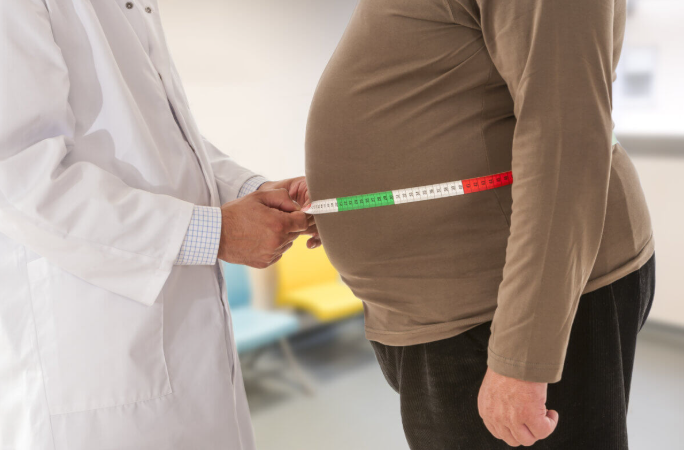
More importantly for this study, BMI doesn’t capture where fat sits on the body. Fat that accumulates around the waist and abdomen, sometimes called belly fat, behaves differently than fat elsewhere. It surrounds internal organs and is more closely associated with metabolic problems that have been linked to poorer health. Waist circumference and the ratio of waist size to hip size, by contrast, reflect this kind of central fat distribution more closely.
Nearly Half a Million People Tracked for a Decade
Researchers drew on the UK Biobank, a large long-term health study in the United Kingdom. After filtering out participants with prior cancer diagnoses or incomplete data, the final study group included 458,543 people. The median age at the start was 57, and 53.3% were women. Participants were tracked for a median of nearly 12 years, during which 50,136 were diagnosed with cancer.
Researchers put weight on the scale three different ways: BMI, waist circumference, and waist-to-hip ratio. They also tried two ways of grouping people, standard weight categories and a quartile-based approach that split everyone into four groups from leanest to heaviest. The quartile method captures differences across the full range of measurements rather than counting only people above a standard cutoff, so it can pick up gradual changes in risk that fixed categories miss.
A statistical problem had also been quietly skewing previous estimates, and the team tackled it head-on. When someone has an undetected cancer, the disease itself can cause weight loss before diagnosis, making that person appear thinner in the data and excess weight look less dangerous than it actually is. To correct for this, the researchers progressively excluded people diagnosed with cancer in the early years of follow-up, up to seven years out, removing cases where pre-diagnosis weight loss may have muddied the results.
Combined Adjustments Nearly Doubled the Cancer Estimate
When all three adjustments were made together, the estimated share of cancers attributable to excess weight climbed to 11.5%, more than double the 5.5% produced by the standard BMI-based estimate with no exclusions. In the United Kingdom specifically, prior research had estimated that roughly 6.3% of cancers were attributable to excess weight. This study’s methods pushed that figure well past 10%.
Waist-based measurements generally produced stronger associations than BMI, especially in the quartile comparisons. People in the heaviest quarter for waist circumference had a 27% higher cancer risk than those in the leanest quarter, during the seven-to-fourteen-year follow-up window. Those in the highest waist-to-hip ratio group showed a 25% higher risk over the same period.
Women showed higher cancer risk tied to excess weight than men, and people under 60 showed stronger associations than those 60 and older. Risk also increased steadily from the leanest to the heaviest participants across most measures, suggesting it rises gradually for many people rather than switching on sharply above a single threshold.
Source : https://studyfinds.com/excess-weight-linked-cancers/



