The remarks came after US President Donald Trump warned that American forces will destroy one bridge or power plant each time Iran shoots at a ship in the Strait of Hormuz.
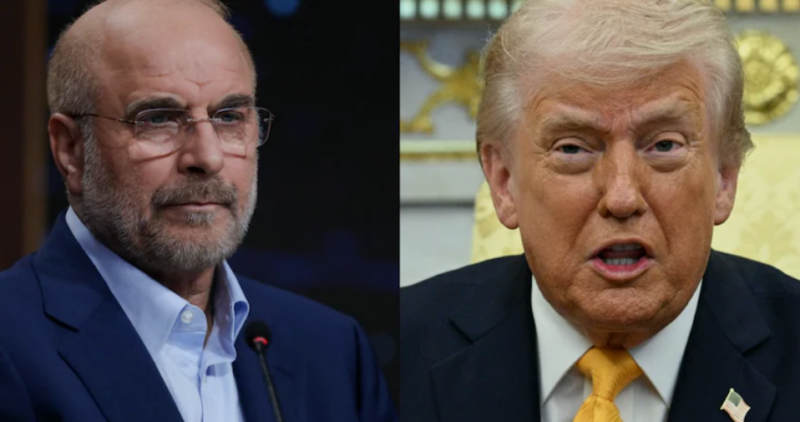
Iran’s Parliament Speaker and chief negotiator Mohammad Bagher Ghalibaf has warned that Tehran would not let the situation in the Strait of Hormuz return to its pre-war state. He said the security of the strait was in the absence of American forces from the region. Ghalibaf also warned that Iran would not let any Gulf nation sell its oil if Iran is not allowed to sell its crude.
In a post on X, Ghalibaf said the conflict had become an “all or none” equation.
“In a region where we do not sell oil, no one will sell oil. If our security is not ensured, no infrastructure will be safe, and the security of the strait is in the absence of American forces. We have repeatedly said that the situation of the strait will not return to pre-war conditions,” he wrote.
معادلهٔ این جنگ مشخص است: یا همه یا هیچکس!
در منطقهای که ما نفت نفروشیم، کسی نفت نخواهد فروخت. اگر امنیت ما تأمین نشود، هیچ زیرساختی ایمن نخواهد بود و امنیت تنگه در نبود نیروهای آمریکایی است. بارها گفتهایم که وضعیت تنگه به قبل از جنگ باز نمیگردد.
— محمدباقر قالیباف | MB Ghalibaf (@mb_ghalibaf) July 22, 2026
The remarks came after US President Donald Trump warned that American forces will destroy one bridge or power plant each time Iran shoots at a ship in the Strait of Hormuz.
“From this point forward, any time the Islamic Republic of Iran shoots at a ship in the Strait of Hormuz, whether it be by Missile, Rocket, Drone, or any other device or weapon, the United States will bomb and destroy ONE BRIDGE OR POWER PLANT, including those located next to, or in, the Capital City of Tehran,” he wrote in a post on his Truth Social platform.
US-Iran War
The US military has announced that it was conducting a 12th night of strikes against Iran as both sides increasingly targeted civilian infrastructure. US Central Command said the attacks were designed to “further degrade Iran’s ability to threaten civilian mariners and commercial vessels transiting regional waters,” as the Americans push to regain control over the Strait of Hormuz and restore the flow of international shipping.
The continued American airstrikes are occurring even as diplomatic efforts show little public sign of progress and officials on both sides have dug in on the dispute over the crucial waterway for global energy that remains largely closed. The unpopular war threatens further worldwide economic disruption and is sending fuel prices up ahead of midterm U.S. elections this fall.
Seyed Abbas Araghchi, Iran’s foreign minister, said his country would adopt an “eye for an eye” defence doctrine.



