A new 25% U.S. tariff will hit a range of Brazilian goods on Wednesday, including farm machinery, wood products, ethanol and apparel, escalating tensions in an already strained relationship between the two most populous countries in the Western Hemisphere.
The tariff is the first levied under the Trump administration’s new strategy of using the Trade Act of 1974 to investigate what it considers unfair trade practices. The White House’s blanket assertion of emergency powers to levy high tariffs against most global partners was struck down by the U.S. Supreme Court earlier this year.
The new tariff threatens between $7 billion and $11 billion of Brazilian exports to the U.S., according to estimates from Brazil’s government and National Confederation of Industry (CNI), respectively. That amounts to roughly 18% to 26% of Brazil’s exports to the U.S.
To soften the domestic effect of the tariffs, the U.S. exempted several key imports, including beef, coffee, aircraft and plane parts.
Brazil is the first country hit with a tariff after a year-long Section 301 investigation into unfair trade practices, even though the U.S. has consistently had a trade surplus with Brazil.
“This is the irony of the U.S. measures,” said Welber Barral, a former Brazilian foreign trade secretary, noting the bilateral trade balance.
Washington has argued tariffs are necessary to counter what it calls unfair trade practices, from electronic payment services to ethanol market access and illegal deforestation.
The tariffs take effect just two days before a temporary 10% global tariff expires and after a Supreme Court ruling struck down previous 50% U.S. duties on Brazilian goods that forced exporters to seek new markets.
FOOTWEAR LAYOFFS
For many sectors, the adjustments have already been painful.
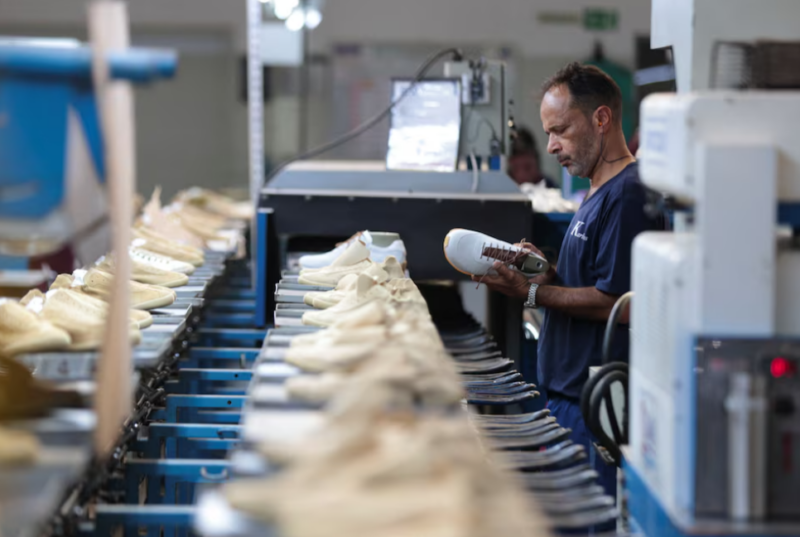
Brazil’s footwear industry, which counts the U.S. as its top foreign market, has already downgraded its export outlook for the year to an expected 7.1% drop, compared with its previous forecast for a 3.6% drop.
The U.S. buys one in every five shoes exported from Brazil, according to the Brazilian Footwear Industries Association (Abicalçados).
“There is no other market capable of replacing the U.S.,” said Toni Hajel, owner of exporter TH Shoes and head of the footwear industry union in Franca, a key hub for footwear production in Sao Paulo state.
He said about 40% of the area’s exports, or 650,000 pairs a year, are sold to the U.S. The new tariffs will make those sales unviable, he added, forcing producers to lay off workers unless Brazil renegotiates the duties or secures a footwear exemption.
LONG-TERM CONSEQUENCES
Economists warn that the uncertainty created by successive measures and partial exemptions may have consequences well beyond immediate trade losses.
“It undermines confidence,” said Gustavo Pessoa, an economics professor at the Fundação Getulio Vargas university in São Paulo, who traveled to Washington this month to argue against the tariffs at a public hearing.



