Neither the BNSS nor the BNS contains any provision mandating body-worn cameras or compulsory videography of crowd-control operations.
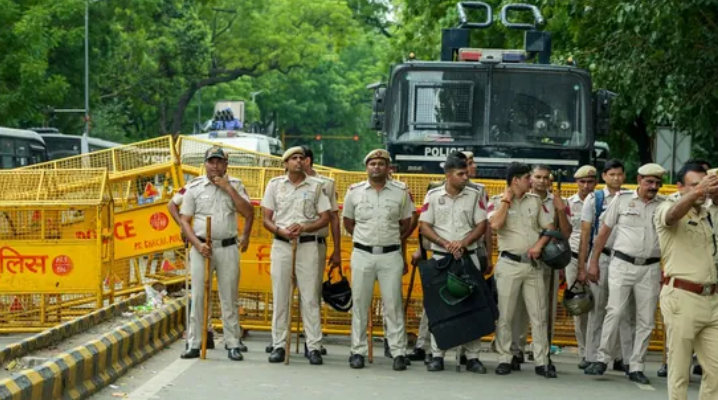
Allegations of police brutality during the recent Cockroach Janta Party (CJP) protests in Delhi have once again brought into focus a recurring constitutional and legal question: How much force can the police legally use to disperse a protest?
While Indian law empowers the police to maintain public order, courts have repeatedly emphasised that those powers are bounded by the Constitution and the principles of legality, necessity and proportionality.
But the legal framework remains fragmented. Even as the Bharatiya Nagarik Suraksha Sanhita (BNSS) confers the power to disperse unlawful assemblies, the operational protocols for crowd control, including lathi-charge, use of tear gas, recording of operations and deployment procedures, are largely governed by state police laws, police manuals and executive standing orders, resulting in varying practices across jurisdictions. As a result, several crucial questions relating to the use of force and accountability continue to be resolved on a case-by-case basis.
A right to protest, but not without limits
The starting point is the Constitution. Article 19(1)(a) guarantees freedom of speech and expression, while Article 19(1)(b) protects the right to assemble peacefully and without arms. Neither right, however, is absolute.
Under Articles 19(2) and 19(3), the State may impose reasonable restrictions in the interests of sovereignty and integrity of India, security of the State and public order.
It is this constitutional balance that informs India’s public order laws. In Mazdoor Kisan Shakti Sangathan Vs Union of India (2018), the Supreme Court held that the right to protest is a cherished constitutional freedom, but must coexist with the rights of other citizens.
Two years later, in Amit Sahni Vs Commissioner of Police (2020), arising out of the Shaheen Bagh protests, the court reiterated that while dissent is integral to democracy, public ways and roads cannot be occupied indefinitely.
The law, therefore, does not permit either extreme — neither a blanket prohibition on peaceful protests nor an unrestricted right to demonstrate regardless of its impact on public order.
When can the police intervene?
The primary statutory framework today is the Bharatiya Nagarik Suraksha Sanhita, 2023 (BNSS).
The most frequently invoked preventive provision is Section 163 BNSS, the successor to the erstwhile Section 144 of the Code of Criminal Procedure (CrPC). It empowers an executive magistrate to issue prohibitory orders in urgent cases where there is sufficient ground to prevent obstruction, danger to human life, disturbance of public tranquility or a riot. Such orders often prohibit assemblies of five or more people, processions or movement in specified areas.
If an assembly nevertheless becomes unlawful or refuses to disperse, Sections 148 to 151 of the BNSS (corresponding to the earlier Sections 129 to 132 CrPC) empower an Executive Magistrate or, in certain situations, a police officer in charge, to command the assembly to disperse. If the order is disobeyed, the assembly may be dispersed by force and, in exceptional situations, with the assistance of the armed forces in accordance with the safeguards prescribed under the law.
Significantly, while BNSS authorises the use of force, it does not define the degree of force that may be employed or prescribe a graduated response mechanism. Instead, it merely contemplates the use of such force as may be necessary to disperse the assembly, leaving the contours of that power largely to judicial interpretation.
In situations where violence breaks out, offences under the Bharatiya Nyaya Sanhita, 2023 (BNS), such as rioting, unlawful assembly, assault on public servants or obstruction of public servants in discharge of duty, may also be invoked depending on the facts of each case.
What has the Supreme Court said?
Although Parliament has never enacted a comprehensive statutory framework governing police use of force during protests, constitutional courts have gradually evolved one through precedent.
The most authoritative pronouncement remains the Supreme Court’s decision in Ramlila Maidan Incident Vs Home Secretary, Union of India (2012), which examined the midnight police crackdown on protesters led by yoga guru Baba Ramdev.
The court held that even where an assembly is unlawful or prohibitory orders are in force, police action must satisfy the constitutional test of necessity and proportionality. The objective of force is to restore public order — not to punish protesters. The State, the court underlined, cannot use force that is excessive or disproportionate to the threat faced.
The court unequivocally condemned the police action as an “abuse of power” and an “invasion of liberties”. Beyond a mere declaration, it ordered both departmental and criminal proceedings against police personnel found responsible for acts including brick-throwing, lathicharge, and the excessive use of tear gas. It further directed that interim compensation be paid to those injured in the crackdown,
The judgment highlighted that police authorities are expected to attempt peaceful dispersal before resorting to coercive measures, issue adequate warnings through public address system wherever circumstances permit, and employ only the minimum force reasonably necessary to achieve the lawful objective. Excessive force, the court held, may amount to an infringement of Article 21, which guarantees protection of life and personal liberty.
This principle has since become the touchstone against which courts evaluate allegations of police excesses during demonstrations.
Videography, identification of personnel and accountability
One of the recurring criticisms following almost every major protest concerns the difficulty in identifying individual police personnel allegedly involved in acts of excessive force. Unlike several other jurisdictions, India has no central statute requiring every police officer deployed for crowd control to wear visible identification numbers or individually traceable markings while performing riot-control duties.
Similarly, neither the BNSS nor the BNS contains any provision mandating body-worn cameras or compulsory videography of crowd-control operations.
Videography today is governed largely through executive instructions, police manuals and administrative standard operating procedures, which vary across states and police forces. Courts have nevertheless increasingly recognised the evidentiary value of such recordings. In the ongoing litigation concerning the Delhi protests, the Delhi High Court has directed the police to preserve video footage and related records while considering petitions alleging police brutality.
The legal position on uniforms is equally nuanced. While police service rules generally require personnel to perform official duties in prescribed uniform unless exempted for operational reasons, there is no specific statutory provision that expressly mandates uniformed deployment during every protest-control operation. Plain-clothes deployments, intelligence gathering and specialised operations continue to remain administrative exceptions. These gaps often complicate efforts to establish individual accountability when allegations of excessive force arise.



