President Asif Ali Zardari’s recent visit to China underscores the growing complexity of Pakistan-China ties. While Islamabad projects an image of strengthened cooperation, particularly around CPEC, reality paints a different picture: worsening security threats to Chinese nationals, Beijing’s withdrawal from the ML-1 railway project, and Pakistan’s growing economic fragility.
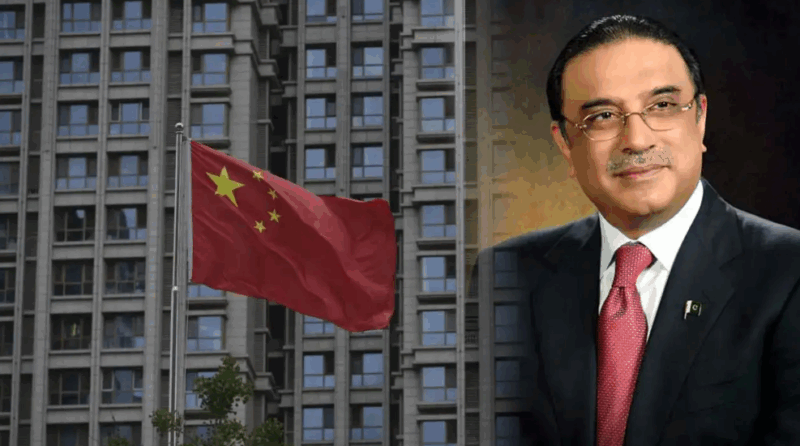
Photo : AP
When President Asif Ali Zardari began his 10-day trip to China on 12 September, Pakistani state outlets hailed it as a reaffirmation of the “iron brothers” alliance. His itinerary included Chengdu, Shanghai, Urumqi and Kashgar, where he was welcomed by provincial leaders and toured development sites. On paper, the agenda was upbeat: economic cooperation, future connectivity, and deepening ties under the China–Pakistan Economic Corridor (CPEC).
Yet behind the photo opportunities and choreographed handshakes, the visit exposed a fragile reality. Pakistan is facing mounting security failures, an economic crisis that has gutted investor confidence, and growing frustration in Beijing over Islamabad’s inability to protect Chinese nationals. Analysts suggest that the symbolism of Zardari’s visit is masking a relationship under unprecedented strain.
China’s Frustration With Pakistan’s Security Lapses
Security has been the Achilles’ heel of CPEC from the beginning. Despite Islamabad raising a 15,000-strong dedicated force to protect Chinese projects, militant groups such as the Balochistan Liberation Army (BLA) continue to stage lethal ambushes. A July 2025 attack in Gwadar left five Chinese technicians injured, highlighting the persistent gaps. Human Rights Watch has noted that Pakistan’s counter-insurgency strategy remains overly reliant on military operations, with little emphasis on addressing local grievances — a factor fuelling further resistance.
These repeated failures have not only angered Beijing but also raised insurance costs for Chinese companies operating in Pakistan. According to Nikkei Asia, several state-owned firms have scaled back on-site deployments, preferring to delay projects rather than risk more casualties.
CPEC Under Strain: From Flagship to Liability
For Pakistan, already battered by repeated IMF bailouts and external debt surpassing $130 billion, this withdrawal signals more than a financial hiccup. It underscores China’s increasing caution in tying its money to an economy teetering on default. A report in Reuters quoted Beijing-based analysts warning that unless Pakistan improves its fiscal discipline and guarantees security, “further investment will remain frozen.”
Meanwhile, CPEC projects have slowed dramatically. According to Pakistan’s Planning Commission, only 32 of the 95 projects announced under CPEC have been completed to date. Critics argue that Islamabad has overpromised and under-delivered, allowing corruption, bureaucratic red tape, and insurgency to hollow out what was once marketed as a “game-changer.”



