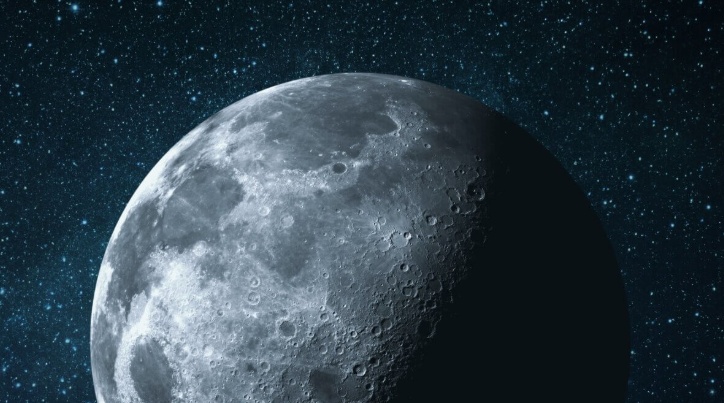
For centuries, women have whispered about the mysterious link between their monthly cycles and the moon’s phases. New research shows that the connection was real, and, believe it or not, smartphones may have disrupted it.
An analysis of 176 women’s menstrual records spanning nearly a century shows that female reproductive cycles synchronized with lunar phases until around 2010. That’s precisely when LED lights flooded the market and smartphones became ubiquitous, bathing modern life in artificial blue light around the clock.
“Women’s menstrual cycles recorded before the introduction of light-emitting diodes in 2010 and the extensive use of smartphones significantly synchronized with the Moon, while those after 2010 coupled to the Moon mostly in January,” the researchers report in their Science Advances paper.
When Technology Rewrote Biology
Led by Charlotte Helfrich-Förster at the Julius-Maximilians University of Würzburg, researchers tracked menstrual data from women across multiple generations, comparing records kept on paper calendars from the mid-20th century with smartphone app data from recent years. The contrast was dramatic.
Before 2010, women’s periods clustered around full and new moons in a pattern too consistent to be random, though this synchronization was always temporary, lasting only months or a few years before shifting. After 2010, that synchronization largely disappeared (except during January, when the combined gravitational pull of the sun, moon, and Earth reaches its annual peak).
Artificial light exposure, particularly from LED screens and bulbs, may disrupt the body’s ability to detect natural lunar light cycles. Unlike older incandescent bulbs, LEDs emit high levels of blue light that interferes with circadian rhythms and could mask the subtle environmental cues that once guided reproductive timing.
The study shows something even more intriguing: menstrual cycles appear to respond not just to moonlight, but to the moon’s gravitational forces. Women’s periods synchronized with three different lunar cycles (the familiar 29.5-day pattern of moon phases, plus two gravitational cycles lasting about 27 days each).
This gravitational influence explains why synchronization persists in January, when Earth reaches its closest point to the sun. During this period, the combined gravitational forces of the sun and moon create the strongest tidal effects of the year, powerful enough to override the interference from artificial light.
Researchers examined records from 176 women across 24 years, creating one of the largest long-term studies of menstrual patterns ever conducted. Most participants were European women who tracked their cycles for an average of six years, with some records spanning nearly four decades from menarche to menopause.
When Screens Changed Everything
The smartphone revolution transformed how humans experience light and darkness. Before 2010, most people encountered artificial light primarily from incandescent bulbs that emit warm, yellowish light similar to firelight. LED screens and bulbs produce blue light that closely mimics daylight, confusing the body’s internal clock.
Satellite measurements show global light pollution increased dramatically after 2010, matching the timeline when lunar-menstrual synchronization weakened. Countries with higher light pollution, like northern Italy, showed less menstrual-lunar correlation than areas with darker night skies.
Google search data supports this connection. Queries for “period pain” spike consistently in January across multiple countries, indicating women worldwide experience stronger menstrual effects during the month when lunar gravitational forces peak.
Research shows human reproductive cycles operate like a “circalunar clock,” similar to the circadian clock that governs daily rhythms, but tuned to monthly lunar patterns.
Like other biological clocks, this lunar timekeeper has a limited range. Menstrual cycles can only synchronize with lunar phases when a woman’s natural cycle length falls within specific windows: roughly 26 to 36 days for moon phases, with narrower ranges for the gravitational cycles. Even before 2010, this synchronization was intermittent, lasting only months or a few years at a time before shifting out of phase.
As women age and their cycles typically shorten, they fall outside these synchronization ranges, explaining why lunar connections weaken over time. Modern lifestyle factors that shorten cycles (including artificial light exposure) make menstrual synchronization even less likely.
If artificial light can disrupt fundamental reproductive rhythms that evolved over millennia, this raises questions about whether other biological processes could also be influenced. The research adds to evidence that light pollution extends beyond cosmetics; it’s an environmental factor reshaping human physiology in ways scientists are beginning to understand.
Source : https://studyfinds.org/womens-periods-synced-with-moon-smartphones-zapped-connection/



