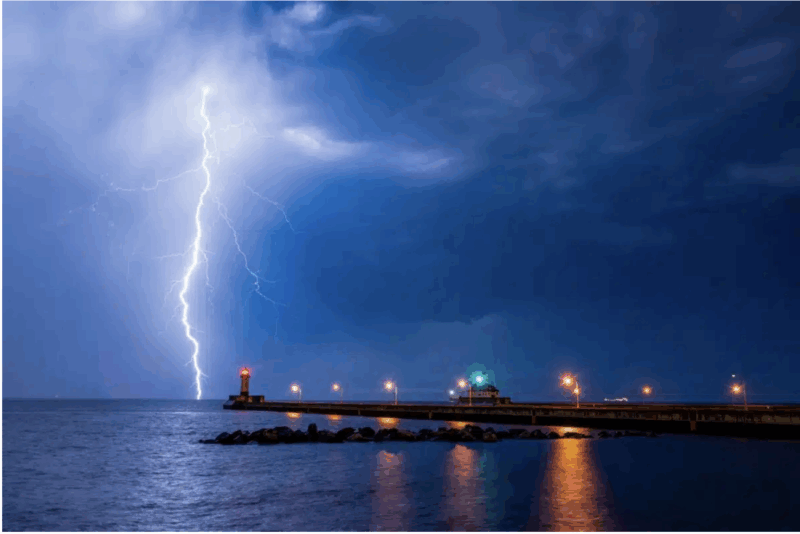
Invisible bursts of radiation that happen inside thunderstorms may hold the key to one of nature’s most spectacular mysteries: how lightning actually begins. Scientists have found that these high-energy flashes, known as terrestrial gamma ray flashes, don’t just accompany lightning strikes—they may help set the stage for them.
For decades, researchers struggled to explain lightning’s first step. Storm clouds build up electrical charge, but the measured electric fields often seemed too weak to spark such enormous discharges. Now, a team led by Victor Pasko at Penn State University suggests the missing piece is a process called photoelectric feedback, in which radiation inside the storm sets off a chain reaction of particles.
Scientists Close In on a 30-Year Mystery
Gamma ray flashes were first spotted by satellites in 1994, coming from thunderstorms. They puzzled scientists because they originated from small, dim regions of storms rather than the bright, crackling areas where lightning is usually seen. The flashes lasted just millionths of a second but carried surprising amounts of energy.



