India’s new criminal code still defines rape solely as a man assaulting a woman, rendering male and transgender survivors legally invisible. Their cases remain unrecorded, untreated, and unpunished, thereby creating a dangerous systemic blind spot, reports Venkatesh R.
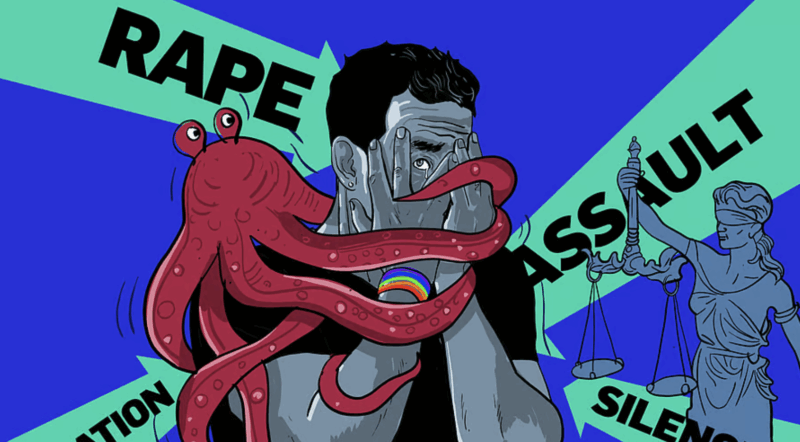
Disbelief, shame, silence — survivors of sexual violence grapple with an array of emotional and psychological shocks. For male and trans survivors, the burden is heavier still: the law does not even acknowledge that they can be victims.
India rewrote its British-era criminal laws in 2024, replacing the Indian Penal Code with the Bharatiya Nyaya Sanhita (BNS). Yet what remained untouched was its imagination of who a rape survivor can be. In the eyes of the law, that survivor is still only a woman.
Under Section 63 of the BNS, rape is defined solely as a “man” committing the act against a “woman.” Men and most trans people simply do not exist in that definition. They disappear before the law even begins to speak.
This isn’t a drafting slip — it’s a worldview. Advocate K M Sai Apabharana, partner at Allied Law Practices, explains that when male or transgender survivors report sexual assault, they are pushed into provisions meant for “hurt,” “grievous hurt,” or “criminal force.” None of these captures the sexual nature of the violence, and the penalties are far lighter. “They provide limited legal avenues for redress,” she says.
What the law refuses to name, society refuses to see. In police stations, courtrooms, and even therapy rooms, survivors who are not women are met with disbelief, laughter, or silence. Their trauma doesn’t fit the statute, and so it doesn’t count.
Arvind Narrain, lawyer and co-founder of Alternative Law Forum, spells it out more bluntly: “The victim is gender-specific… the only person who can be subjected to sexual violence is defined as a woman.” That single clause narrows the entire legal imagination, pushing survivors outside the frame before they can even report a crime.
The result is legal improvisation. “If the sexual-violence part is out of the picture,” Narrain says, “then you’re left with assault, grievous hurt, hurt, criminal intimidation”. None of these, he points out, comes close to naming sexual violence for what it is.
Source : https://www.deccanherald.com/specials/hidden-victims-open-wounds-3813127



