SURPRISING details have resurfaced about the complicated relationship between Rob Reiner and his son Nick, who is accused of murdering the filmmaker and his wife, Michele.
The youngest son of the A-list Hollywood couple reportedly battled a 15-year-long addiction to drugs and was even homeless for a period of time.
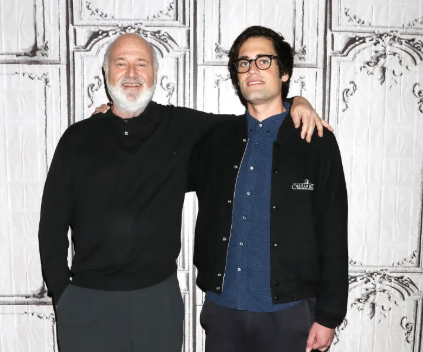
On Sunday, Rob, 78, and Michele, 68, were found stabbed to death with their throats slit after having allegedly gotten into an altercation with a family member, according to police.
The couple was allegedly discovered by their daughter, Romy, who lived across the street from them in Los Angeles, California.
Romy called the police and said that her brother, Nick, 32, was “dangerous” and should be a person of interest, according to TMZ.
Nick was nowhere to be found when police arrived around 3:30 pm on Sunday, the outlet reported.
He was later arrested Sunday evening in connection with the gruesome deaths and is being held on a $4 million bond.
While the death of the Oscar-nominated director and his wife shocked the world, Reiner’s neighbors weren’t surprised by the son’s suspected involvement.
“This is not the first time their son has been violent,’’ a longtime neighbor of the victims told The New York Post.
“I know of another incident a few years back with Nick, but I won’t say more than that,’’ added the anonymous neighbor. “I just never thought it would ever get to this point.”
Nick previously admitted to being a heroin addict and began using drugs at the age of 15.
“I know they wanted him to get help, go to rehab, but he wanted to get help while at home — he did not want to get treatment at a facility,’’ the neighbor said.
“And I know they have argued about that for years. Nick has had demons for the longest.”
During a 2018 episode of the Dopey podcast, the son admitted to having previously “totally spun out on uppers” and destroyed his parents’ guest house in 2017.
“It’s not much of a story. I got totally spun out on uppers — I think it was coke and something else — and I was up for days on end,” Nick recalled.
“I started punching out different things in my guest house.”
Nick said that there was no “logic” to his freakout, but he did recall that just before the incident, his parents told him he “had to go.”
The suspected murderer had been in and out of rehab 17 times since he began using, and even experienced homelessness, he told People magazine in 2016.
“I was homeless in Maine. I was homeless in New Jersey. I was homeless in Texas,” Nick said.
“I spent nights on the street. I spent weeks on the street. It was not fun.”
‘BEING CHARLIE’
In 2015, Nick even co-wrote a movie called Being Charlie that his dad directed, inspired by his and his father’s relationship during his addiction.
Being Charlie initially started as a pilot script Nick intended to pitch for television, but it eventually morphed into a bonding project between the father and son, the Los Angeles Times reported.
The film follows Charlie, played by Nick Robinson, a privileged child who becomes addicted to drugs, and David Mills, played by Cary Elwes, a successful actor with political aspirations.
Being Charlie follows the strained relationship between the father and son, as the father begs for Charlie to get help.
Throughout the movie, Charlie tries and fails at different rehabilitation programs set up by his father.
During a Q&A that followed the 2015 premiere of the movie, the “When Harry Met Sally” director admitted that the movie brought up raw feelings between him and his son.
“It was very, very hard going through it the first time, with these painful and difficult highs and lows,” Rob Reiner said.
“And then making the movie dredged it all up again.”
The father-son duo said parts of the film were lifted directly from their personal lives.
In one scene, during an intense push for Charlie to seek help, the father character told his son, “I’d rather you hate me, and you be alive.”
Rob said he’s told his own son that verbatim.
Even lead actor Cary Elwes, who previously worked with Rob on The Princess Bride, said the film “doesn’t get more personal than this.”
“There were times when I would want to tone it down and Rob would just tell me, ‘No, turn it up,’” Elwes said in 2015.
“He would tell me he didn’t handle it well and we had to show that. He would describe the stages of grief and how addiction is like a slow suicide, then say, ‘Let’s explore all of that.’”
Rob and his wife both said they chose to listen to doctors who pushed rehab programs rather than listening to their son.
“We were so influenced by these people,” Nick’s mother, Michele, said at the time.
They would tell us he’s a liar, that he was trying to manipulate us. And we believed them.”



