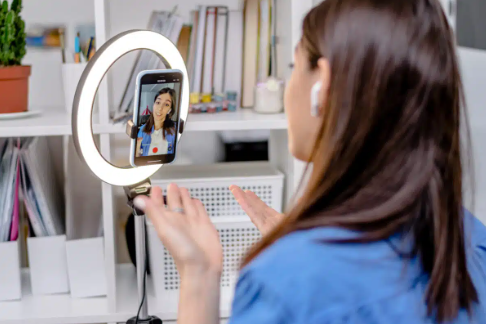
When millions of young people turn to TikTok for information about birth control, they’re overwhelmingly getting it from influencers, self-proclaimed “hormone health coaches,” and everyday users instead of doctors or nurses. A new study reveals that of 100 top contraception-related videos on the platform (drawn from five major hashtags and collectively receiving 4.85 billion views), only 10% were created by medical professionals.
Even more concerning, researchers found that 53% of creators explicitly rejected hormonal birth control methods like the pill, and 34% expressed distrust in healthcare providers and hormonal contraception. These statements of rejection and distrust were mostly based on personal experiences, subjective opinions, or non-persuasive recommendations, rarely citing scientific sources.
The findings, published in Perspectives on Sexual and Reproductive Health, highlight a troubling pattern: TikTok’s algorithm is designed to keep people watching, not to ensure accuracy. With 69% of TikTok’s users between ages 18 and 34, dramatic personal stories about negative birth control experiences often gain more traction than balanced, evidence-based medical explanations.
“The rise of contraceptive misinformation on social media is re-shaping patient-provider relationships and impacting contraceptive beliefs,” the researchers wrote. Such content, they caution, could influence contraceptive choices and potentially contribute to higher rates of unintended pregnancy.
Who Creates Birth Control Content on TikTok?
Led by Dr. Caroline de Moel-Mandel from La Trobe University in Australia, study authors analyzed the most popular TikTok videos under five contraception-related hashtags: #birthcontrol, #contraception, #thepill, #naturalbirthcontrol, and #cycletracking. They used a newly created account for an 18-year-old Australian female to reduce algorithm bias and selected the top 20 videos from each hashtag. Videos were excluded if they were duplicates, not in English, or didn’t provide information or advice about contraception.
They found that general uploaders, including influencers, created 58% of the videos, while people calling themselves “hormone health coaches” and “health educators” each made 15%. Most creators were White, female-presenting millennials from English-speaking countries, primarily the United States, but also the United Kingdom, Australia, Canada, and Ireland. Other origins included Nigeria, Korea, and New Zealand.
When it came to reach, medical professionals’ videos had higher average views than other non-company creators and, along with general uploaders, the most followers. However, the two online companies in the sample had the highest overall views.
How Accurate Is TikTok’s Birth Control Information?
The team used DISCERN, a tool that evaluates whether health information is reliable, balanced, and well-sourced, to assess video quality. Overall, the results were poor across all categories. Medical professionals’ videos scored a median of 33, classified as “poor quality” (27–38 on the DISCERN scale). General uploaders and hormone health coaches scored even lower, and the overall median score for all videos was 27, also “poor.”
One reason for the low scores may be TikTok’s short format. The median video length was just 44.5 seconds, leaving little time to cover risks, benefits, or where to find more reliable information. Many creators failed to cite evidence or link to credible resources.
Natural contraceptive approaches, known in medical terms as Fertility Awareness-Based Methods (FABMs), were discussed most often (38% of videos), followed closely by birth control pills (35%). Videos promoting FABMs rarely mentioned their limitations or that effectiveness depends on factors such as the method used, sufficient training or instruction, motivation, partner cooperation, and natural biomarker variability.
“Importantly, they failed to mention that these methods are generally ineffective when used on their own,” Dr. de Moel-Mandel said in a statement. “This kind of misinformation, combined with a growing distrust in healthcare professionals can result in unsafe decisions and ultimately, unplanned pregnancies.”
Why Young People Don’t Trust Their Doctors
The study found signs of a growing disconnect between patients and healthcare providers. When shared decision-making expectations aren’t met, patients may feel pressured, dismissed, or even deceived — sentiments echoed in many TikTok videos.
Some creators shared personal stories about feeling brushed off or not fully informed about side effects, while others openly recommended turning to “hormone health coaches” or “health educators” instead of medical professionals. These titles are largely unregulated and do not necessarily indicate formal training or credentials.
Cleaning Up Contraceptive Misinformation
Misinformation about contraception can have serious consequences. They include discontinuation of effective methods, incorrect use of FABMs, or avoidance of hormonal contraception altogether, all of which can increase the risk of unintended pregnancy.
FABMs can be valid and effective choices for some, but success depends on multiple factors: the specific method used, adequate training, ongoing motivation, partner cooperation, and the natural variability of fertility markers. TikTok influencers rarely provide such detail, instead presenting simplified or overly positive portrayals.
Source : https://studyfinds.org/tiktok-contraception-videos-non-medical-creators/



