From dancing the tango to playing video games, there are countless creative ways to promote a sharper, younger mind.
Researchers have developed a method to calculate whether someone’s brain is aging faster or slower than their chronological age suggests. The technique, called a “brain clock,” works similarly to how a fitness tracker estimates your cardiovascular age based on heart rate and activity levels. But instead of measuring steps, brain clocks analyze patterns in brain activity to predict biological age.
A study published in Nature Communications used these brain clocks to examine whether creative experiences influence brain aging. The findings suggest that people who engage in creative activities, from tango dancing to playing StarCraft II, show signs of delayed brain aging compared to those without such pursuits. The research team analyzed brain data from 1,472 participants across 13 countries, making it one of the largest investigations into creativity and brain health.
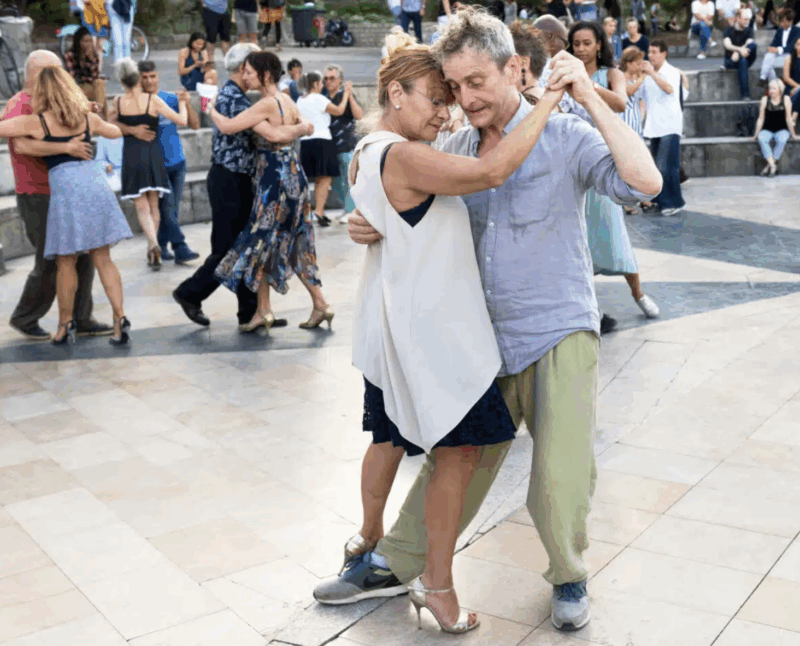
The study compared experts and non-experts in four domains: tango dancing, music performance, visual arts, and real-time strategy video gaming. Across all four areas, experts showed what researchers call negative “brain age gaps,” meaning their brains appeared younger than their actual age would predict. The differences were substantial: across domains, experts’ brains looked about four to seven years younger than matched non-experts.
How Brain Clocks Work
Brain clocks rely on machine learning algorithms trained to recognize age-related patterns in brain connectivity. As people get older, certain networks in the brain become less efficient, particularly connections between the frontal and parietal regions. These changes happen predictably enough that artificial intelligence can estimate someone’s age just by looking at their brain activity patterns.
When the predicted “brain age” matches chronological age, it suggests typical aging. When the brain age is higher, it indicates accelerated aging, a pattern seen in many neurological diseases. When brain age is lower than chronological age, it suggests the brain has been preserved better than average. The brain age gap is simply the difference between predicted and actual age—values below zero indicate younger-looking brain patterns.
The research team used electroencephalography (EEG) and magnetoencephalography (MEG) to measure brain activity. These techniques track the electrical signals produced when neurons communicate. From these signals, researchers mapped how different brain regions connect and coordinate with each other. The resulting connectivity patterns served as the input for the brain age calculations.
The Creativity Connection
The researchers didn’t stop at comparing experts to non-experts. They also examined whether the degree of expertise mattered. Musicians were evaluated based on years of experience playing instruments. Gamers were assessed by their league rankings in StarCraft II, a strategy game that requires rapid decision-making and coordination. Visual artists were judged on years of university-level art education. Tango dancers reported months of formal instruction.
Across these measures, a clear pattern emerged: the more skilled someone was in their creative domain, the younger their brain appeared. This dose-response relationship suggests the brain benefits accumulate with practice rather than appearing as an all-or-nothing effect.
A separate experiment tested whether short-term learning could produce similar benefits. Non-gamers participated in 30 hours of StarCraft II training over three to four weeks. After training, their brain age gaps decreased compared to their pre-training measurements. An active control group that played a different game, Hearthstone, showed no such changes. The learners also improved on an attention task unrelated to gaming, suggesting the brain changes translated to broader cognitive benefits.
Players who showed the largest gains in actions per minute, a measure of in-game skill, also showed the greatest decreases in brain age, reinforcing the connection between skill development and brain preservation.
How Creativity Influences Brain Aging
The brain doesn’t age uniformly. Some regions decline faster than others, particularly areas in the frontal and parietal cortex that handle attention, motor control, and coordination. These age-vulnerable regions are also among the areas most affected by neurodegenerative diseases.
The study found that creative experiences particularly affected these regions. Experts showed increased connectivity in the same brain hubs that typically decline with age, suggesting creative activities may provide a protective effect precisely where the brain needs it most.
Different creative domains activated somewhat different brain networks, but all converged on similar age-vulnerable hubs. Across the expertise groups, enhanced connectivity was associated with motor control, movement, rhythm, coordination, and visual processing. The short-term learners showed different patterns, with changes primarily linked to visual perception, object recognition, and attention. Despite these variations, all groups showed enhancement in frontoparietal networks involved in executive function.
The Mechanism Behind the Benefits
The researchers didn’t just document that creative experiences correlate with younger-looking brains. They also investigated potential mechanisms using computational brain models. These models simulate how brain regions interact by incorporating both structural connections, measured through brain imaging, and functional dynamics, measured through electrical activity.
Two properties stood out. First, people with more creative experience showed higher “local efficiency” in their brain networks—tighter, faster communication among nearby regions. This suggests specialized networks have become more refined through practice, allowing quicker and more reliable information processing within expert-related circuits.
Second, long-term experts, but not short-term learners, showed changes in “global coupling,” or stronger long-range coordination across the entire brain. Increased global coupling suggests that creative expertise doesn’t just refine isolated networks but improves communication throughout the brain.
These findings align with research on neural plasticity, the brain’s ability to reorganize itself through experience. Creative activities that involve motor skills, attention, rhythm, and coordination may strengthen both local circuits and long-distance connections. The brain becomes not just more specialized but more integrated.
Comparing Short-Term Learning to Long-Term Expertise
The effects of 30 hours of video game training were smaller than the differences between lifelong experts and non-experts. This scaling makes biological sense. Neuroplasticity requires sustained practice to produce lasting structural changes. A month of training can begin the process, but years of engagement drive more substantial reorganization.
Even the smaller effects from short-term learning, however, were accompanied by measurable cognitive improvements. Learners not only got better at StarCraft II but also responded faster on an unrelated attention task, demonstrating transfer effects beyond gaming-specific skills. The control group showed no such brain age changes.
Study Limitations and Future Directions
The research team acknowledged several constraints. The cross-sectional design for the expertise comparisons prevents definitive causal conclusions—it’s possible that people with healthier brains are more likely to pursue and excel in creative activities. While the pre-post learning experiment provides stronger causal evidence, it involved only 24 participants and focused solely on video game training.
Additionally, the research measured brain age but didn’t directly assess clinical outcomes such as dementia risk or cognitive decline over time. Future studies should track participants longitudinally to determine whether delayed brain aging translates into tangible health benefits.
The use of EEG and MEG data from different studies, with varying electrode configurations and recording protocols, introduced technical challenges. However, the consistent findings across different datasets and recording methods suggest the core results are robust rather than artifacts of any particular measurement technique.
The study also couldn’t fully control for all potential confounding factors. Unmeasured factors could still play a role in the observed associations between creative expertise and brain age.
Creativity as Brain Health Intervention
The research adds to growing evidence that lifestyle factors influence brain aging. Previous studies have linked physical exercise, education, and social engagement to healthier brain aging patterns. This study extends those findings to creative and artistic pursuits.
The results may inform public health recommendations. If creative activities genuinely slow brain aging, they represent accessible interventions that many people already enjoy. Unlike pharmaceutical treatments, creative hobbies carry minimal risks and offer additional psychological benefits including stress reduction and social connection.
The cross-cultural nature of the research, spanning 13 countries across Latin America, Europe, and North America, suggests the brain benefits of creativity transcend cultural boundaries. Whether someone practices tango in Argentina or plays video games in Poland, engagement in creative activities appears to support brain health.
The inclusion of video games alongside traditional arts challenges conventional thinking about creative pursuits. Strategy games like StarCraft II require rapid problem-solving, adaptive planning, and coordination, elements that overlap with more conventional creative activities. The findings suggest that what matters for brain health may be the cognitive demands and engagement rather than the specific medium.
Source: https://studyfinds.org/creative-skills-keep-brain-younger/



