
Forget Marie Kondo’s organized closets. New research reveals that people who embrace a simple life may feel better not only because they own fewer possessions, but most strongly because they build greater communities and share more with their neighbors.
Researchers at the University of Otago in New Zealand surveyed 1,643 people and found that the “beneficence” dimension of voluntary simplicity — activities like sharing the fruits of one’s labor with others outside the immediate family, putting effort into building community, and sharing skills and labor — showed the strongest direct relationship with well-being. While owning less was part of the voluntary simplicity lifestyle, it still contributed indirectly through the overall pattern of simple living behaviors.
The findings suggest that both consumer culture’s promise that buying more leads to satisfaction, and the minimalism movement’s focus on decluttering alone, may overlook the deeper role of social connection in supporting happiness.
Community Connections Matter More Than Owning Less Stuff
Voluntary simplicity means deliberately choosing to consume less while focusing on relationships, personal growth, and experiences rather than possessions. People who practice this lifestyle might grow their own food, buy from local producers, repair items instead of replacing them, and share resources with neighbors.
When researchers examined which specific behaviors were most directly related to well-being, material simplicity (owning fewer things) was not a significant direct predictor in their models. The same was true for resource conservation and producing one’s own food. However, all of these still contributed to the overall voluntary simplicity score, which was positively linked to wellbeing.
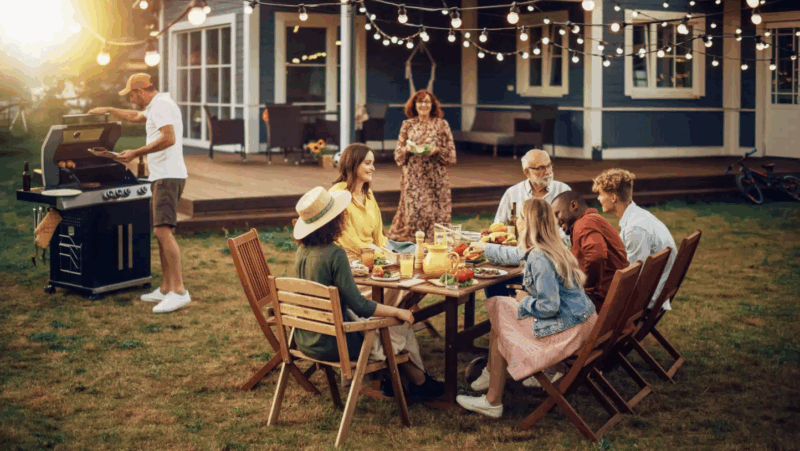
The standout factor was beneficence, or sharing the fruits of one’s labor with others outside the immediate family, putting effort into being engaged in and building community, and sharing skills and labor with others, even when not at work. This community-focused dimension showed the strongest direct relationship with both psychological wellbeing and life satisfaction.
People who embraced simple living also reported higher satisfaction in life achievement and community connection, and smaller, marginally significant improvements in personal relationships, health, and living standards. The study found no significant link with safety or future security. Overall, it was the social aspect, rather than simply reducing possessions, that most clearly boosted well-being.
How Researchers Studied Simple Living and Happiness
The research team surveyed a representative sample of New Zealand’s population: 51 percent men and 49 percent women, with a median age of 45 and median household income of $50,000. Participants answered questions about their engagement with voluntary simplicity behaviors across six areas: material simplicity, resource conservation, local purchasing, self-sufficient food production, community involvement, and work-life balance.
Scientists measured two distinct types of well-being: hedonic well-being — which includes life satisfaction, subjective well-being, and happiness — and eudaimonic well-being (psychological flourishing and personal growth). They split their sample in half for analysis: the first group was used to identify patterns, the second to confirm the results. The well-being relationship analysis used 854 participants, and the gender moderation analysis used 847.
In the final validated scale, all four “work-life preference” items were excluded because they didn’t apply to many people not in employment, such as retirees. This means the general-population version of the scale focused on five core components: beneficence, material simplicity, self-sufficiency, local procurement, and resource conservation.
Women Benefit More Than Men From Simple Living
Gender played a surprising role in the results. Women who practiced voluntary simplicity experienced stronger positive effects on well-being compared to men, for both hedonic and eudaimonic well-being. The study found a significant moderation effect for females but not for males, meaning the lifestyle’s wellbeing benefits were clear in women but less so in men.
Previous studies have found women are more likely to embrace simple living than men, though this is the first research to test gender as a moderator for eudaimonic wellbeing. Scientists still don’t fully understand why this difference exists.
Age did not significantly moderate the relationship, and income showed a negative moderation trend that was not statistically significant at the 10% level. This means the benefits of voluntary simplicity were seen across income levels.
What This Means for Your Daily Life
Rather than focusing solely on decluttering possessions, people interested in the well-being benefits of simple living might consider joining community gardens, participating in tool libraries, organizing neighborhood skill-sharing groups, or buying from local producers. These activities naturally create social connections, the kind most strongly linked to higher well-being in the study.
The findings suggest that collaborative consumption (sharing, borrowing, and exchanging resources) can support both social connection and personal well-being. For policymakers and communities, initiatives that make it easier for people to share resources may be particularly valuable in supporting well-being and sustainable living.



