As we dissect the list of candidates Prashant Kishor has chosen for the Bihar assembly election, it becomes essential to scrutinise how these selections align with the narrative he wove during his two-year-old yatra
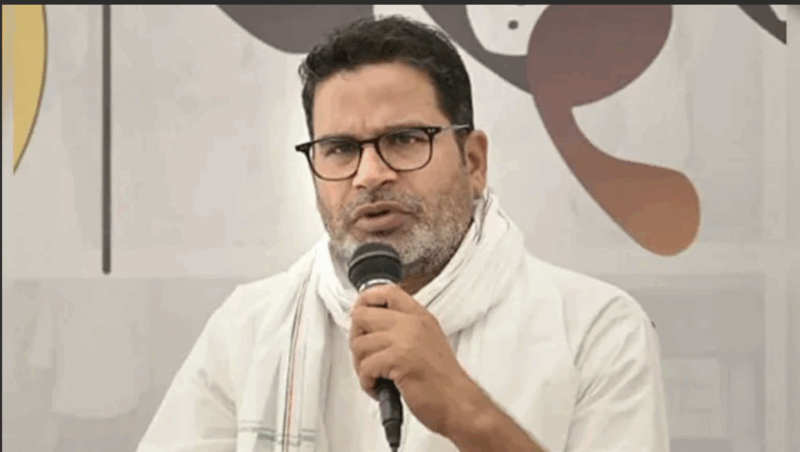
In the vast tapestry of Indian politics, few figures embody the complexities of aspiration and pragmatism as vividly as the election strategist-turned-politician Prashant Kishor.
His recent yatra across the heart of Bihar – a state steeped in history, culture, and a myriad socio-political challenges – reflects not only a quest for electoral success but also a profound engagement with the hopes and dreams of its people.
Although the Jan Suraaj Party (JSP) was formed as recently as October 2, 2024, it is the first party to announce the names of its candidates. While other political parties are still haggling over seat-sharing between allies, the JSP unveiled the first list of 51 candidates from 26 districts on October 9.
Will the promises that PK, as Prashant Kishor is known, made during the yatra resonate with the choices now presented to the electorate?
PK, a strategist by training and a visionary by disposition, embarked on his two-year-long yatra with a series of commitments that echoed the aspirations of a populace long burdened by political inertia. His promises ranged from good governance and transparency to social justice and youth empowerment.
He spoke fervently about revitalising Bihar, a state that has often found itself in the shadows of its more prosperous counterparts. The very essence of his campaign was rooted in the idea that Bihar deserved more – more attention, more resources, and more opportunities. And above all, better leaders, who were not dynasts, not criminals (Bahubalis), not political chameleons who change their party affiliation often, and not venal politicians who loot public money for their private interests.
eduled Castes (SC) and reserved seats for SC, and 9 from the general category. Given that EBC has the highest proportion in the state with 36 per cent, and OBC has 27.12 per cent as per the Bihar Caste Survey 2023, these two categories get the highest number of candidates.
Muslims, who constitute 17.7 per cent, have been allotted 7 candidates. The general category, comprising 15.52 per cent of the population, has been allotted 9 seats. The number of women candidates is very few. However, these ratios are bound to change once the entire list of candidates is declared.
PK has argued that a few thousand families have captured the entire politics of Bihar. Either they are political dynasts, mafias (Bahubalis), or simply individuals who keep switching from one political party to another (the Paltu Rams, or Aaya Gaya Rams, of Bihar politics), or those who are enormously corrupt, facing several allegations, either criminal in nature or simply scamsters.
Therefore, a real alternative that will provide good governance must not include any candidate that is either from a political dynasty, or a previous switcher from another political party, or has a criminal record.
As a result, almost all his 51 candidates are fresh faces, doctors, upright police officers, honest bureaucrats, academics, lawyers, a singer, a transgender and professionals. None has a criminal record, none are party switchers, none are from political dynasties.
Only Exception
Perhaps, the only exception to the political dynasty filter is the inclusion of Jagriti Thakur, the granddaughter of former Bihar chief minister Karpoori Thakur, also known as Jannayak (people’s hero). Thakur was from the Hajjam (barber) caste. He initiated the first reservation for Backwards Classes (especially EBC) during his regime between 1978 and 1980.
TSP has fielded Jagriti Thakur from Samastipur’s Morwa constituency. PK said one reason for her inclusion was because of her gender (scarcity of women candidates in general), and she has an extraordinary track record of public service.
Former IPS Officer To Fight For PK
RK Mishra, an outstanding former Indian Police Service (IPS) officer of the 1986-batch, who was made Superintendent of Police of Bhagalpur during the gruesome and uncontrolled communal riots in 1989, has been selected as the candidate from Darbhanga. The riots lasted for over two months.
In his first interview with NDTV, Mishra identified the main problems of Darbhanga town as “constant flooding and waterlogging on the streets, nightmare traffic jams, no public space for parking and total lack of public good” in this historic city, which otherwise has half-a-dozen grand palaces that belonged to the Darbhanga Raj, and is today the campus of Lalit Narayan Mithila University.
Mishra promised that if he is elected, he would make sincere efforts to eradicate waterlogging by building drains, end traffic jams and create parking spaces for cars and other vehicles.
Another notable mention is 2000-batch IPS officer Jai Prakash Singh, who took voluntary retirement as ADGP (CID). He is being fielded from Chapra.



