The Southeast Asian neighbours have resorted to arms several times this year since a Cambodian soldier was killed in a May skirmish.
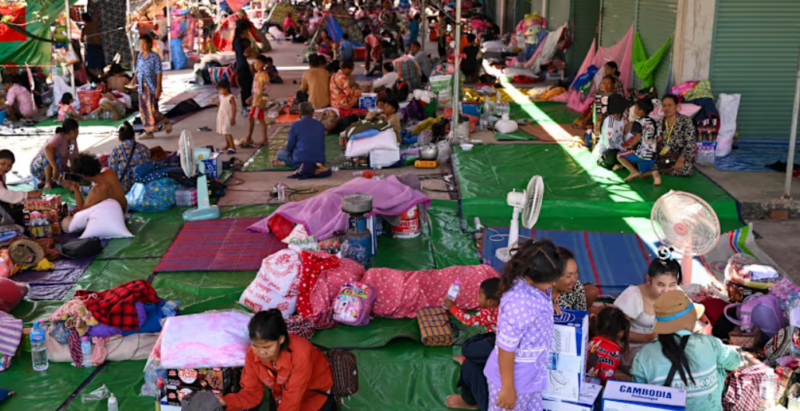
Thailand’s military said on Sunday (Dec 14) it was considering blocking fuel exports to Cambodia, as fighting between the two countries spread to coastal areas of a disputed border region two days after US President Donald Trump said the sides had agreed to a new ceasefire.
The Southeast Asian neighbours have resorted to arms several times this year since a Cambodian soldier was killed in a May skirmish, reigniting a conflict that has displaced hundreds of thousands of people on both sides of the border.
Thai military commanders have been discussing blocking fuel exports to Cambodia, including asking the navy to be “vigilant against” ships carrying strategic supplies and designating maritime zones near Cambodian ports as “high-risk”, a navy official told a press conference on Sunday.
“At this time, there are no orders on these measures,” said Captain Nara Khunkothom, assistant spokesperson for the Royal Thai Navy, adding that the matter would be discussed at a security meeting on Monday.
The Thai energy ministry said on Friday that Thailand had halted exporting oil to Cambodia since June. Thailand, last year, exported 2.2 billion litres of fuel to Cambodia, according to the energy ministry’s data.
THAILAND IMPOSES CURFEW IN SOUTHEAST
Cambodia accused Thailand of striking civilian infrastructure, including the use of fighter jets and shelling in civilian areas. Thailand said it has targeted only military targets.
Thailand announced a curfew in its southeastern Trat province on Sunday as fighting continues across the two countries’ 817-km border. A soldier and a civilian were killed by BM-21 rockets fired by Cambodia on Sunday, Thai authorities said.
At least 16 soldiers and 10 civilians have died, and hundreds have been injured in the latest round of clashes, which started on Monday, with 258,626 civilians displaced, according to the Thai authorities.
Cambodia did not report any new deaths or injuries on Sunday. At least 11 have died, 74 have been injured, and 394,706 have been displaced since Monday, according to Cambodia’s interior ministry.
Thai forces said on Saturday they had destroyed a bridge that Cambodia used to deliver heavy weapons and other equipment to the region and launched an operation targeting pre-positioned artillery in Cambodia’s coastal Koh Kong province.
“Overall, there have been clashes continuously” since Cambodia again reiterated its openness to a ceasefire on Saturday, Thai Defence Ministry spokesman Rear Admiral Surasant Kongsiri told a press conference in Bangkok later on Sunday.
US President Donald Trump, who brokered a ceasefire in the long-running dispute in October, said he spoke to Thailand’s caretaker Prime Minister Anutin Charnvirakul and Cambodian Premier Hun Manet on Friday, and said they had agreed to “cease all shooting”.
But Anutin vowed on Saturday to keep fighting “until we feel no more harm and threats to our land and people”.
A White House spokesperson later said Trump expected all parties to honour commitments and that “he will hold anyone accountable as necessary to stop the killing and ensure durable peace”.
Thailand is open to a diplomatic solution, but “Cambodia has to cease hostility first before we can negotiate”, Surasant said.
While both Cambodia and Thailand would benefit from good relations with Trump to negotiate favourable tariff rates with the US, they are unlikely to “bow to any economic carrots or sticks” from Washington, said Southeast Asia security expert Japhet Quitzon.
In July, the US president had threatened to raise tariff rates and withdraw from negotiations if both sides did not stop fighting.
“Both Cambodia and Thailand are plateauing economically … but at this point, it seems as though nationalism trumps, so to speak, President Trump,” added Quitzon, who is an associate fellow with the Southeast Asia Program at the Center for Strategic and International Studies.



