A surge in private school fees across India, particularly in Delhi, is triggering protests and court battles as families struggle with affordability, arbitrary hikes, and threats of student expulsion. With some fees doubling in five years, parents demand regulatory reforms and financial transparency from schools.
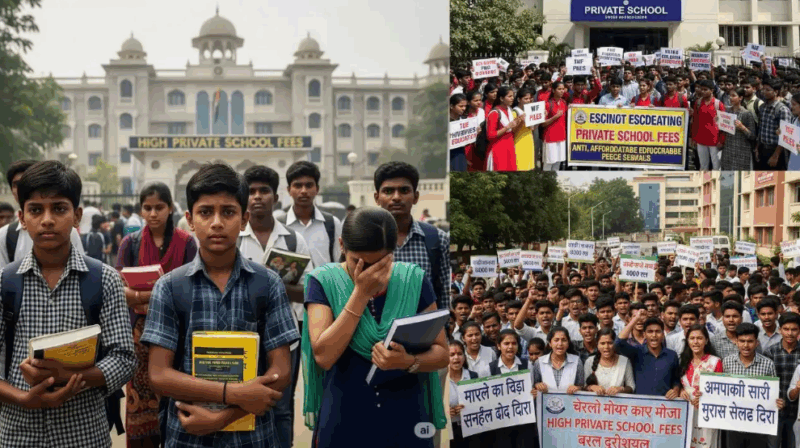
Hundreds of Indian families are protesting against steep and, in many cases, allegedly unlawful hikes in private school fees, which have more than doubled in some schools over the past five years. Parents across major cities including Delhi, Pune and Hyderabad say the increases are unsustainable, pushing household budgets to the brink and leading to student expulsions, despite legal protections.
The tipping point came in Delhi, when a prominent school in Dwarka allegedly expelled students, including 14-year-old Aaditya Mattey, for unpaid fees. Aaditya, who was preparing for his English exam on 9 May, was escorted out of his classroom by school security guards and sent home without explanation.
“Two or three minutes after I entered the class, guards and bouncers asked me to leave the room,” Aaditya said.
His father, Divya Mattey, refused to pay the new annual fee of Rs 189,096, nearly double the Rs 93,400 he paid in 2020. The family, along with dozens of others, is now fighting the school in court. “We never thought a school of this stature would treat children like this – bar them from classrooms, assign bouncers and make them sit in the library,” Mr Mattey told the BBC.
A National Pattern of Fee Inflation
In Maharashtra, for example, a 15 per cent increase every two years is permitted if fewer than 25 per cent of parents object. Karnataka allows annual 10 per cent hikes with audit justification. Yet, legal challenges tend to drag for years, offering little immediate relief.
In Delhi, private schools on government-leased land must obtain prior approval from the Directorate of Education (DoE) to raise fees, and must reserve 25 per cent of seats for economically disadvantaged students. But recent protests suggest many schools are bypassing or defying these regulations.
“It’s not our job to regulate schools. That’s what the government is supposed to do,” said Gagandeep Singh, whose son’s school in West Delhi hiked fees by 45 per cent last year and over 10 per cent again this year.
The BBC reached out to the schools in question, but received no response.
Government Intervention on the Horizon
“Schools’ finances must be audited before each academic year so parents know what they’re paying for,” said Shikha Sharma Bagga, a Supreme Court lawyer and secretary of advocacy group Justice for All.
Education Minister Ashish Sood has promised stricter oversight and said parent voices will be considered in the final legislation.
But parents are sceptical. Protests outside the DoE and Delhi Vidhan Sabha continue, with calls for audits, penalties for non-compliance, and protections against student expulsion for financial reasons.
Schools Cite Operational Costs and Losses
However, the claim of operational losses rings hollow for many. “Both my husband and I work, but our salaries haven’t gone up significantly. As a parent, you try to give your child the best, but sometimes that comes at great personal cost,” said one Delhi mother who is considering withdrawing her son from school after a 30 per cent fee hike.
Children Bear the Brunt
“My son is only 14. He should be focusing on his studies, not worrying about whether he’ll be allowed to sit in class tomorrow,” said Mr Mattey.
Pankaj Gupta, a small shop owner, echoed the concern. His son’s school raised fees by 25 per cent without prior notice. “We had no choice. We had to pay,” he said, noting that his business has not recovered since the pandemic and is now also threatened by e-commerce.



