ASTRONAUTS visiting Mars could unearth a museum of alien fossils that may have belonged to an intelligent civilisation.
Professor Chandra Wickramasinghe backed NASA’s plan to send humans to Mars in the 2030s and Elon Musk’s bid to colonise the planet.
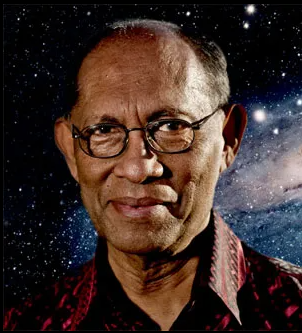
The Buckingham Centre for Astrobiology astrobiologist thinks alien life “unquestionably” existed on the Red Planet.
And he’s even suggested explorers could unearth fossils pointing to alien life, possibly more intelligent than us.
Prof Wickramasinghe told The Sun: “I think it is entirely plausible that Mars, sometime in the past, was a green planet full of life.
“Then something happened that made it a virtually dead planet or nearly a dead planet.
“This could have happened after impact. An episode of comet asteroid impacts could have destroyed all life that existed on it if it did exist on Mars. It could have destroyed it just as on the Earth.
“If there was a huge protracted episode of asteroid comet impacts, then this planet would be a dead planet.
“The fact that Mars and Earth are very similar, geologically very similar, have seasons and they have very similar patterns of oscillation of temperature and so on makes it entirely possible that, in the past, Mars was the home of life.
“I don’t rule out intelligent life.
He added: “I think astronauts will explore all those fossils discussed by Barry DiGregorio, examine them more carefully and decide whether they’re artifacts or real fossils.
“They would encounter bacteria and I think they would find a planet that is very easy to terraform, to make it a living planet like the earth.
“If you go with enough resources, you could build houses and build a civilisation on Mars, and I don’t think that’s impossible.
“I can’t rule out an intelligent civilisation.”
Asked what that life may have looked like, he said: “It’s speculation. It could have been as intelligent as you or I or maybe even more intelligent.
“Who knows? I think evidence has been virtually stamped out of existence possibly through an impact episode, if it did exist.”
DiGregorio had claimed alien fossils had been discovered by NASA’s Curiosity rover in 2018.
He accused NASA of failing to investigate properly so it could boost publicity for a manned mission to Mars.
NASA said it believed the images likely showed signs of crystal growth, not alien fossils.
Billionaire Musk has long signalled his intent to colonise Mars through his SpaceX company.
Last year, the X owner even suggested humans could land there in four years and be living in a self-sustaining city in 20.
NASA says on its website it intends to send humans to Mars in the 1930s.
In 1976, NASA landed two Viking landers on Mars.
NASA scientist Gilbert Levin ran an experiment to test the soil and concluded there were positive signs of life through the presence of radioactive gas.
NASA and its other scientists disagreed, and separate experiments from Viking concluded the soil did not show signs of life.
But Levin spent the rest of his life claiming he’d found signs of alien life until his death in 2021.
Prof Wickramasinghe said: “We have unquestionably found microbial life on Mars, the most secure discovery was the Gilbert Levin discovery in the 1970s when they did the Viking land experiments.”
He added: “That result was overwhelmingly positive. They got the result that they wanted.
“So almost immediately Levin, who I’d known for a long time, made the announcement on behalf of NASA that we have discovered life on Mars.
“This was a step too far for the NASA establishment, and they then revoked that statement.”
On its website, NASA says: “Mars remains our horizon goal for human exploration because it is one of the only other places we know where life may have existed in the solar system.
Source : https://www.the-sun.com/tech/14329268/aliens-live-mars-smarter-humans/



