On October 16, 1964, China conducted its first nuclear test at Lop Nur, marking its entry into the nuclear club. This event, termed Project 596, was portrayed as a symbol of national strength but resulted in severe consequences for the Uyghur and Kazakh populations of Xinjiang.
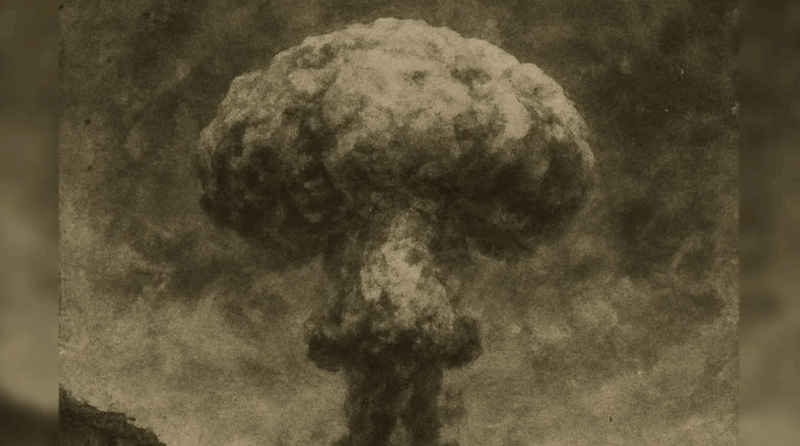
On 16 October 1964, at 1500 China Standard Time, Lop Nur in Xinjiang shook when a uranium-235 implosion device exploded on top of a 102-metre tower. The 22-kiloton explosion put the People’s Republic of China into the very select nuclear club as a member number five. Beijing’s legend cast the test—designated Project 596—as evidence that China had “caught up with the superpowers.” But hidden beneath this mythology is a grimmer reality: China’s atomic success was founded on Xinjiang’s suffering, shouldered disproportionately by the region’s Uyghur and Kazakh people.
The Genesis of Nuclear Ambition
Project 596 came from China’s deteriorating relations with the Soviet Union. Originally started in the 1950s with a heavy Soviet contribution through the 1957 New Defence Technical Accord, China’s nuclear programme stalled with Nikita Khrushchev’s revocation of the accord on 20 June 1959. Moscow’s withdrawal of more than 1,400 advisers put China’s programme into shambles. Mao Zedong converted the reverse into an ideological call to action, sanctioning Project 596—named after June 1959—as a show that China would become nuclear in its own right.
The decision to speed up the programme timed in with the Great Leap Forward famine of 1958-1962, which accounted for an estimated 30 million deaths. While millions died of hunger, resources were being shifted towards uranium enrichment plants at Lanzhou and the building of Lop Nur. The Communist Party was more concerned with atomic prestige than with people’s belly needs, pouring meagre resources into weapons research as peasants died.
Xinjiang: The Sacrificial Geography
The choice of Lop Nur as a testing site for Chinese nuclear tests was put forward as utilitarian—a distant, “uninhabited” desert that was suitable for atomic tests. This was intentional deception. Uyghur pastoralists, Kazakh nomads, and other Turkic peoples had lived in the area for centuries. The creation of the test site, which later covered around 100,000 square kilometres, required mass displacement with limited compensation.
From 1964 to 1996, China detonated 45 nuclear tests at Lop Nur: 23 atmospheric and 22 underground. The atmospheric tests discharged vast amounts of radioactive material. Lop Nur discharged about six million times more poisonous radioactive material than Chernobyl. Between 1 and 1.48 million people were exposed to fallout, according to estimates, with Chinese officials allegedly synchronising detonations with westward wind patterns to maximise exposure in Uyghur-populated regions.
The Human Toll
The health impacts have been devastating. Japanese physicist Jun Takada’s research puts the number of people killed by radiation exposure at around 194,000. Cancer incidence in Xinjiang shot up to 30-35 per cent above China’s national rate. Doctors reported shocking trends: 90 per cent of cancer victims had blood or lymph cancers caused directly by radiation. The leakage of an estimated 48 kilogrammes of plutonium-239—where breathing in even a millionth of a gramme can cause cancer—was responsible for a public health disaster whose consequences linger on through generations.
Dr Enver Tohti, a Uyghur doctor who practised in cancer wards across Xinjiang, recorded instances of lymphomas and other cancers caused by radiation at levels hundreds of times higher than normal trends. Beijing has, however, always denied independent researchers access, shut down epidemiology studies, and refused to admit the link between nuclear testing and public health disasters.



