Israeli–US raids on Iran have disrupted shipping and aviation across the Middle East, leaving nearly 3,000 merchant ships and about 45,000 sailors stranded. Maritime traffic in the Persian Gulf has largely halted, raising fears of global trade disruptions and worsening conditions for crews and livestock vessels stuck at sea.
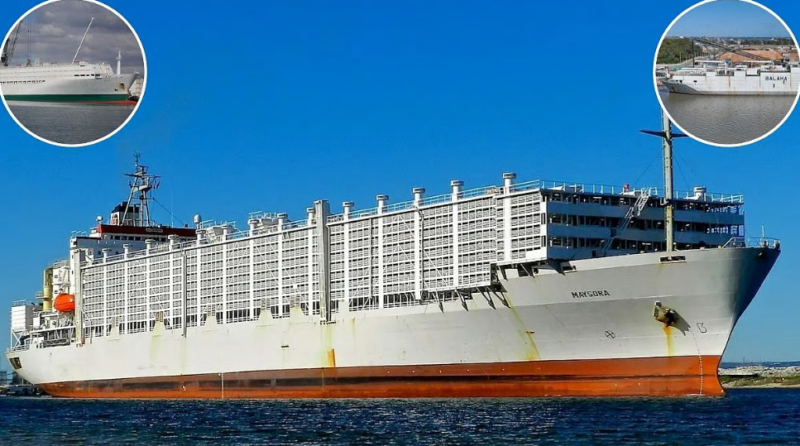
The logistical and economic network across the Middle East has been severely disrupted following Israeli–American raids on Iran, leaving thousands of merchant vessels stranded and tens of thousands of sailors unable to move through key maritime routes.
Air and maritime transport disrupted
Air freight and passenger traffic have reportedly been suspended across Kuwait, Iraq, Qatar, Bahrain, Syria, Lebanon, Jordan, Iran and Israel, while maritime traffic in the Persian Gulf has largely come to a standstill.
According to estimates cited by the Paris-based NGO Robin des Bois, nearly 3,000 merchant ships are currently stuck in the region. Based on an average of 15 crew members per vessel, around 45,000 sailors—many of them from countries such as the Philippines and India—are effectively stranded due to the conflict.
Threats to global trade routes
Shipping in the Red Sea also faces threats of reprisals from the Yemen-based Houthi movement, raising fears of further disruptions to global trade.
Experts have expressed concerns that the paralysis of transport routes could affect supplies of strategic commodities including gas, oil, raw materials for plastics, automobiles and consumer goods.
Livestock carriers also stranded
The NGO also warned about the plight of thousands of live animals being transported by sea to Middle Eastern markets. Based on available information, at least 70,000 cows, sheep and goats exported from South America, the European Union and the Horn of Africa are currently stranded in the Eastern Mediterranean and Red Sea.
Under normal circumstances, livestock carriers already face poor conditions at sea, but delays caused by war, disease outbreaks or disruptions to key shipping passages—such as the 2021 blockage of the Suez Canal during the grounding of the Ever Given—can make conditions on board extremely severe.
Livestock vessels currently in the conflict zone
At least six livestock vessels are already in the conflict zone. These include the Al Mabrouka-10, which sailed from Digna in Sudan and is currently in Jeddah, Saudi Arabia; the Balha One, travelling from Rio Grande in Brazil towards the Suez Canal after a technical stop in Cartagena, Spain; the Mariona Star, heading from Tartous, Syria to Jeddah and currently in the Red Sea; and the Mayar, travelling from Berbera, Somalia to Jeddah and also in the Red Sea.
The Maysora, sailing from Vila do Conde in Brazil towards the United Arab Emirates or Iraq, is currently in the Suez Canal, while the Tuleen, which departed from Koper in Slovenia, is approaching Haifa in Israel.
Additional vessels heading towards the region
Seven additional livestock carriers are reportedly heading towards the conflict zone. These include the Al Farouk, travelling from Reni in Ukraine to Beirut and currently south of Cyprus; the Galloway Express, sailing from Montevideo in Uruguay to Ashdod, Israel and currently off Crete; and the Julia AK, heading from Vila do Conde in Brazil to Jeddah and presently off the coast of Mauritania.
Other vessels include the Karim Allah, sailing from Reni in Ukraine to Beirut and currently in the Sea of Marmara; the Norland, travelling from Vila do Conde to Beirut and presently between Malta and Crete after a stop in Cartagena; the Rami M, bound for Beirut from Vila do Conde and currently near southern Cyprus after stopping in Benghazi, Libya; and the Taiba, travelling from Vila do Conde to Aqaba, Jordan and presently off Crete after a technical stop in Cartagena.



