About 4,900 of the accounts were taken down with the help of the Singapore Police Force.
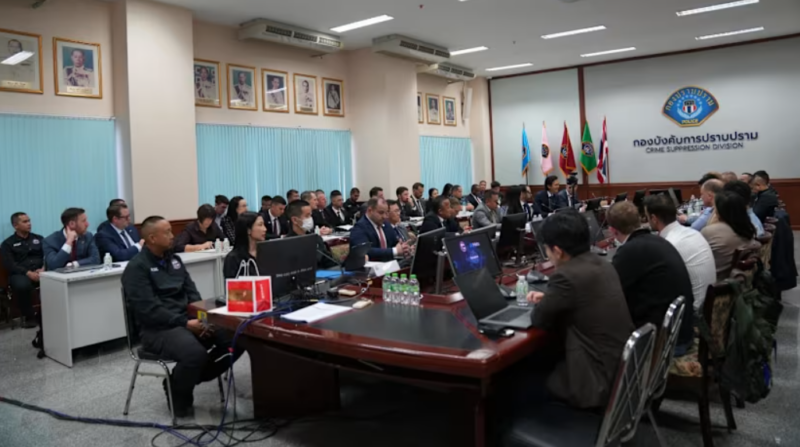
Meta has disabled more than 150,000 Facebook and Instagram accounts linked to scam centre networks in Southeast Asia after a global law enforcement operation last week involving agencies from countries such as Singapore, Thailand and the United States.
About 4,900 of the accounts were taken down with the help of the Singapore Police Force (SPF), which shared intelligence with Meta, the parent company of Facebook, Instagram and WhatsApp.
The operation, known as the Joint Disruption Week, was held in Bangkok and led by the Royal Thai Police Anti-Cyber Scam Center, the United States’ Federal Bureau of Investigation (FBI) and the Department of Justice Scam Center Strike Force.
The Royal Thai Police arrested 21 people for their involvement in scam activity, Meta said in a press release on Wednesday (Mar 11).
The latest enforcement operation was the second joint crackdown since December 2025. The first saw the removal of 59,000 accounts, pages and groups from Meta’s platforms as well as the issuance of six arrest warrants.
The tech company also released its adversarial threat report for the first half of 2026, where it listed target trends that surfaced during its investigations.
Mandarin-speaking audiences, including those in China, Taiwan, Hong Kong, and Singapore, were among groups frequently targeted by criminal scam syndicates.
These targeting patterns likely reflect both the expected returns of larger, higher-income markets and the operational realities of these scam compounds, said Meta.
Coerced or recruited workers are typically trained to conduct outreach in English or their own major regional languages, enabling them to target a large number of victims.
Still, criminal scam syndicates are opportunistic and may target individuals anywhere, Meta added.
Meta’s director of global threat disruption David Agranovich also flagged three scam types observed on its platforms during last week’s joint enforcement operation.
They included law enforcement impersonation scams, where criminals pose as police or government officials to extort victims, and digital arrest scams, which involve fraudsters conducting fake video call arrests to coerce victims into paying fines or transferring assets.
Another category was cryptocurrency investment scams, where a criminal builds a false romantic or professional relationship with their target before luring the individual into a fraudulent investment scheme.
On Meta’s partnership with enforcement agencies, Mr Agranovich said the company expects to conduct more such joint operations throughout this year.
“When platforms and law enforcement can share intelligence in real time and coordinate action against the criminals, we can disrupt these networks faster and more effectively than any of us can do alone,” he added.
Mr Daryl Poon, director of law enforcement for the Asia-Pacific region at Meta, said scam networks today operate across borders and adapt quickly, often shifting tactics between platforms and jurisdictions.
Initiatives like the Joint Disruption Week allow Meta to stay ahead of emerging scam trends and better protect people across the region, he added.
Deputy Assistant Commissioner of Police (DAC) Gregory Kang from SPF also noted the importance of close cooperation between law enforcement agencies and digital platforms.
“By proactively sharing information, we can more effectively disrupt the criminal networks behind these scams,” added DAC Kang, who is assistant director of the cybercrime division in SPF’s Criminal Investigation Department.
Police Lieutenant General Jirabhop Bhuridej, assistant commissioner general of the Royal Thai Police and deputy director of the police cyber task force, noted that criminal scam syndicates cause real harm to communities and the economy.
Tackling scams calls for a joint effort between the public and private sectors, he added.
“This operation also sends a clear message to criminals that the Royal Thai Police and our partners will continue to suppress and eradicate all forms of online crime to the fullest extent, to make Thai society and our region a safe place for all citizens.”
NEW TOOLS
Meta also announced new tools that will be available on Facebook, Messenger and WhatsApp to protect users from scams.
These include Facebook alerts to help users decide whether to block or reject requests from accounts that show signs of suspicious activity, such as not having many mutual friends or those with a different country location in their profile.
On WhatsApp, scammers may try to trick people into linking their accounts to a fraudster’s device, either by getting users to enter their phone number followed by a device linking code or scanning a QR code.
Source : https://www.channelnewsasia.com/singapore/scam-facebook-instagram-meta-thailand-enforcement-5986251



