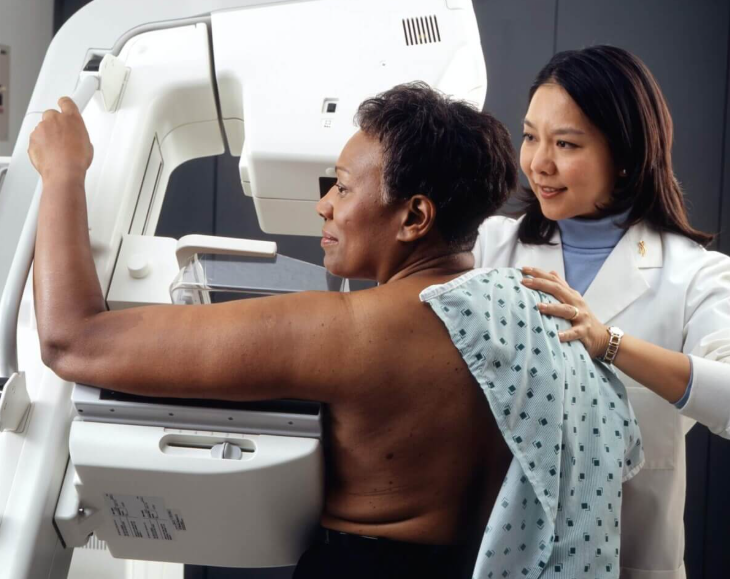
New research suggests that mammograms may continue to benefit women in their eighties, a group often excluded from cancer screening guidelines. A UCLA study found that women over 80 who had a mammogram within two years of their breast cancer diagnosis lived longer and were less likely to see their cancer return compared with women of the same age who were not screened.
Researchers reviewed 174 women, ages 80 to 98, diagnosed between 2013 and 2020. Of these, 98 had undergone a mammogram before diagnosis, while 76 had not. Women in the screening group had a 74 percent lower risk of death and a 55 percent lower risk of recurrence, based on hazard ratios. These benefits remained even after adjusting for age, tumor type, and whether surgery was performed.
Early Detection in the 80+ Group
How cancer was discovered differed sharply between groups. Nearly 80 percent of unscreened women found their cancer by feeling a lump, compared to just 25 percent of screened women.
Unscreened women were more likely to be diagnosed with larger tumors (3.1 cm versus 1.7 cm), higher-grade cancers, and more advanced disease. They were also more likely to require mastectomy or to forgo surgery entirely.
Why Screening May Work Better With Age
Concerns have long existed that mammograms may not help elderly women. The opposite appears to be true. The UCLA team noted that mammography often performs better in older women because breast tissue becomes less dense, making it easier to detect abnormalities.
Other large studies confirm this trend. A 2017 National Mammography Database analysis showed that accuracy improves with age, with fewer false alarms and better cancer detection.
Treatment Paths Differ With Screening
Screening also influenced treatment choices. Women who were screened were more likely to have breast-conserving surgery (82 percent versus 61 percent) and radiation therapy. Unscreened women more often had mastectomy or no surgery at all.
Over a median follow-up of 55 months, survival differences became clear. Screened women not only lived longer overall but also had longer disease-free intervals. These advantages held up even after accounting for factors such as age, tumor biology, and surgery.
What Guidelines Say About Mammograms After 75
Guidelines remain mixed for older women. The U.S. Preventive Services Task Force does not issue recommendations for women 75 or older, citing insufficient evidence. The American Cancer Society suggests continuing screening only if a woman is in good health with an expected lifespan of at least 10 years. The American College of Radiology advises continuing as long as a woman is healthy and willing to undergo follow-up tests if needed.
With no clear consensus, decisions often rest with patients and their doctors. Surveys of older women have found that physician recommendations strongly influence whether patients continue mammograms.
Study Boundaries
The UCLA team emphasized limits to their study. It was retrospective, relatively small, and based mostly on White, non-Hispanic patients. It included only women already diagnosed with breast cancer, so it does not address how screening affects those who never develop the disease.
Potential downsides of continued screening also remain. Earlier research has shown that about 11 percent of women over 80 receive a false-positive mammogram, which can lead to additional tests or procedures without a cancer diagnosis. Such experiences can create stress and financial strain for patients and their families.
A Question for an Aging Population
The number of older adults in the U.S. is climbing rapidly. Between 2010 and 2020, the share of adults 65 and older grew faster than any other age group, reaching nearly 17 percent of the population. With more women living into their eighties and nineties, decisions about when to stop cancer screening will only grow more important.
The UCLA findings, published in the Annals of Surgical Oncology, suggest that healthy women over 80 may still benefit from mammograms, both in detecting cancer earlier and in improving survival. Rather than stopping at a fixed age, the study supports individualized decisions made between patients and their healthcare providers.
Source : https://studyfinds.org/mammograms-after-80-longer-breast-cancer-survival/



