The price of lobster rolls and whole Maine lobsters could climb even higher as warming oceans create an unexpected problem for America’s most valuable fishery. New research reveals that rising temperatures produce smaller baby lobsters, threatening the sustainability of an industry that generated over $2 billion in 2021.
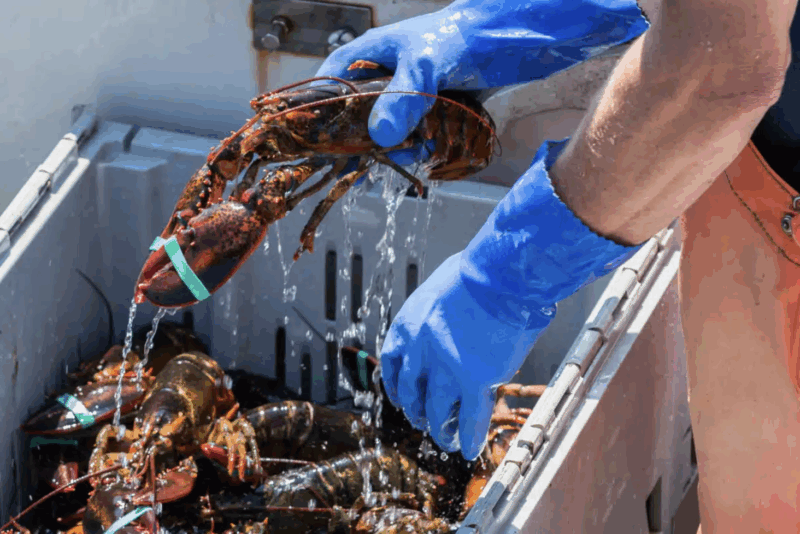
Scientists from the Virginia Institute of Marine Science and University of New Hampshire discovered this troubling trend after exposing pregnant lobsters to ocean conditions expected by century’s end. While the industry has weathered challenges before, this biological change strikes at the heart of lobster reproduction, potentially affecting how many juveniles survive to reach dinner plates.
Fast Growth Comes at a Price
Lead researcher Brittany Jellison and her team spent five months monitoring how lobster embryos developed under different climate scenarios. Eggs exposed to temperatures 4°C warmer than current averages produced larvae measuring 0.1 millimeters smaller at hatching. That might sound insignificant, but in the lobster world, size determines survival from day one.
Larger larvae have better survival odds, a serious concern for an industry already grappling with geographic shifts and declining catches in southern New England. The Gulf of Maine lobster fishery has thrived in recent years thanks to warming temperatures, but this latest finding suggests those benefits may be short-lived.
Temperature drove every major change researchers observed. Warmer conditions sped up embryo development, increased heart rates by 17%, and ramped up metabolic activity by 38%. Eggs developed faster but hatched smaller, a well-known biological trend where animals grow more quickly but reach smaller sizes in warmer conditions.
Acidification Proves Less Concerning
One bright spot emerged from the research: American lobster embryos showed remarkable tolerance to ocean acidification. Even at pH levels 0.4 units lower than today, roughly what oceans may experience by 2100, developing eggs maintained normal growth and metabolism.
This resilience likely stems from their natural environment. Pregnant lobsters migrate through diverse habitats during the nine- to 12-month egg development period, encountering everything from acidic estuarine waters to deeper ocean zones. Some females in New Hampshire’s Great Bay Estuary regularly experience pH levels as low as 7.7.
Embryos also pack tightly under their mother’s tail, where oxygen levels drop and carbon dioxide builds up between grooming sessions. This exposure to naturally variable conditions may have equipped them to handle acidification better than scientists initially expected.
Jellison noted that enzyme activity and oxygen consumption tracked seasonal temperature patterns throughout the experiment, reinforcing temperature’s dominant role. The physiology of American lobster embryos appears robust to ocean acidification but sensitive to warming, particularly for metabolic traits.
Source: https://studyfinds.org/maines-warming-waters-shrinking-baby-lobsters-prices-could-soar/



