We’re pausing our live coverage for now – but will be back soon
It’s now past 9 p.m. in Washington and approaching dawn in the Middle East. We’re closing down this round of live coverage, but we’ll be back soon with a new page with the latest developments as they happen.
On Tuesday, Israeli and U.S. forces pounded targets across Iran, prompting Iranian retaliatory strikes around the Gulf as the conflict spread to Lebanon, rattled global markets and sent oil prices sharply higher.
Here’s what you need to know:
- Iran has fired missiles and drones at neighboring Arab states that host U.S. bases, and strangled shipping through the Strait of Hormuz.
- Trump said the U.S. government would provide insurance to tankers in the region and the Navy would escort them through the strait if necessary.
- Global stock markets slid as the disruption of Middle East energy supplies threatened to reignite inflation.
- In Lebanon, Iran’s Hezbollah allies fired on Israel, which responded with air strikes and reinforcements of ground positions in the south. Syria’s defense ministry said it reinforced its border with Lebanon.
- Trump said the U.S. military had struck numerous Iranian naval and air targets, saying that “just about everything has been knocked out.”
- Scores of people have been killed across the Middle East since the U.S. and Israel attack began, with a reported 787 people killed, including 165 schoolgirls, in Iran.
- Iranian drones struck the U.S. embassy in Saudi Arabia after previously hitting the mission in Kuwait. Washington shut both embassies and its embassy in Lebanon, and ordered some staff and their families to leave much of the Middle East.
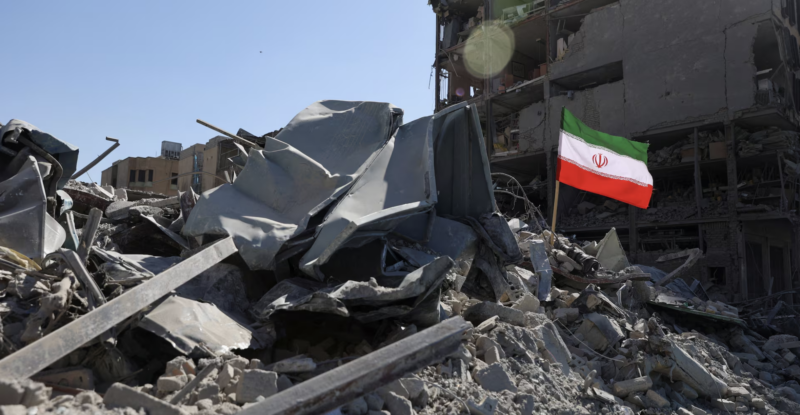
- The building housing Iran’s Assembly of Experts, tasked with choosing a leader to replace Khamenei, was flattened by an air attack, Iranian news agencies said.
- Israeli and U.S. leaders have voiced hopes the attack would trigger an uprising, but Reuters found no evidence one was imminent.
- Trump said he ordered U.S. forces to join Israel’s attack on Iran because he believed Iran was about to strike first, contradicting the rationale offered a day earlier by his secretary of state for how the war began.
- Trump threatened to impose a full U.S. trade embargo on Spain after it refused to let the U.S. military use its bases for missions linked to strikes on Iran.
Defense executives to meet at White House on more weapons
The Trump administration plans to meet with executives from the biggest U.S. defense contractors at the White House on Friday to discuss accelerating weapons production, five sources told Reuters.
Companies including Lockheed Martin and Raytheon parent RTX, along with other key suppliers, have been invited to attend the meeting, the people said, speaking on condition of anonymity because the discussions are private.
The meeting underscores the urgency felt in Washington to shore up weapons stocks after the Iran operation drew heavily on munitions.
Since Russia invaded Ukraine in 2022 and Israel began military operations in Gaza, the U.S. has drawn down billions of dollars’ worth of weapons stockpiles, including artillery systems, ammunition and anti-tank missiles.
The conflict in Iran has consumed longer-range missiles than those furnished to Kyiv.
At least one of the people said the gathering was expected to center on pressing weapons makers to move faster to boost output.
Lockheed, the Pentagon and White House did not immediately respond to requests for comment. RTX declined to comment.



