The Philippines’ “doctors to the barrios” model shows how workforce shortages, intersected with governance, financing and system design, reveal why rural care remains fragile despite years of reforms.
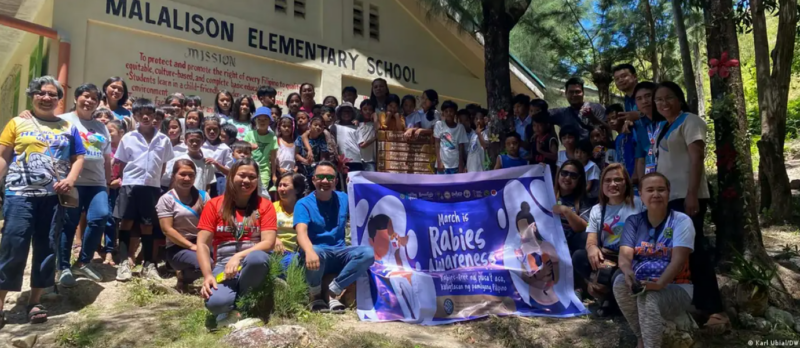
When Dr. Katrina Magbojos joined the Philippines’ Doctors to the Barrios (DTTB) program, she was assigned not to a distant island or a conflict zone, as the term “barrios” might suggest, but to Jalajala, Rizal, about two hours southwest of the capital, Manila.
Jalajala is considered remote due to limited transportation options, scarce resources and challenges in accessing early medical care.
Magbojos served as a rural health physician in Jalajala under the Department of Health’s DTTB between 2022 and 2025.
Morning clinics often ran through noon, followed by afternoon consultations and administrative work.Patients at the clinic needed treatment for issues including upper respiratory tract infections, tuberculosis, diabetes, and hypertension.
While electricity and the internet were generally stable, public transportation dictated daily limits.
“Water was the main problem in my last year of deployment,” Magbojos told DW, explaining how her supply was often cut off to save costs.
For her, social problems in developing countries like the Philippines remain a challenge. People with lower incomes have poor health-seeking behavior, she said, because “whenever they seek consultation, they always think it is just an expense, so sometimes they seek it too late.”
Magbojos said that many patients could not complete their treatment because medicines were limited. She recalled two cases of human rabies that affected her deeply.
“Preventable vaccines are subsidized by the government, but the two cases did not access preventive vaccines,” she said.
Why DTTB still exists
The Doctors to the Barrios program began in 1993 after a health department survey found that 271 municipalities were without a resident doctor. Yet, after three decades, many health officials claim the underlying issue persists.
The Philippines has 7.92 doctors per 10,000 population as of 2022, according to figures from the Philippine Senate — lower than the benchmark of 10 doctors per 10,000.
As of December 2025, the Department of Health had 739 Doctors to the Barrios deployed across the country, according to Dr. Karl Ubial, who serves as the team lead for Primary Care Provider Network support under the DTTB program.
“The DTTB is a program that ensures that universal health care is achieved through equitable access and distribution of doctors,” Ubial said.
He added that the mandate goes beyond filling vacancies to strengthening local health systems.
Numbers and systems both matter
At the heart of the DTTB discussion is a persistent question: is the problem simply a lack of doctors? Ubial said the answer is more complex.
“The binding constraint in many areas is maldistribution and local system capacity [financing, HRH absorption, referral networks, medicines, diagnostics, governance],” he told DW.
Even when doctors are available, system limitations often make retention difficult. DTTB functions as a bridge while broader reforms under the Universal Health Care (UHC) law take shape.
“DTTB is designed to close an access gap until such time that LGUs [local government units] are capacitated to supply themselves with the proper amount and quality of Human Resources for Health,” Ubial said.
Why towns still rely on DTTBs
Many municipalities remain dependent on the DTTB because they cannot sustain a physician’s presence, often due to limited budgets or difficulty recruiting doctors to more remote areas.
Ubial also pointed to constrained access to medical education, now being addressed through the Doktor Para sa Bayan Act, which aims to address the shortage of physicians by providing free education.
Meanwhile, Magbojos said he saw these limits play out in referrals.
Jalajala has a provincial infirmary, but “they lack manpower, tools and equipment,” she said.
Serious cases were referred to hospitals several municipalities away. Transport often became a bottleneck.
“If they’re unlucky enough that all the ambulances are unavailable, they will have to transfer by their own means,” she said. Referral coordination, she added, was uneven.
DTTB as a transitional measure
Some observers describe DTTB as a temporary solution. Ubial, however, described it as a transitional program.
“For me, it is more like a bridge — a transition while long‑term human resource and capacity delivery solutions are being built,” he said.



