The Sawalkot project, a run-of-the-river hydroelectric plant on the Chenab River in the Ramban and Udhampur districts of the Union Territory, was initially conceptualised in 1984 but had remained shelved for years due to objections raised by Pakistan under the Indus Water Treaty framework.
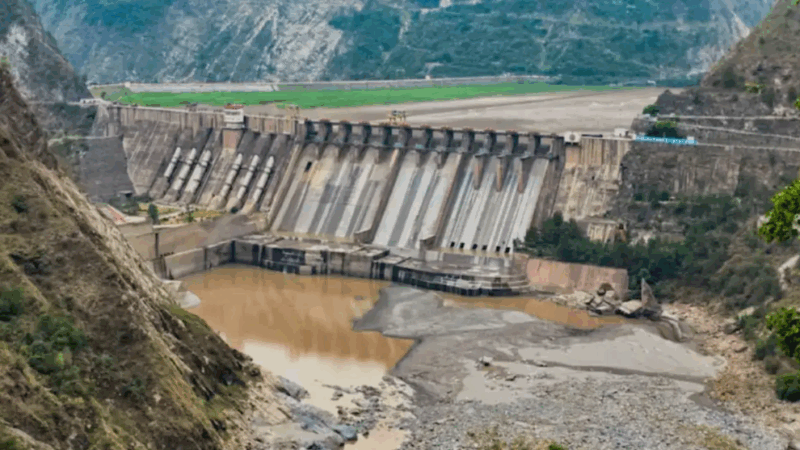
In a significant move following the effective suspension of the Indus Waters Treaty, Centre has floated tenders for the construction of the long-pending 1856 MW Sawalkot Hydro Electric Project in Jammu and Kashmir, nearly four decades after it was first conceived.
The Sawalkot project, a run-of-the-river hydroelectric plant on the Chenab River in the Ramban and Udhampur districts of the Union Territory, was initially conceptualised in 1984 but had remained shelved for years due to objections raised by Pakistan under the Indus Water Treaty framework.
With the treaty now on the backburner amid heightened bilateral tensions, India is pressing ahead with major infrastructure developments in the region. The National Hydroelectric Power Corporation (NHPC) will oversee the project, with a sanctioned expenditure of Rs 209 crore, and a targeted completion timeline of 113 months.
Once operational, the Sawalkot Hydro Electric Project is expected to generate 7,994.73 million units of energy annually, thereby bolstering power supply in the energy-deficient northern grid as well as aiding industrial growth in the region.
The project is part of a broader plan by the government to construct seven key hydroelectric projects in Jammu and Kashmir with a total installed capacity of 5,388 MW. These include 1000 MW Pakal Dul HEP, 624 MW Kiru HEP, 540 MW Kawar HEP, 1856 MW Sawalakote HEP, 390 MW Kirthai-I, 930 MW Kirthai-II and 48 MW small hydro initiatives.
Construction work is already in advanced stages for Pakal Dul, Kawar, and Kiru projects.
Following the Pahalgam carnage that killed 26 innocent tourists in the Baisaran meadow in Jammu and Kashmir’s Pahalgam, India had announced a raft of measures against Pakistan, including the suspension of the Indus Waters Treaty, the expulsion of Pakistani military attaches and the immediate shutting down of the Attari land-transit post.
What is the Indus Waters Treaty?
The Indus Waters Treaty, brokered by the World Bank, has governed the distribution and use of the Indus river and its tributaries between India and Pakistan since 1960.



