The senior fellow at the Asia Pacific Foundation said that, while on one hand, India maintains strong ties with Israel, it also has good ties with Iran, keeping in mind New Delhi’s interests in the Middle East. Hence, it won’t be easy for India to perfect a balancing act during the ongoing war.
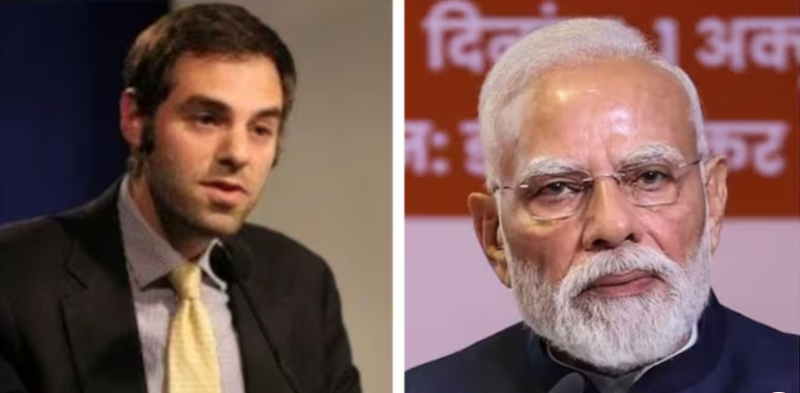
India faces a difficult diplomatic balancing act amid escalating Middle East tensions involving Iran, Israel and the US, geopolitical expert and author Michael Kugelman told India Today TV. Kugelman said New Delhi must tread carefully to protect its strategic interests, maintain key partnerships and safeguard energy security while adhering to its long-standing doctrine of strategic autonomy.
Kugelman argued that India is in a tough spot because it maintains close ties with several actors, some of them rivals, directly affected by the conflict.
“Balancing would, of course, reflect India’s foreign policy when it comes to strategic autonomy,” Kugelman said, noting that maintaining such balance will be difficult in the current climate.
“India’s in a tough spot because we see how important India’s relationship with Israel has become over the last years”.
This comes a day after India Today reported that Iran’s measured approach toward India highlights Tehran’s strategic interest in keeping New Delhi engaged, even amid escalating regional rivalries.
India’s condolence over Ayatollah Ali Khamenei’s death exemplifies its longstanding diplomatic practice of respectful engagement during geopolitical tensions.
The situation was further complicated by US sanctions on the Chabahar Port, a key project India is developing as a strategic trade gateway.
Despite reduced investments under Washington’s “maximum pressure” campaign, Iran refrained from harsh criticism, with former official Abbas Araghchi noting the cuts were “disappointing” but expressing hope for continued work.
Tehran’s engagement reflects three priorities: securing energy supplies, protecting India’s diaspora interests, and respecting India’s non-alignment policy.
Over the past decade, India’s relationship with Israel has deepened considerably, particularly in defence cooperation. The partnership has become increasingly important as New Delhi looks to strengthen its military capabilities, including acquiring advanced air defence systems from Israel.
Kugelman further pointed out that Prime Minister Narendra Modi visited Israel shortly before the US and Israel launched strikes on Iran, underlining the growing closeness between the two countries.
According to Kugelman, developments such as Operation Sindoor have further strengthened the importance of India-Israel defence cooperation, wherein Israeli air defence technology helped India thwart Pakistani drone and missile strikes.
However, Israel is only one part of India’s complex strategic calculus. Kugelman noted that India also maintains strong ties with Gulf countries within the Gulf Cooperation Council, including Saudi Arabia and the United Arab Emirates.
These relationships are critical for energy supplies and for the welfare of millions of Indian nationals living and working across the region.
“We know that given how volatile and potentially explosive this conflict is, and given how much India could be impacted for so many reasons, mainly based on energy equities and, of course, the several million Indians in the GCC region, India has to be very careful about how it messages itself on this war,” Kugelman said.
While India’s ties with Iran have cooled in recent years—especially after New Delhi sharply reduced imports of Iranian crude oil—Kugelman said Tehran remains an important partner in India’s broader regional engagement.
Despite the reduced energy trade, “it’s still an important and friendly relationship,” he said, adding that this makes India’s diplomatic balancing act even more delicate.
The conflict is already having tangible implications for India.
INDIA-CHINA ECONOMIC COOPERATION
Reports claim that the country is grappling with a severe commercial liquefied petroleum gas crisis, prompting the government to invoke the Essential Commodities Act to prioritise domestic supply and increase production.
Although about 70 per cent of India’s fuel imports now bypass the Strait of Hormuz, roughly 90 per cent of LPG shipments still pass through the strategic waterway, leaving the country exposed to disruptions.
Against this backdrop, India has also taken steps to ease economic restrictions on Chinese investment.
The Union Cabinet recently relaxed foreign direct investment norms for companies from China in sectors such as electronics and solar manufacturing.
Kugelman described this move as an example of India’s “strategic pragmatism”.
He said the gradual easing of tensions between India and China predates the current conflict, pointing to earlier developments such as the 2024 border agreement and discussions about resuming direct flights between the two countries.
“I think that India’s being very pragmatic and this reflects a common trend in its foreign policy,” Kugelman said. While the Middle East conflict adds economic pressures—particularly related to energy security—he emphasised that India’s outreach to China is part of a broader strategic recalibration rather than a sudden shift.



