India and Canada are reportedly close to finalising a $2.8-billion uranium deal, signalling revived nuclear and trade cooperation despite recent diplomatic tensions and marking a major boost for India’s energy ambitions.
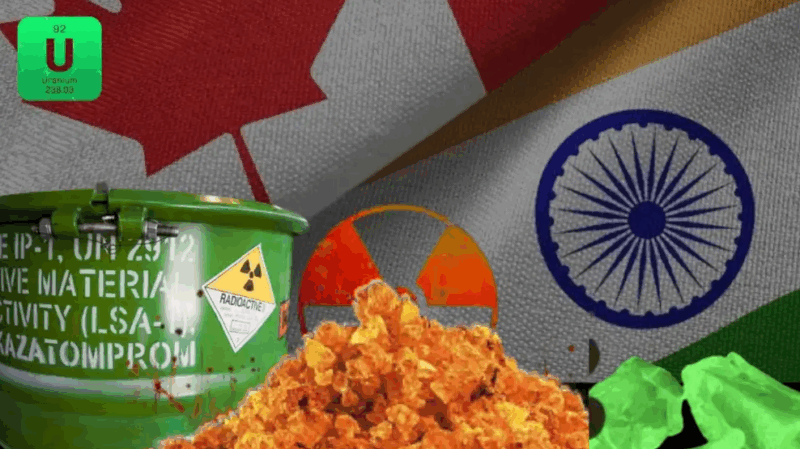
India and Canada are inching close to a $2.8 billion Uranium deal, the Globe and Mail reported on Monday, citing people familiar with the matter. The report comes amid Prime Minister Narendra Modi and his Canadian counterpart Mark Carney announced revival of trade between two nations.
As per this agreement, the Uranium export would potentially run up to 10 years and Canada’s Cameco Corp. would supply the material as part of a broader civil nuclear cooperation effort between the two countries. “It’s possible the terms of the deal could be modified before it is announced,” the Canadian newspaper reported citing sources.
India has previously sourced uranium from Cameco under a 2015 supply agreement worth about US$350 million over five years. The deal, signed during Prime Minister Narendra Modi’s official visit to Canada, was made possible through the 2013 Canada–India Nuclear Cooperation Agreement (NCA).
However, the latest proposed uranium arrangement is not expected to be a renewal of the earlier contract, the report noted. Cameco declined to comment, according to The Globe and Mail.
India’s Nuclear Capacity and Potential Cooperation
India currently operates roughly 25 nuclear reactors, with six more under construction. Many of these are based on Canadian Candu-derived pressurised heavy-water reactor designs. Beyond uranium supply, broader cooperation could extend to Canada’s plans to deploy commercial small modular nuclear reactors (SMRs) in India.
On Sunday, both leaders signalled progress on parallel trade discussions. The Ministry of External Affairs (MEA) said, “Both sides reaffirmed their longstanding civil nuclear cooperation and noted the ongoing discussions on expanding collaboration, including through long-term uranium supply arrangements.”
Troubled Ties and a Slow Thaw
Notably, diplomatic relations deteriorated sharply in September 2023 after then–Prime Minister Justin Trudeau accused India of involvement in the killing of Canadian Sikh activist Hardeep Singh Nijjar in British Columbia – allegations India strongly rejected as “preposterous imputations” driven by “the political agenda of the Trudeau Government that is centered around vote bank politics.”
In the fallout, Canada paused negotiations on a broad trade pact that year.
Relations began to gradually improve only after Prime Minister Modi met Canadian leader Mark Carney on the sidelines of the G7 summit in June.



