Young Europeans are skeptical of the EU’s democratic institutions. Now, the bloc is trying to reach out and gain their support — can it succeed?
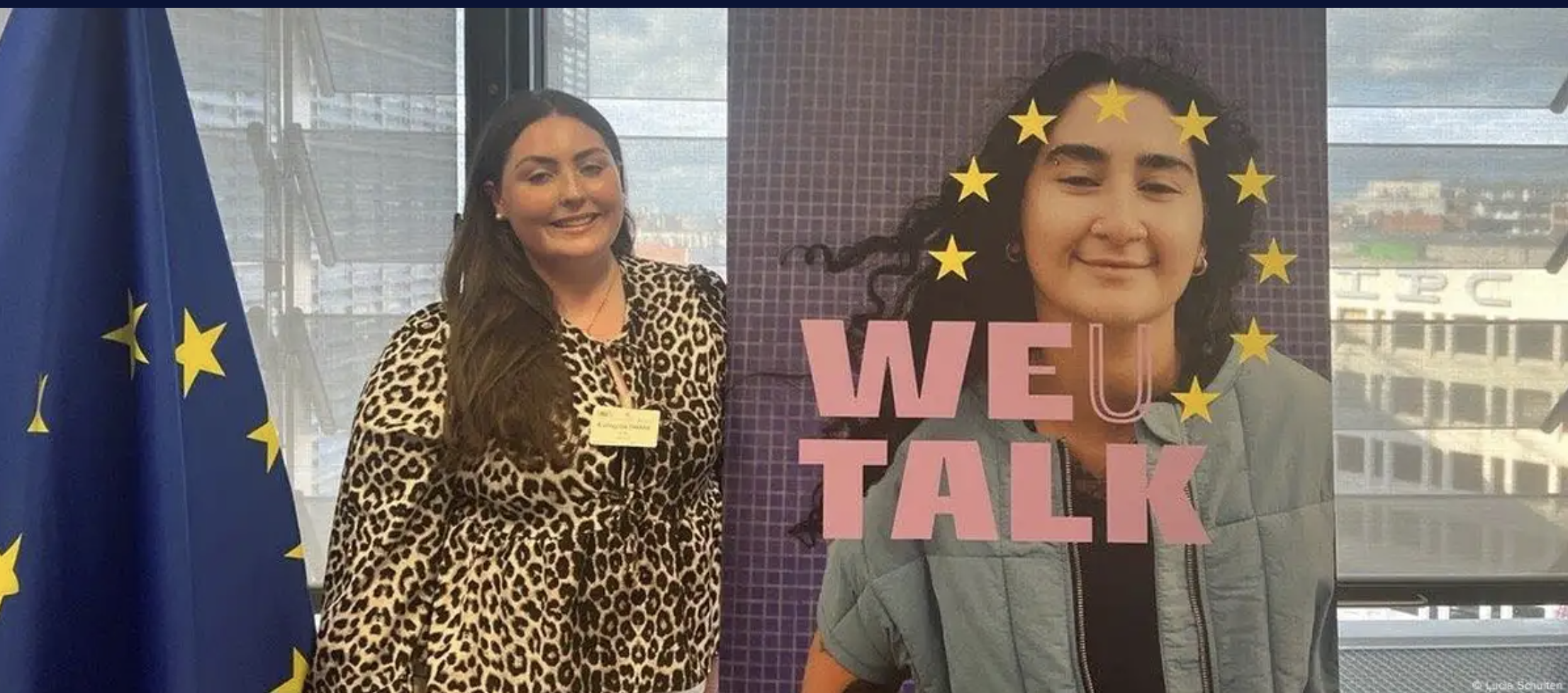
For 18-year-old Aisling Giltinane from Ireland, cyberbullying is a deeply personal issue as she experienced it when she was younger.
She jumped at the chance to join a small group of young Europeans who came to the EU Commission’s headquarters in Brussels, to meet with EU Commissioner Glenn Micallef in September to discuss it.
“I wanted to make a difference,” she told DW. “I wanted to show what we can do so that other kids don’t have to go through the same.”
The participants — some still in high school, others already working — got a chance to bring their own ideas to the table.
These include making it easier to report cyberbullying, improving education on the topic, as well as involving teachers and parents more. The EU Commission wants to present a “Comprehensive EU Action Plan on Cyberbullying” next year and the discussions will feed into it.
But for many, the meeting is about more than just cyberbullying: “For me it’s mostly about the opportunity to voice not only my concerns, but also my ideas,” George Vella, an 18-year-old from Malta said. By talking directly to politicians he says his concerns are more likely to be addressed than if he just voices them on social media or with friends.
Aisling Giltinane said she had a positive exchange with Commissioner Micallef, who is in charge of International Fairness, Youth, Culture and Sport. “We were able to tell him what we wanted, and he really took that on board.”
Young Europeans often critical of the EU
Unlike the small group visiting Brussels, not all young people in Europe voice confidence in the European Union or its democratic structures. A new survey by the German TUI Foundation found that 40% of the participants agreed with the statement that the way the EU works is not particularly democratic. Another 51% said that the EU is a good idea but poorly implemented. Some 53% believe that the EU is too concerned with trivial matters.
The survey questioned over 6,000 people aged 16 to 26 years old from across Germany, France, Spain, Italy, Greece, Poland and the UK.
The voter turnout of the last European election also shows a declining interest in taking part in EU democratic processes. In 2019, 42% of 15 to 24-year-olds voted. According to the statistical office Eurostat, only 36% showed up at the ballot box in 2024, meaning a decline of 6 percentage points. The number of young people voting in the latest election also lagged the average participation rate of 51%.
Can Europe win back young people?
Student George Vella thinks that the EU is doing a lot for young people, but that this is sometimes not “visible enough.” National governments often get credit for initiatives that actually come from the European Union, he said.
In Brussels, Commissioner Micallef says he is sure that “young people see the European Union as part of the solution to the challenges they face.” Speaking to DW after the meeting, he said, young people expect their trust in the EU to be repaid by concrete action.
He added that the EU is going to act in areas such as affordable housing, the quality of jobs and bringing down energy costs.
However, delivering tangible results might prove tricky. Enrique Hernandez-Diez, youth researcher and public law professor at the University of Extremadura, points out that the EU lacks legislative power in areas like employment, social security, and housing.
On these issue that are often key to a younger demographic, the EU’s role is limited to supporting member states, coordinating or offering ideas and funds, he said. Meanwhile, those benefitting from EU supported schemes often lack awareness about where the funds come from.
At times the bloc also gets blamed by national politicians for unpopular policies, distorting the EU’s image among some population groups, he added.
Source: https://www.dw.com/en/eu-wants-to-get-win-back-young-europeans-gen-z-democracy-brussels/a-74255419



