They were the colossal animals that roamed the Earth 166 million years ago. Now a window into their prehistoric past is being revealed in an Oxfordshire quarry.
Hidden under tonnes of rock, a dinosaur superhighway is emerging – where palaeontologists are walking in the footsteps of these giant beasts.
This summer’s excavation at this extraordinary site has uncovered one of the longest trackways found anywhere in the world.
Scientists from across the UK descended on Dewars Farm Quarry and the BBC captured them working to unearth the footprints, amongst the trucks, diggers, and tippers.
“These footprints are insanely big,” explains Emma Nicholls from Oxford University’s Museum of Natural History.
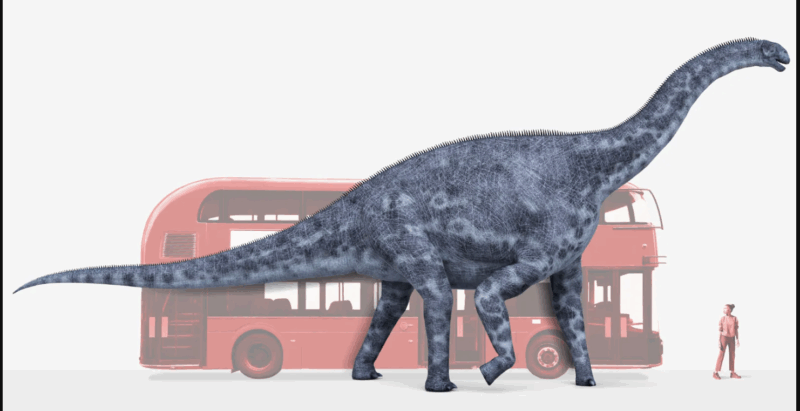
“They’re the massive footprints of a sauropod dinosaur; probably Cetiosaurus, which is a dinosaur that we know was found in this area.”
These were four-legged, long-necked, plant-eating beasts that could reach about 18m in length.
Dewars Farm Quarry has long been linked with dinosaurs. Some trackways were discovered here in the 1990s, and last year researchers found 200 huge footprints criss-crossing the quarry floor.
However this year, the team unearthed even more tracks in a different part of the quarry.
Reaching from one end of the quarry to the other, the trail extends 220m, making it one of the longest continuous trackways ever found.
“We’re uncovering something that people have never seen before,” says University of Birmingham palaeontologist Kirsty Edgar. “It’s so rare to find something this big.”
Not every dinosaur dig starts with a trowel and a brush – discoveries as enormous as this one begin with a big bang.
A controlled explosion in the quarry removes millions of years of limestone rock, allowing the palaeontologists the more delicate task of excavating each sunken footprint.
Several trackways emerge – but one, the dinosaur superhighway, just goes on and on.
A bump at the front of each print marks where the dinosaur squelched the mud forwards – this tells us which direction it was heading in.
Smaller prints have also been found at the site, made by a two-legged carnivorous dinosaur called Megalosaurus.
These creatures, which measured up to 9m-long, left a distinctive three-toed mark as they prowled across the Jurassic terrain.
Source: https://www.bbc.co.uk/news/resources/idt-5f8c77b0-92bc-40f2-bf21-6793abbe5ffe



