Isro is set to dominate the 2026 space calendar with several high-profile launches including the robotic pioneer Vyommitra. From the Gaganyaan trials to electric satellites, India is redefining the cost of innovation.
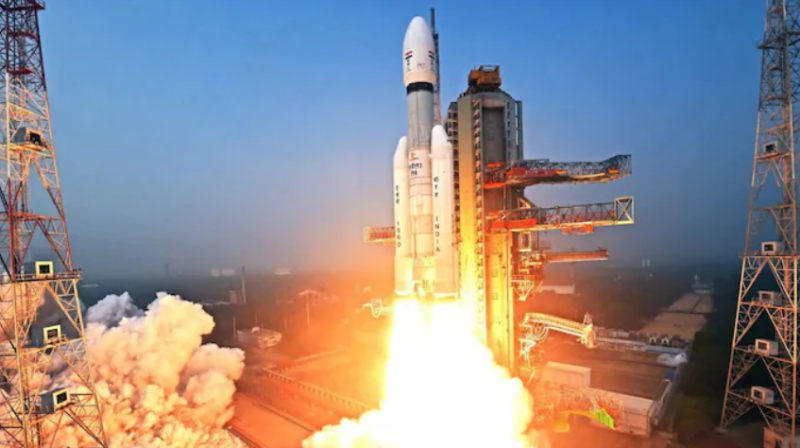
The Indian Space Research Organisation (Isro) is no longer just a participant in the global space race; it is setting the pace. Following the historic triumph of the Chandrayaan-3 Moon landing, the agency has prepared a 2026 calendar that reads like a science fiction novel.
From uncrewed robotic tests to ambitious planetary explorers, the current year promises to be a masterclass in affordable innovation for Isro.
Speaking during an address post the successful LVM3-M6 mission (Launch Vehicle Mark-III’s sixth operational flight), Isro chairman V. Narayanan revealed an ambitious roadmap that highlights India’s evolution from a regional player into a dominant global space powerhouse.
From the highly anticipated Gaganyaan mission to the surging prowess of private startups like Skyroot Aerospace, the coming year is set to be a definitive turning point for the nation’s celestial ambitions.
Narayanan emphasised that the Gaganyaan mission marks a crucial step towards human spaceflight, noting that its success will cement India’s place in an elite club of spacefaring nations.
JANUARY 2026: PSLV-C62, THE STRATEGIC EYE
The year begins with the PSLV-C62 mission, tentatively set early this year. This launch carries the EOS-N1 satellite, a sophisticated tool for hyperspectral imaging, an advanced technique that captures detailed data of light wavelengths for every pixel in an image, and not just red, green, and blue.
By capturing chemical signatures from space, it provides vital data for border surveillance and disaster management. It will be accompanied by 18 smaller international satellites, showcasing Isro’s role as a global launch hub.
FEBRUARY 2026: PSLV-N1, THE INDUSTRY MILESTONE
In a landmark shift towards privatisation, the PSLV-N1 mission will mark the first time a PSLV rocket has been entirely manufactured by an Indian industry consortium (HAL and L&T).
This satellite will provide critical oceanographic data, aiding everything from the fishing industry to climate research. The primary payload is the EOS-10 / Oceansat-3A. Co-passengers likely include India-Mauritius Joint Satellite (IMJS) and possibly LEAP-2 from Dhruva Space.
MARCH 2026: GAGANYAAN G1, THE ROBOTIC PIONEER
Scheduled for March 2026, the Gaganyaan G1 mission is the crown jewel of the schedule. A human-rated LVM3 (Launch Vehicle Mark III) rocket will carry Vyommitra, a female humanoid robot, into orbit.
This uncrewed flight is a critical safety test, designed to validate the life support, re-entry, and sea recovery systems that will eventually keep Indian astronauts safe during their journey into the thermosphere.



