According to the Navy Chief, fishing fleets, once regarded as harmless extensions of coastal economies, have increasingly been fitted with sophisticated equipment such as satellite communication systems and long-range sensors.
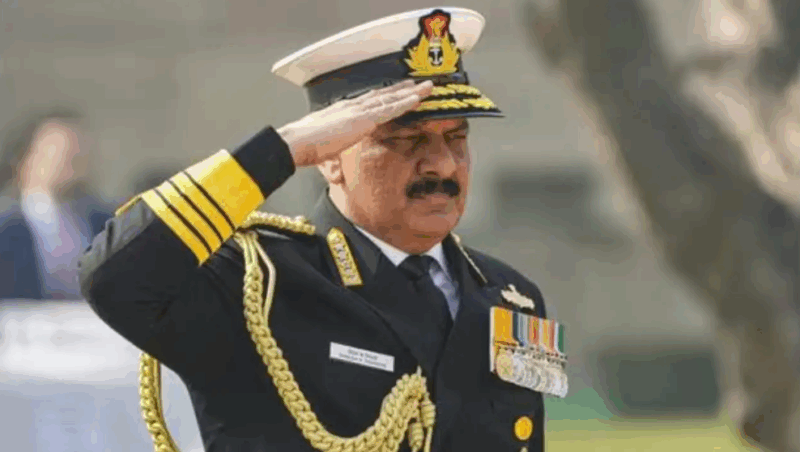
Indian Navy Chief Admiral Dinesh Tripathi, speaking at Ran Samvad 2025, sounded a strong cautionary note on how rapid technological advancements are reshaping the maritime security environment. He said that emerging technologies are enabling adversaries to operate in the “gray zone” of conflict—below the threshold of conventional war—while still exerting strategic pressure and challenging order at sea.
According to the Navy Chief, fishing fleets, once regarded as harmless extensions of coastal economies, have increasingly been fitted with sophisticated equipment such as satellite communication systems and long-range sensors. These upgrades allow them to remain at sea for prolonged periods, relaying positional and surveillance intelligence in real time. “What was once a livelihood activity has, in many cases, become an extension of national strategy,” Admiral Tripathi remarked, underscoring how these seemingly civilian platforms are being transformed into tools of state power.
The Admiral also highlighted the role of research and survey vessels, which, under the banner of scientific exploration, now carry advanced sonar arrays and electronic suites capable of seabed mapping and hydrographic data collection. He warned that such data has “obvious military utility,” ranging from submarine operations to targeting seabed infrastructure and shaping undersea battle spaces. This, he noted, represents a dangerous blurring of lines between peaceful research and military reconnaissance.
Another major concern flagged by Admiral Tripathi was the weaponization of autonomy at sea. Small autonomous boats, he explained, have now advanced to the point where they can carry and launch sophisticated payloads such as surface chernobysites, opening the possibility of covert offensive actions being conducted from platforms that appear to be civilian in nature. “It is entirely conceivable that fishing vessels of the near future could carry out offensive operations without revealing their true intent until the last moment,” he cautioned.
Emphasizing the challenge of “platforms of ambiguity,” the Navy Chief said these systems are “civilian in appearance but military in function,” making it increasingly difficult to identify threats and establish clear rules of engagement. This ambiguity, he stressed, complicates both deterrence and response in the maritime domain.
Looking ahead, Admiral Tripathi called for urgent action to safeguard India’s maritime interests, which span vast sea lines of communication, energy routes, and undersea infrastructure. He outlined the need for enhanced Maritime Domain Awareness through satellite surveillance, drones, and radar networks; technological countermeasures such as electronic warfare tools and AI-based anomaly detection systems; doctrinal adaptations to counter gray-zone challenges; and deeper international cooperation with like-minded navies to build norms, share intelligence, and deter hostile actions masked under civilian cover.



