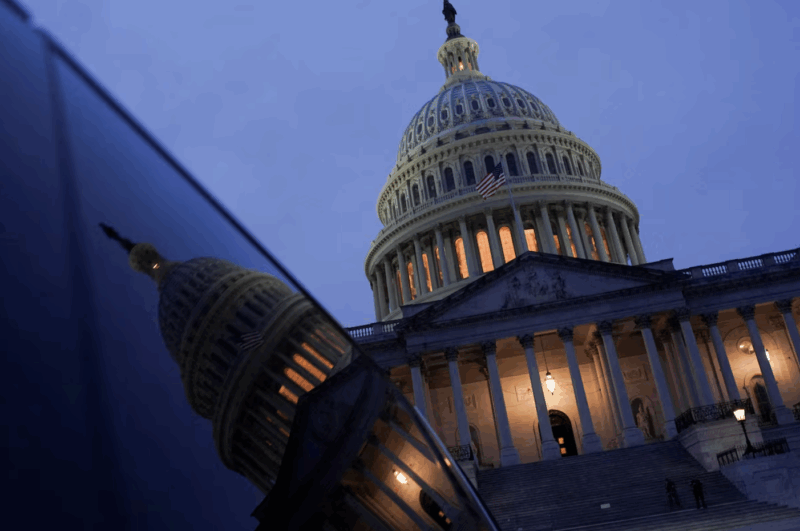
The U.S. government shutdown that has turned off the official flow of data could begin clouding the view for policymakers in Japan and other countries where insight into the fortunes of the world’s biggest economy informs the outlook for their own currencies, trade performance and inflation.
What happens in America, in other words, doesn’t stay in America, and global officials say being left data-blind by the shutdown over time could complicate their own policymaking and boost the risk of a mistake at a moment when countries are already adjusting to the Trump administration’s efforts to remake global trade.
“It’s a serious problem. We hope this gets fixed soon,” Bank of Japan Governor Kazuo Ueda told a news briefing on October 3, as he discussed the hurdles the BOJ faces in deciding when to resume interest rate hikes.
One Japanese policymaker went further.
“It’s a joke. (Federal Reserve Chair Jerome) Powell keeps on saying the Fed’s policy is data-dependent but there’s no data to depend upon,” said the official, who declined to be named as he was not authorized to speak publicly.
Bank of England policy member Catherine Mann said the questions surrounding U.S. data, the controversy over the Fed’s independence, and other issues don’t figure as directly into BOE policy debate as the shifts in trade policy, for example, which directly affect things like prices and the export outlook.
But she noted how over time the British pound lost its central status in the world, a process that took decades and was driven by multiple forces she referred to as “termites” that weakened the pound’s role over time.
Policy changes that could degrade the dollar’s standing or erode the Fed’s independence, “are things that we have in our mind but they’re not front and center,” Mann said. But “they are the termites, as opposed to something that is imminent.”
Finance and economic leaders from around the world are gathered in Washington this week for meetings of the World Bank and the International Monetary Fund, and – in a world beset by an ongoing European land war, tensions and violence in the Middle East, and long-term issues like climate change – much of the meeting’s oxygen is likely to be consumed by discussion of U.S. President Donald Trump’s plans for the world, his performance in office so far, and, now, the sudden stop of official information about a $30 trillion economy that accounts for roughly one-fourth of world output.
Source : https://www.reuters.com/world/asia-pacific/data-darkness-us-spreads-global-shadow-2025-10-15



