Humans may be experiencing one of the most unusual evolutionary changes in our species’ history, and it may have little to do with DNA. A new study from the University of Maine suggests that culture has become such a powerful force that it may be overtaking biology as the main driver of human evolution. If true, this shift could eventually make cultural groups, not just individuals, the key players in shaping our future.
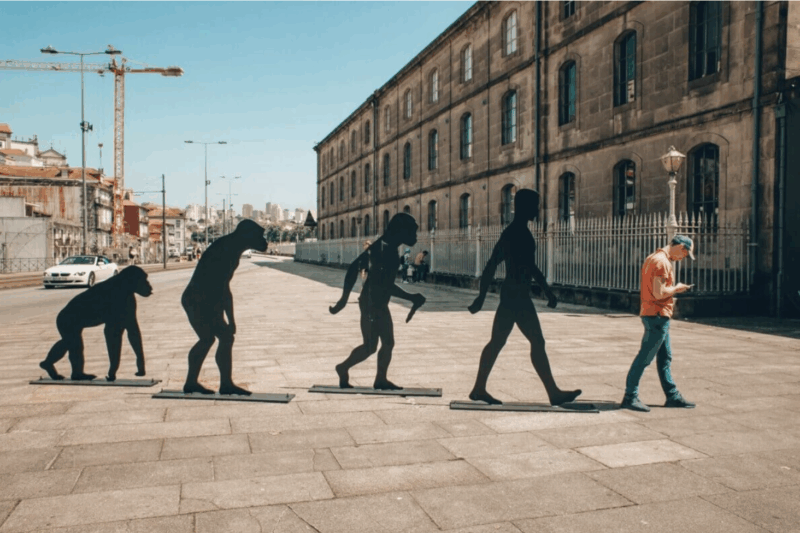
Published in BioScience, the research introduces the idea of an “evolutionary transition in inheritance and individuality,” or ETII. The theory proposes that humans may be moving toward a stage where cultural inheritance — the passing on of knowledge, technology, and institutions — becomes more important than genetic inheritance. Unlike past evolutionary changes that unfolded over millions of years, this cultural shift may be progressing at a pace fast enough to notice within historical timeframes, though the authors stress the process is still incomplete and largely theoretical.
How Culture Can Outpace Genetic Evolution
Researchers Timothy Waring and Zachary Wood argue that cultural evolution is faster and more flexible than genetic evolution in almost every measurable way. Cultural information can move instantly through conversation, teaching, or digital media, while genetic changes are stuck on the slow timetable of generations. People also actively choose which cultural traits to adopt, often from those who seem most successful, whereas genetic inheritance is random and passive.
Medicine shows this dynamic clearly. Procedures like Cesarean sections allow people with narrower pelvises to survive childbirth and pass on that trait. Glasses correct poor eyesight, which would once have been a disadvantage in survival. Surrogacy and assisted reproductive technologies allow people to reproduce where it would otherwise not be possible. Each cultural solution reduces the role of natural selection, leaving culture — not genes — as the stronger link to survival.
Cities and languages also illustrate the advantages of culture at scale. Larger populations tend to produce more patents and innovations per person. Languages with more speakers often evolve toward efficiency. When groups pool knowledge, they can solve problems faster than any individual could manage alone.
The Three Stages of Human–Culture Coevolution
The study outlines three broad stages in the relationship between genetic and cultural evolution:
Stage 1: Early cultural capacity. Human ancestors evolved bigger brains and longer lifespans, allowing us to store and transmit cultural information through language, tools, and cooperation.
Stage 2: Gene–culture balance. For a time, culture and genetics reinforced each other. A classic example is the rise of dairy farming alongside genetic changes that enabled lactose tolerance.
Stage 3: Cultural dominance. Today, cultural solutions often appear before genetic evolution can respond. Medical systems reduce natural selection pressures. Schools and institutions, rather than inherited traits, increasingly shape opportunities. Laws and norms influence reproductive decisions as much as biology does.
One puzzling trend the researchers discuss is the dramatic decline in fertility rates in advanced societies. They note that traditional evolutionary theory struggles to explain this pattern. One possibility is that cultural reproduction — passing on knowledge, skills, and group membership — is becoming more important than biological reproduction. Other theories, such as the transfer of wealth across generations and the widening of social networks, may also contribute. The decline likely results from a mix of these cultural dynamics.
Source: https://studyfinds.org/culture-replacing-dna-driver-human-evolution/



