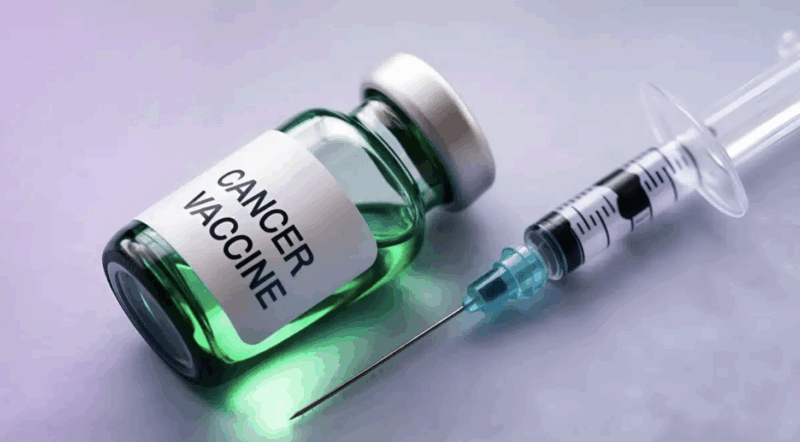
Scientists have developed a cancer vaccine that stopped three different types of aggressive tumors from growing in mice. The experimental shot prevented cancer in about 7 to 9 out of every 10 animals tested, working against melanoma, pancreatic cancer, and a hard-to-treat form of breast cancer.
Researchers at the University of Massachusetts Amherst say that mice that beat cancer once stayed cancer-free when the scientists tried giving them cancer again weeks later. Incredibly, their immune systems remembered what to fight.
The vaccine uses tiny particles loaded with two different alarm signals that wake up the immune system. Working together, these signals created a stronger defense than either one alone. And unlike some experimental cancer vaccines that require mapping a patient’s unique tumor mutations (which is an expensive, time-consuming process), this approach works with simpler tumor material.
That matters because it could mean faster development and lower costs if the vaccine eventually works in people.
Why Cancer Vaccines Keep Failing
Cancer vaccines have disappointed doctors and patients for decades. Trial after trial shows the same frustrating pattern: people’s immune systems barely respond, and tumors keep growing.
The problem isn’t the concept. Vaccines work brilliantly against viruses by teaching immune cells what to attack. But cancer cells are trickier. They’re made from the body’s own cells gone rogue, so they know how to hide. They can shut down immune responses nearby, avoid displaying markers that scream “threat,” or turn the area around them toxic to immune cells trying to fight back.
This new vaccine tackles what researchers believe is the root issue: the immune system simply isn’t getting activated strongly enough to overcome cancer’s tricks.
Two Alarms Work Better Than One
Your immune system is akin to a security team that needs two things to spring into action. First, they need to know what the intruder looks like. That’s the antigen, basically a “wanted poster” with the criminal’s photo. Second, they need to know there’s actually a threat happening right now. That’s the adjuvant, the alarm that gets everyone moving.
Old vaccines like the smallpox shot contained whole germs with lots of natural alarm signals built in. They worked incredibly well. Modern vaccines are safer because they use only purified pieces of germs, but most include just one type of alarm. That trade-off means less risk but also less punch.
The Massachusetts researchers built microscopic fat bubbles, or nanoparticles about 1,000 times smaller than the width of a human hair. Each one carries two different molecular alarms: one called cyclic-di-guanosine monophosphate and another called monophosphoryl lipid A. These trigger two separate warning systems inside immune cells, both of which pump out interferons, the proteins that organize your body’s defense.
When the team tested different mixes in the lab, certain combinations produced over four times more interferon than using either alarm alone. They traced this boost to three specific proteins (IRF3, IRF5, and IRF7) that kicked into high gear when both alarms rang simultaneously.
The real test: Would human cells respond the same way? They tested immune cells from three human donors. All three showed the same strong interferon response. That doesn’t guarantee the vaccine will work in people, but it’s encouraging.
Getting the Vaccine Where It Needs to Go
Size matters when you’re designing a vaccine. These nanoparticles were engineered to be between 30 and 60 nanometers across—small enough to slip through tiny channels in your lymphatic system and travel to lymph nodes.
Lymph nodes are where immune responses get organized. They’re packed with dendritic cells, specialized scouts that grab bits of invaders, carry them to lymph nodes, and show them to T cells, the immune system’s assassins. Once T cells learn what to hunt, they multiply by the thousands and head out looking for targets.
After injecting the vaccine under the skin of mice, the researchers added a glow-in-the-dark label to track where the particles went. Within 24 hours, the two-alarm nanoparticles had concentrated in lymph nodes at three times the levels of empty dummy particles. Under the microscope, they could see more activated dendritic cells gathering, exactly as they’d hoped for.
Mice got three shots: one on day zero, another two weeks later, and a final booster two weeks after that. Three weeks after the last shot, it was time for the real test.
Source : https://studyfinds.org/cancer-vaccine-shows-promise-against-aggressive-tumors



