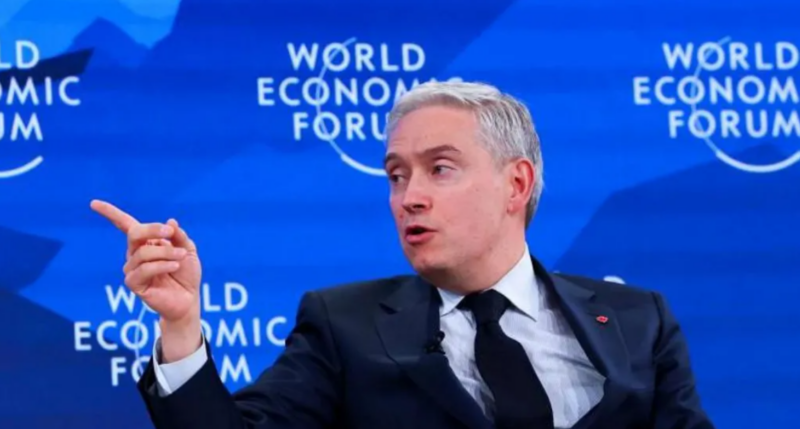
A baseline tariff may be the “price” Canada has to pay to continue shipping goods to the US, Canada’s finance minister said.
François-Philippe Champagne’s remarks came after Donald Trump’s State of the Union address, in which the US president said he wants tariffs to eventually replace income taxes to become America’s main revenue source.
Champagne’s comments follow US trade chief Jamieson Greer saying Canada has to accept “some level of higher tariff” if it wants to do business with the United States.
Trump last week imposed a worldwide 10% tariff through a never-used law known as Section 122 after the US Supreme Court rejected his previous sweeping tariffs policy.
“I think it is pretty well understood now in the world that the view of the American administration is that there’ll be a price to access the American market,” Champagne told reporters in Ottawa, after being asked if the president’s remarks in his speech hinder Canada’s hopes of getting tariffs lifted.
“Every country of the world that I know of is paying a price,” he went on. “What I’m saying is that Canada is paying the lowest price.”
Canada has exemptions from tariffs that comply with the continental free trade deal, the USMCA. It also faces steeper tariffs on steel, aluminium and softwood lumber.
“If Canada wants to agree that we can have some level of higher tariff on them, while they open up their market to us in things like dairy and other things, then that’s a helpful conversation,” Greer said while speaking to CBC on Tuesday.
In the wake of the trade tensions, Canadian Prime Minister Mark Carney has said he wants to double Canada’s non-US exports by the next decade, particularly in industries such as metals and cars.
The US is by far Canada’s largest customer, making up about 75% of Canadian exports.
The new tone from the Canadians on US tariffs comes in the wake of a 6-3 US Supreme Court decision on Friday that found Trump’s sweeping tariff policy enacted last April was unlawful and the president had overstepped his powers.
Trump responded to the ruling by announcing a new 10% global tariff to replace ones struck down by the Supreme Court.



