The celebrations, held under the theme 150 years of ‘Vande Mataram’, were attended by the top national leadership and high-profile international guests; around 10,000 special guests witnessed the parade, which blended military strength with cultural unity
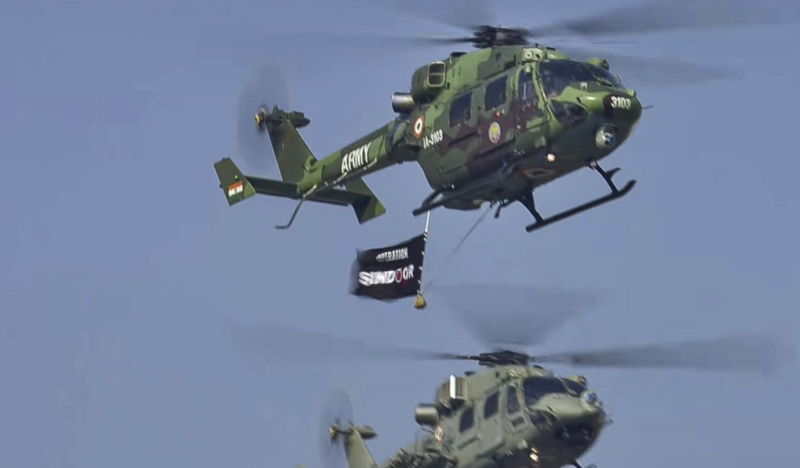
India put military power front and centre at its 77th Republic Day parade on Monday (January 26, 2026), transforming Kartavya Path into a sweeping display of missiles, armour, mechanised columns and combat aircraft, with a sharp focus on weapon systems associated with Operation Sindoor, the high-intensity military operation conducted in May last year.
The celebrations, held under the theme 150 years of ‘Vande Mataram’, were attended by the top national leadership and high-profile international guests, including European Council President Antonio Costa and European Commission President Ursula von der Leyen, who were the chief guests.
Used in warfront
The military display began with a showcase of key weapon systems, including the BrahMos supersonic cruise missile, Akash air defence system, Suryastra rocket launcher, and Arjun Main Battle Tank, highlighting India’s emphasis on battlefield-ready capability and indigenous defence production. Much of the equipment on display has either featured in or drawn directly from lessons learned during Operation Sindoor, the May 7–10 conflict with Pakistan.
A major attraction was a tri-services tableau that presented replicas of prominent weapon systems deployed during the operation. At its centre was a glass-cased integrated operational command centre, visually depicting the conduct of Operation Sindoor through the coordinated use of systems such as BrahMos and the S-400 air defence system. While BrahMos missiles were projected as delivering decisive offensive strikes, Akash and S-400 systems were portrayed as providing a protective air-defence shield during the conflict.
The parade was led by Lt. General Bhavnish Kumar, General Officer Commanding, Delhi Area, and a second-generation officer. For the first time, the Indian Army showcased a phased ‘Battle Array Format’, including its aerial component. The reconnaissance element featured the historic 61 Cavalry in active combat uniform, followed by high-mobility reconnaissance vehicles. Aerial battlefield shaping was demonstrated by the indigenous Dhruv Advanced Light Helicopter and its armed variant Rudra, flying in Prahar formation.



